Does Juicing Make You Gassy? Ultimate Health Guide
Yes, juicing can make you gassy. This typically happens because of the high concentration of natural sugars like fructose and sugar alcohols like sorbitol found in fruits and vegetables. When these are consumed in liquid form without the presence of fiber, they can travel quickly to the large intestine where gut bacteria ferment them, producing gas and bloating. Additionally, certain “gas-heavy” vegetables like kale, cabbage, and broccoli are common culprits in many juice recipes.
Why Does Juicing Cause Bloating and Gas?
The transition to a juicing routine is often motivated by a desire for better health, but for many, the initial results include an uncomfortable amount of flatulence and abdominal distension. Understanding why this happens requires a look at how our digestive system processes concentrated liquid nutrients compared to whole foods.
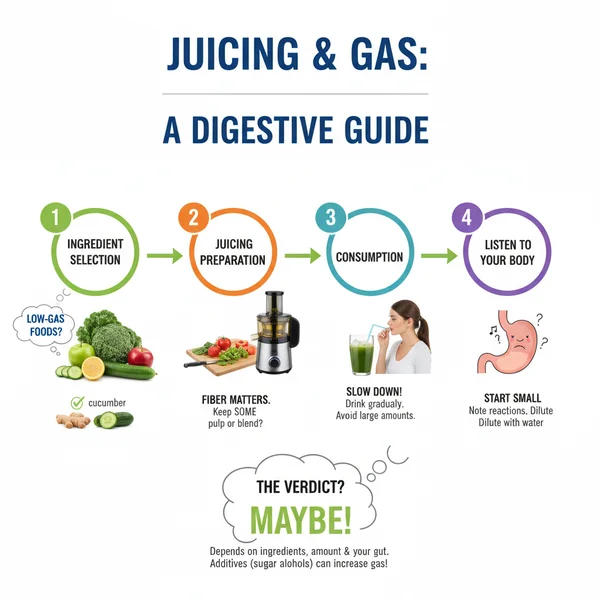
One of the primary scientific reasons for gas after juicing is the presence of FODMAPs (Fermentable Oligosaccharides, Disaccharides, Monosaccharides, and Polyols). These are short-chain carbohydrates that the small intestine absorbs poorly. When you juice a large volume of apples, pears, or stone fruits, you are consuming a massive dose of fructose and sorbitol. Because the juice lacks the structural fiber of the whole fruit, these sugars hit your system rapidly. If your body cannot absorb them fast enough, they pass into the colon. Here, resident bacteria feast on the sugars, creating carbon dioxide, hydrogen, and methane gases as byproducts of fermentation.
Furthermore, the specific ingredients used in your juice play a significant role. Cruciferous vegetables—such as kale, cauliflower, and cabbage—contain a complex sugar called raffinose. Humans lack the enzyme necessary to break down raffinose in the small intestine. When you extract the liquid from these greens, the raffinose remains present. As it reaches the lower gut, bacteria break it down, which inevitably leads to gas.
Another factor is the speed of consumption. Juicing allows you to consume the nutrient equivalent of several pounds of produce in a matter of minutes. This “nutrient flood” can overwhelm the digestive enzymes in your saliva and stomach. Without the mechanical act of chewing to signal the release of digestive juices, the liquid can move through the tract too quickly, leading to incomplete digestion and subsequent gas.
How to Make a Digestive-Friendly Juice Recipe
If you want to enjoy the benefits of juicing without the unwanted side effects, you need to follow a specific strategy. A well-balanced juice focuses on low-sugar vegetables and soothing ingredients like ginger or mint. Below is a “Gas-Free Green Recipe” designed to be gentle on the stomach while providing a high nutrient density.
Ingredients
- 2 Large Cucumbers (high water content, low sugar)
- 4 Stalks of Celery (natural electrolytes)
- 1 Inch Fresh Ginger Root (pro-kinetic properties to move gas)
- 1/2 Lemon (peeled to reduce bitterness)
- 1 Cup Fresh Parsley (natural diuretic)
- 1 Small Green Apple (for a hint of sweetness without excessive fructose)
Instructions
- Prep the Ingredients: Thoroughly wash all vegetables and fruits. Remove the skin from the lemon if you prefer a milder taste. Chop the cucumbers and celery into lengths that fit your specific juicer’s feed chute.
- Sequence the Juicing: Start by juicing the ginger and lemon. This ensures their potent oils and juices are “flushed” through the machine by the water-heavy vegetables that follow.
- Juice the Greens: Feed the parsley through the juicer, followed immediately by the apple. The apple’s flesh helps push the leafy parsley through the extraction screw or blade.
- Finish with Water-Heavy Produce: Feed the celery and cucumbers last. Their high water content acts as a natural cleaner for the juicer, pushing any remaining nutrients into your glass.
- Stir and Serve: Use a spoon to stir the juice gently. Avoid shaking it vigorously, as this introduces air bubbles into the liquid, which can contribute to more gas when swallowed.
Recipe Specifications
- Prep Time: 10 minutes
- Cooking Time: 0 minutes
- Servings: 2 servings (approx. 12-16 oz total)
- Calories: Approximately 85 calories per serving
Important Considerations for New Juicers
When starting a juicing journey, it is vital to listen to your body’s signals. Not all digestive systems are created equal, and what works for one person might cause significant distress for another. One of the most common mistakes is jumping into a “juice cleanse” or a high-volume juicing habit overnight. Your gut microbiome needs time to adjust to the influx of specific enzymes and sugars.
Pay close attention to the vegetable-to-fruit ratio. A common rule of thumb for preventing gas and blood sugar spikes is the 80/20 rule: 80% vegetables and 20% fruit. If you find you are still gassy, try reducing the fruit even further or sticking to low-fructose options like berries or citrus.
Furthermore, consider the temperature of your juice. Drinking ice-cold juice can shock the digestive system and slow down the enzymatic processes required for smooth digestion. Room temperature or slightly chilled juice is often much easier on the stomach. Lastly, be aware of pre-existing conditions. If you have Irritable Bowel Syndrome (IBS) or Small Intestinal Bacterial Overgrowth (SIBO), the high concentration of certain plant compounds in juice can exacerbate symptoms significantly. In these cases, it is best to consult with a healthcare professional before making juice a daily staple.
Avoid “chugging” your juice. Digestion begins in the mouth with an enzyme called salivary amylase. Even though you aren’t eating solids, “chewing” the juice or swishing it in your mouth for a few seconds before swallowing can help prime your stomach for the liquid, reducing the likelihood of fermentation-induced gas.
- Add Carminatives: Include “gas-fighting” ingredients in every recipe, such as fresh ginger, fennel bulbs, or a few leaves of peppermint.
- Strain the Pulp: If your juicer leaves a lot of sediment, use a fine-mesh nut milk bag or strainer to remove excess insoluble fiber, which can sometimes irritate a sensitive colon.
- Limit Cruciferous Greens: If you notice gas specifically after drinking “green” juice, try steaming your kale or broccoli slightly before juicing, or swap them for romaine lettuce or spinach which are generally easier to digest.
- Drink on an Empty Stomach: For many, juice is best digested when the stomach is empty. Drinking it alongside a heavy meal can cause the juice to “sit” on top of the food and ferment, leading to intense gas.
Conclusion
In summary, while juicing is an incredible way to flood your body with vitamins and minerals, it can certainly make you gassy if not approached correctly. The combination of high sugar concentrations, the absence of fiber, and the use of gas-producing cruciferous vegetables often creates the perfect storm for bloating. However, by focusing on a higher vegetable-to-fruit ratio, incorporating soothing ingredients like ginger, and sipping your juice slowly, you can significantly mitigate these effects. Start with small servings and allow your digestive system to adapt to your new healthy habit for the best long-term results.
❓ Frequently Asked Questions
1
How long does fresh juice last in the fridge?
Fresh juice is best consumed immediately for maximum nutrient density. However, you can store it in an airtight glass container for up to 24 to 48 hours. Ensure the container is filled to the top to minimize oxygen exposure, which helps maintain flavor and prevents the juice from spoiling quickly.


2
Can I make digestive juice ahead of time?
Yes, you can prepare your juice ahead of time, though it may lose some enzymatic activity. To keep it fresh, add a squeeze of lemon juice to act as a natural preservative. Store it in the coldest part of your refrigerator and shake well before drinking to redistribute any settled nutrients.
3
What can I substitute for fennel in a juice recipe?
If you do not have fennel, celery is an excellent substitute for its high water content and digestive benefits. Alternatively, use fresh mint or a larger portion of cucumber. These ingredients provide a similar refreshing base while helping to soothe the stomach and reduce the likelihood of gas or bloating.
4
How do I know when my juice recipe is balanced?
A balanced juice recipe usually follows the 80/20 rule: eighty percent vegetables and twenty percent fruit. This ratio ensures you get a high concentration of vitamins and minerals without a massive sugar spike. If the juice tastes too bitter, try adding more cucumber or a small piece of ginger.
5
Can I freeze fresh green juice?
You can freeze fresh juice for up to three months without significant nutrient loss. Use BPA-free plastic bottles or silicone molds, leaving about an inch of space at the top for expansion. Thaw the juice in the refrigerator overnight and consume it immediately once it returns to a liquid state.