Frozen Berries vs Fresh: The Ultimate Comparison
The debate between frozen berries vs fresh is one that resonates in every kitchen, from the professional bakery to the morning smoothie enthusiast. For years, “fresh” was synonymous with “superior,” while frozen options were relegated to the back of the freezer as a secondary choice. However, as agricultural technology and freezing techniques like IQF (Individually Quick Frozen) have evolved, the gap has narrowed significantly. Choosing between the two depends on more than just the season; it involves understanding nutrient density, culinary behavior in a recipe, and the practicalities of prep time and cost. Whether you are looking for the perfect topping for your morning oats or a reliable fruit source for a mid-winter pie, understanding the structural and nutritional differences between these two options is essential for any home cook.
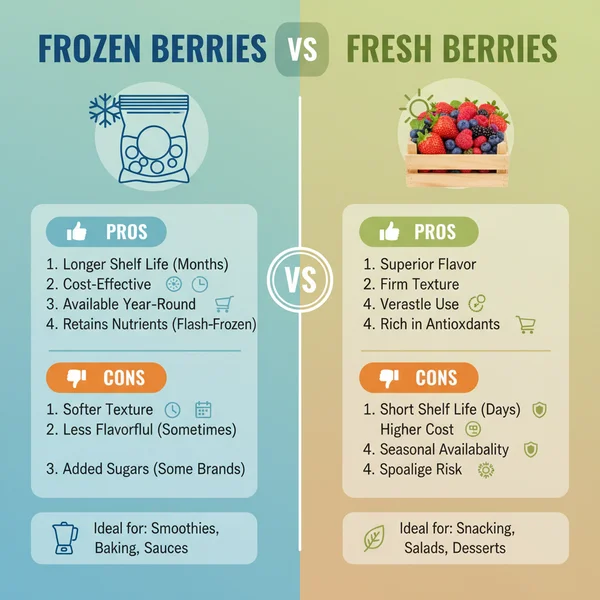
For raw snacking, garnishes, and salads, fresh berries are the undisputed winner due to their firm texture. However, for smoothies, baking, and sauces, frozen berries are superior because they are often more nutrient-dense, more affordable, and offer significantly longer shelf lives without compromising the final recipe.
Comparison: Frozen Berries vs. Fresh
| Feature | Fresh Berries | Frozen Berries |
|---|---|---|
| Nutritional Value | High at harvest; declines during transport. | Peak nutrients locked in via flash-freezing. |
| Shelf Life | Short (3-7 days). | Long (6-12 months). |
| Texture | Firm, crisp, and structural. | Soft and slightly mushy once thawed. |
| Prep Time | Requires washing and hulling. | Pre-washed and ready to use. |
| Cooking Performance | Holds shape well in light heat. | Bleeds color; breaks down into sauces easily. |
| Price per Serving | Higher, especially out of season. | Economical and consistent year-round. |
| Availability | Seasonal fluctuations. | Available regardless of the month. |
Detailed Analysis: Decoding the Berry Dilemma
When we look at the comparison of frozen berries vs fresh through a scientific lens, the results are often surprising. Fresh berries are frequently harvested before they reach peak ripeness so they can survive the rigors of shipping. During the days spent in transit and on grocery store shelves, their vitamin C and antioxidant levels begin to degrade. In contrast, frozen berries are typically picked at the height of ripeness and flash-frozen within hours. This process pauses the clock on nutrient loss, often resulting in a product that has higher concentrations of vitamins than the “fresh” counterparts that have traveled thousands of miles. This makes frozen berries an incredible addition to your ingredients list when health is the primary goal.

From a culinary perspective, the texture is the most significant differentiator. Fresh berries contain intact cell walls that provide a satisfying “snap” or firmness when bitten. When berries are frozen, the water inside them expands and forms ice crystals, which rupture these cell walls. Consequently, once thawed, a frozen berry will never regain the structural integrity of a fresh one. This is a critical factor when following instructions for a fruit tart or a fresh summer salad where the visual appeal of whole, plump fruit is necessary. If your recipe calls for a garnish, fresh is the only way to go.
However, frozen berries hold a massive advantage in prep time. They are almost always pre-washed and, in the case of strawberries, already hulled. When you are calculating servings for a large family breakfast or a batch of muffins, being able to pour the fruit directly from the bag into the bowl saves precious minutes. It is important to note that using frozen berries can affect your cooking time. Because they are added to batters at sub-zero temperatures, they can lower the internal temperature of a cake or muffin, often requiring an extra 5 to 10 minutes in the oven to ensure the center is fully baked.
Furthermore, both options are naturally low in calories, making them an excellent choice for weight management. However, be cautious with “frozen berry mixes” that may contain added sugars or syrups. Always check the ingredients label to ensure you are getting 100% fruit. If you are watching your caloric intake, the volume of frozen berries is often easier to measure by weight, ensuring your calories count remains accurate for every serving you consume.
When to Choose Each Option
Determining whether to reach for the fresh carton or the frozen bag depends largely on your intended application. Fresh berries are the gold standard for any dish where the fruit is served raw. If you are preparing a charcuterie board, a yogurt parfait, or a spinach and strawberry salad, the aesthetic and textural contrast of fresh fruit is irreplaceable. Additionally, if you are making a delicate pavlova or topping a cheesecake, fresh berries provide a clean look without the “bleeding” effect that occurs when frozen fruit begins to release its juices.
On the other hand, frozen berries are the champion of the “cooked” or “blended” category. In smoothies, they act as both the flavor source and the cooling agent, creating a thick, frosty consistency without the need for excess ice which can dilute the taste. For pancakes, waffles, and pies, frozen berries are often preferred because they break down more readily, creating a jam-like consistency that permeates the dish. They are also the best choice for homemade jams and reductions where the fruit will be boiled down anyway. From a budget perspective, if a recipe requires several cups of blackberries in the middle of January, frozen berries will provide the same flavor profile at a fraction of the cost of imported fresh alternatives.
Keep a bag of mixed berries in your freezer for daily smoothies and baking to save money and maximize antioxidants. Reserve your “fresh” budget for peak summer months (June-August) when local berries are in season; this is when the flavor and texture of fresh berries truly justify their higher price point.
Conclusion
In the battle of frozen berries vs fresh, there is no single loser—only the best tool for the specific job. Fresh berries win on texture, beauty, and the joy of seasonal eating, making them perfect for raw applications. Frozen berries win on nutrition, convenience, and value, making them the workhorse of the modern kitchen. By considering your prep time, the specific instructions of your recipe, and the desired final texture, you can choose the option that ensures your dish is both delicious and cost-effective. Ultimately, having both in your kitchen repertoire is the best way to enjoy these vibrant fruits year-round.
❓ Frequently Asked Questions
1
How long do frozen berries last in the freezer?
Properly stored frozen berries can last for 8 to 12 months in a standard freezer. While they remain safe to eat indefinitely if kept frozen, their quality, texture, and flavor may start to decline after a year. Ensure the bag is airtight to prevent freezer burn.
2
Can I substitute frozen berries for fresh in baking?
Yes, you can substitute frozen berries for fresh in most baking recipes like muffins or cakes. However, do not thaw them first; use them frozen to prevent the juice from bleeding too much into the batter. You might need to add a few extra minutes to the cooking time.
3
Are frozen berries less nutritious than fresh?
Generally, no. Frozen berries are often flash-frozen immediately after harvest, which preserves their vitamins and antioxidants. In some cases, because fresh berries may sit in transport for days, frozen berries can actually contain higher levels of certain nutrients than out-of-season fresh berries found at the store.
4
How do I prevent frozen berries from staining my batter?
To prevent staining, toss your frozen berries in a small amount of flour or cornstarch before folding them into your recipe. Additionally, fold them in very gently at the very last second. Keeping them frozen until the moment they go into the oven also helps minimize color bleeding.
5
Can I freeze my own fresh berries at home?
Absolutely. To freeze fresh berries, wash and dry them thoroughly first. Spread them out in a single layer on a baking sheet and freeze until solid. Once frozen, transfer them to a freezer-safe bag or container. This flash-freezing technique prevents them from clumping together into one mass.