Chickpea Flour vs Almond Flour: Ultimate Comparison
As the demand for gluten-free and grain-free alternatives continues to skyrocket, two heavyweights have emerged in the alternative baking aisle: chickpea flour and almond flour. While both serve as functional replacements for traditional wheat flour, they are fundamentally different in terms of their origin, nutritional profile, and culinary performance. Whether you are following a ketogenic lifestyle, looking for a protein boost, or managing a nut allergy, choosing between chickpea flour vs almond flour can significantly impact the outcome of your favorite recipe.
Chickpea flour, also known as besan or garbanzo bean flour, is a staple in Middle Eastern and Indian cuisines, prized for its binding properties and earthy flavor. On the other hand, almond flour, made from blanched ground almonds, has become the “gold standard” for low-carb and Paleo baking due to its mild sweetness and healthy fat content. Understanding how these flours behave regarding prep time, cooking time, and final texture is essential for any home cook looking to diversify their pantry ingredients.
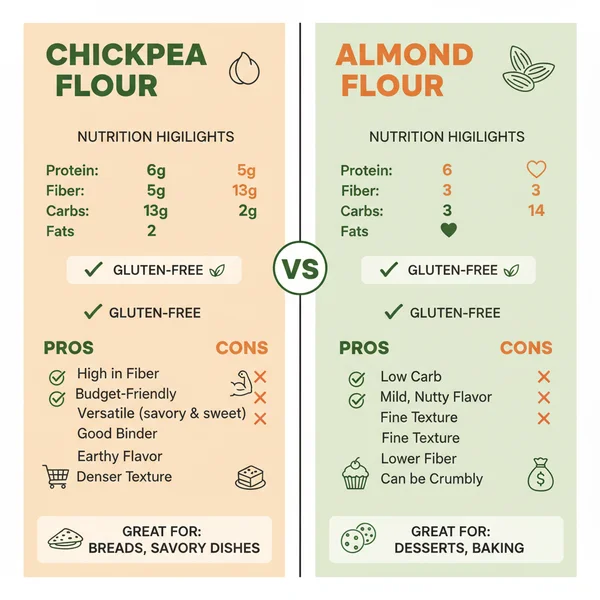
Choose almond flour if you are following a keto or low-carb diet and want a moist, tender crumb in cakes and cookies. Choose chickpea flour if you need a budget-friendly, nut-free binder for savory dishes, fritters, or high-protein vegan omelets. While almond flour excels in sweets, chickpea flour is the undisputed champion of savory structural integrity.
Chickpea Flour vs Almond Flour: At a Glance
| Feature | Chickpea Flour | Almond Flour |
|---|---|---|
| Primary Nutrient | Complex Carbohydrates / Protein | Healthy Fats / Protein |
| Calories (per 1/4 cup) | ~110-120 calories | ~160-180 calories |
| Net Carbs | ~13g (Moderate) | ~2g-3g (Very Low) |
| Flavor Profile | Earthy, nutty, slightly bitter raw | Sweet, buttery, mild nuttiness |
| Binding Ability | Excellent (high starch content) | Poor (requires eggs or binders) |
| Glycemic Index | Low (approx. 44) | Very Low (approx. <15) |
| Price Point | Affordable / Budget-friendly | Premium / Expensive |
Detailed Analysis: Performance and Nutrition
When diving into the chickpea flour vs almond flour debate, it is important to look beyond just the label. Each flour interacts with other ingredients differently, affecting the instructions you must follow during the baking or cooking process.
The Nutritional Breakdown
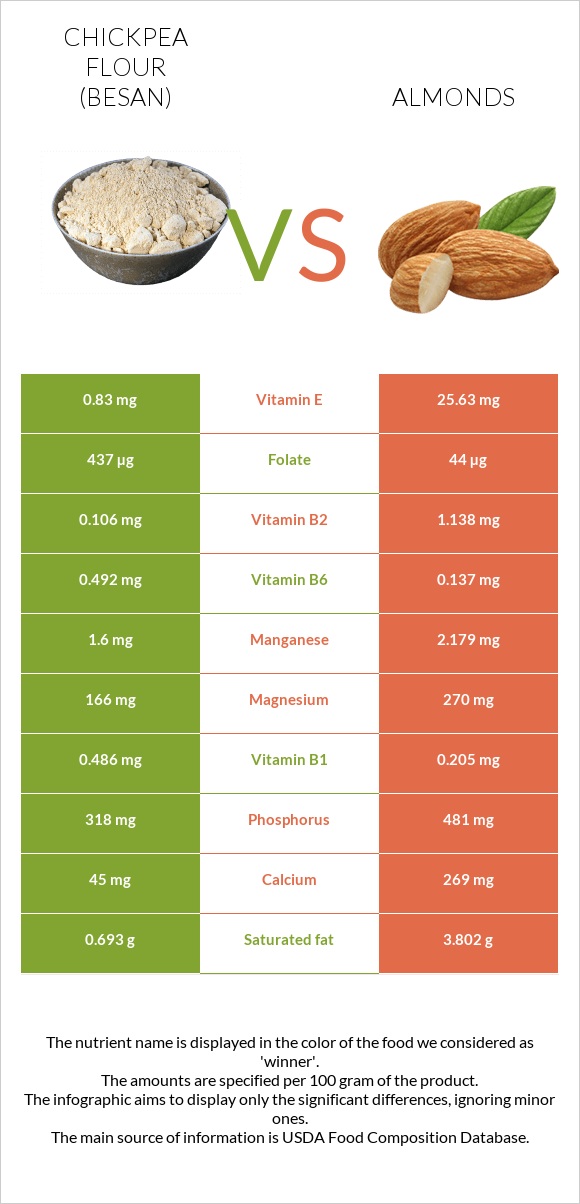
From a calories perspective, chickpea flour is lower in density than almond flour. Because almond flour is made from crushed nuts, it contains a high concentration of monounsaturated fats. While these are heart-healthy fats, they drive the caloric count up significantly. A single recipe for almond flour muffins might yield 12 servings, but each serving will be significantly higher in fat and calories than a chickpea-based alternative.
However, chickpea flour contains more carbohydrates. While these are “slow-burning” complex carbs with a good amount of fiber, they may not fit into a strict ketogenic diet. For those managing diabetes or looking for a stable blood sugar response, almond flour has the edge due to its nearly negligible impact on insulin levels. Conversely, chickpea flour is an excellent source of folate and iron, which are often lacking in many grain-free diets.
Texture and Binding Properties
One of the most striking differences lies in how these flours behave in the oven. Chickpea flour is naturally dense and contains starches that act as a binder. When mixed with water, it creates a “glue-like” consistency that can mimic eggs in vegan cooking. This makes it ideal for instructions that require structural stability, such as flatbreads (socca), crackers, or veggie burgers.
Almond flour lacks these starches. If you try to swap almond flour 1:1 for chickpea flour in a recipe without adding extra binders like eggs, flax meal, or xanthan gum, the result will likely be crumbly and fragile. Almond flour provides moisture and a “tender” mouthfeel, which is why it is preferred for cookies and cakes where a delicate crumb is the goal. However, keep in mind that the prep time for almond flour recipes often involves more careful measuring and sifting to avoid clumps.
Flavor Nuances
The taste of chickpea flour can be polarizing. In its raw form, it has a distinct, almost bitter “beany” flavor. This bitterness disappears completely once the cooking time is sufficient, transforming into a toasted, nutty aroma. Almond flour, conversely, is pleasant even when raw. It adds a natural sweetness to ingredients, meaning you can often reduce the amount of added sugar in your recipe.

When to Choose Each: Scenarios and Best Use Cases
Deciding between chickpea flour vs almond flour usually depends on the specific dish you are preparing and your dietary restrictions. Here are the most common scenarios for each:
Choose Chickpea Flour When:
- You are making savory dishes: It is the perfect base for savory pancakes, crepes, and fritters.
- You need a thickener: Because of its starch content, it works beautifully as a gluten-free thickener for soups, stews, and gravies.
- Budget is a concern: Chickpea flour is significantly cheaper than almond flour, making it more sustainable for daily use.
- You have a nut allergy: It is a safe, legume-based alternative for schools or households with nut sensitivities.
- You want to increase fiber: It offers a higher fiber count per 100g than almost any other gluten-free flour.
Choose Almond Flour When:
- You are on a Keto or Paleo diet: It is the most reliable low-carb flour available for weight management.
- You are baking sweets: Its high fat content results in moist cakes, chewy cookies, and tender brownies.
- You want a breadcrumb substitute: Ground almond flour makes an excellent “breading” for chicken or fish, providing a crunchy, golden crust.
- Flavor is the priority: Its mild, buttery taste complements vanilla, chocolate, and fruit flavors perfectly.
For the best results in gluten-free baking, try using a combination of both flours. A blend of 70% almond flour for moisture and 30% chickpea flour for structure often yields a finished product that mimics traditional wheat flour more closely than either could individually. This is particularly effective in breads where you want a “chew” without the high carb count of wheat.
Practical Tips for Success
To ensure your recipe turns out perfectly, pay close attention to the instructions regarding liquid ratios. Chickpea flour is highly absorbent. If you find your batter is too thick, increase the liquid ingredients slightly. Additionally, because chickpea flour can have a strong flavor, it is often beneficial to let the batter rest for 15-30 minutes of prep time before cooking; this allows the flour to fully hydrate and mellows the taste.
For almond flour, storage is key. Because of its high oil content, almond flour can go rancid quickly if left at room temperature. To extend its shelf life, store it in the refrigerator or freezer. When using it in a recipe, always bring it back to room temperature first to ensure it incorporates properly with other ingredients like butter or coconut oil.
Regarding cooking time, almond flour tends to brown (and burn) much faster than wheat or chickpea flour due to its natural sugars and fats. If you are baking a cake with almond flour, you may need to tent the top with foil halfway through the cooking time to prevent over-browning while the center finishes setting. Chickpea flour, meanwhile, requires a thorough cook to eliminate the “raw bean” taste—never undercook a chickpea-based dish!
Conclusion: Which Flour Wins?
In the battle of chickpea flour vs almond flour, there is no single “better” option—only the “right” option for your specific goals. If your priority is a low-carb, keto-friendly lifestyle with a focus on indulgent textures, almond flour is your best bet despite the higher calories. However, if you are looking for an affordable, high-fiber, and nut-free binder for savory meals, chickpea flour is an indispensable tool in the kitchen. By understanding the strengths of each, you can master any gluten-free recipe with confidence, ensuring perfect servings every time.
❓ Frequently Asked Questions
1
How long does chickpea flour last in fridge?
Chickpea flour can last up to six months in the refrigerator when stored in an airtight container. If kept in a cool, dry pantry, it typically stays fresh for about two to three months. Always check for a musty smell or any signs of moisture before using it in your recipe.
2
Can I make almond flour ahead of time?
Yes, you can make homemade almond flour by pulsing blanched almonds in a food processor. However, be careful not to over-process them, or you will end up with almond butter. Store it in an airtight container in the freezer for up to one year for maximum freshness.
3
What can I substitute for chickpea flour?
Soy flour or quinoa flour are the closest substitutes for chickpea flour due to their high protein content and earthy flavor. If you need a binder, you might try a mixture of all-purpose flour and starch, though the nutritional profile and final texture will vary significantly.
4
How do I know when the cooking time is up?
Dishes made with these flours often require specific visual cues. For chickpea-based batters, look for set edges and a matte surface. For almond flour bakes, wait for a deep golden hue. Always follow the specific instructions to ensure the internal structure has fully stabilized before cooling.
5
Can I freeze almond flour?
Absolutely! Freezing almond flour is highly recommended because its high oil content makes it prone to spoilage. In an airtight bag or container, it can last for over a year. There is no need to thaw it before measuring; it can be used directly from the freezer.