Best Apples for Juicing: Ultimate Guide
Freshly pressed apple juice is a world away from the pasteurized, sugar-laden versions found on grocery store shelves. When you embark on a homemade juice recipe, the quality of your liquid gold depends entirely on your choice of ingredients. Not all apples are created equal; some offer a syrupy sweetness, while others provide a sharp, refreshing acidity that cuts through a heavy breakfast. In this guide, we explore the best apples for juicing to help you achieve the perfect flavor balance. Whether you are looking for a high juice yield or a specific nutritional profile, choosing the right variety will transform your kitchen into a high-end juice bar. Discover which cultivars stand out for their texture, juice content, and flavor longevity.
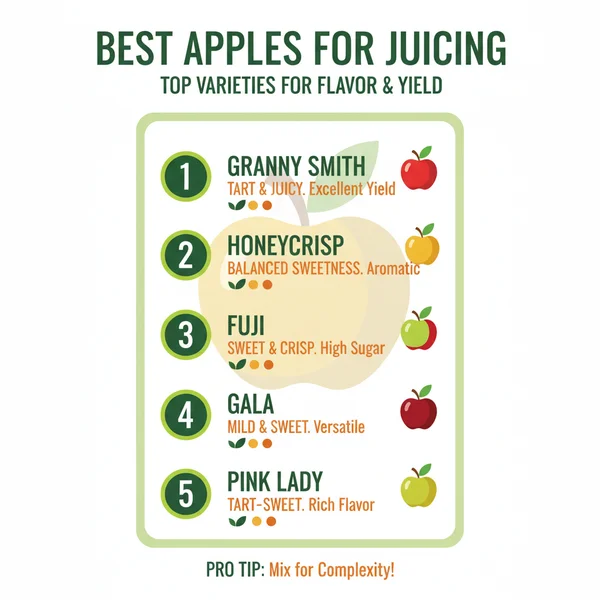
- Granny Smith (Best for Tartness)
- Fuji (Sweetest High-Yield)
- Honeycrisp (The Premium Choice)
- Gala (Best Budget Daily Option)
- Pink Lady (Perfect Sweet-Tart Balance)
- Golden Delicious (Smooth and Mellow)
- Red Delicious (Mild and Antioxidant Rich)
- Braeburn (Complex and Spicy)
- McIntosh (Soft and Fragrant)
- Jazz (Crisp and Zesty)
The Top 10 Best Apples for Juicing
#1: Granny Smith
Granny Smith apples are widely considered one of the best apples for juicing due to their distinctively tart flavor and low sugar content. When used as the primary ingredients in a green juice, they provide a sharp zing that pairs exceptionally well with kale, spinach, and cucumber. Because they are less sweet than other varieties, the total calories in a serving of Granny Smith juice are slightly lower than their red counterparts. Their firm texture makes them easy to process through a centrifugal or masticating juicer, ensuring a quick prep time. If you find pure Granny Smith juice too puckering, it serves as an excellent base to balance out sweeter fruits like pears or pineapples.
#2: Fuji
If you prefer a juice that tastes like liquid candy, the Fuji apple is your top contender. Originating from Japan, this variety is prized for its incredibly high sugar levels and dense, juicy flesh. In any juice recipe, Fuji apples provide a massive yield, meaning you get more servings out of a single bag of fruit compared to mealier varieties. The instructions for juicing Fujis are simple: wash, core (if desired), and feed them through. Because they are so sweet, they are perfect for children or for those who want to avoid adding artificial sweeteners to their drinks. Keep in mind that the high natural sugar content means slightly higher calories per glass, so moderation is key.
#3: Honeycrisp
The Honeycrisp apple is often the most expensive option at the market, but its performance in a juicer justifies the price. As the name suggests, these apples are remarkably crisp and explode with juice when crushed. Using Honeycrisps reduces your overall prep time because their skin is thin and they don’t oxidize (turn brown) as quickly as other varieties. The flavor is a sophisticated blend of honey-sweet and subtle tartness. When calculating servings, you will find that a Honeycrisp often yields up to 20% more liquid by weight than a standard Red Delicious. They are ideal for a single-ingredient recipe where you want the natural complexity of the apple to shine without any additives.
#4: Gala
Gala apples are the reliable workhorse of the juicing world. They are widely available year-round and are typically more affordable, making them one of the best apples for juicing on a daily basis. Galas have a mild, mellow sweetness with a floral aroma that doesn’t overpower other ingredients in a blend. Because they are softer than Honeycrisps, they are very easy on your juicer’s motor, though they may produce a bit more pulp. For a quick morning routine, the prep time is minimal. While they don’t have the sharp “bite” of a Granny Smith, they provide a smooth, consistent base for any fruit and vegetable juice recipe you have in mind.
#5: Pink Lady (Cripps Pink)
Pink Lady apples are a favorite among juice enthusiasts who want a “sparkling” flavor profile. These apples have a high acid content combined with high sugar, resulting in a tangy, refreshing finish. When you follow instructions for a multi-layered juice, Pink Lady apples hold their own against strong flavors like ginger or turmeric. Their juice remains bright and vibrant in color, which makes for a beautiful presentation. Nutritionally, they are excellent ingredients as they are packed with flavonoids. A typical glass of Pink Lady juice provides a decent energy boost with manageable calories, making it a perfect mid-afternoon pick-me-up during a busy workday.
#6: Golden Delicious
Golden Delicious apples are often overlooked, but they are spectacular for juicing if you enjoy a silky, butter-sweet flavor. Unlike the tart Granny Smith, the Golden Delicious is very low in acid. This makes it a great choice for individuals with sensitive stomachs who still want to enjoy a fresh juice recipe. The skin is very thin, so there is no need for peeling, which significantly cuts down on prep time. Because the flesh is softer, it is best to juice these when they are firm and cold; if they become too mealy, they may clog a fine-mesh strainer. They offer a rich, golden color to your servings and a very smooth mouthfeel.
#7: Red Delicious
While often criticized for their tough skin and mealy texture when eaten raw, Red Delicious apples are surprisingly good ingredients for juicing when mixed with other varieties. The dark red skin is exceptionally high in antioxidants, which are transferred into the juice if you use a masticating juicer. The flavor is very mild and simple, which makes it a good “filler” apple to increase your total servings without significantly altering the taste of your blend. Since they have a lower water content than Fujis, you might find the yield slightly lower, but for those watching their calories, they are a solid, low-sugar option that provides a classic apple aroma.
#8: Braeburn
Braeburn apples offer a complex flavor profile that is often described as spicy or cidery. This makes them one of the best apples for juicing during the autumn months when you want a drink that feels warm and robust. They have a very firm texture, which translates to a high liquid yield and very little foam in your juicer. When following a recipe that includes cinnamon or cloves, Braeburns provide the perfect aromatic backdrop. Since they are quite dense, the prep time involves a bit more effort in slicing them to fit your juicer’s chute, but the resulting juice is rich, flavorful, and incredibly satisfying.
#9: McIntosh
McIntosh apples are famous for their unique “vinous” or wine-like flavor. They are very soft and juicy, which means they break down almost instantly in a juicer. This variety is perfect for those who want a thicker, more nectar-like juice. However, because they are soft, the instructions for juicing them usually involve alternating them with harder fruits like carrots or Granny Smiths to keep the juicer screen clear. They contribute a beautiful fragrance to your ingredients list. If you are making a juice recipe that you intend to chill and serve later, McIntosh juice holds its aroma exceptionally well compared to other varieties.
#10: Jazz
A cross between the Gala and the Braeburn, the Jazz apple is a modern favorite that is exceptionally hard and crisp. It has a zesty, fruity flavor that is more intense than a standard Gala. Because of its density, it produces a very clear juice with minimal sediment. It is a fantastic choice for a high-yield recipe where you want a punchy flavor without the extreme tartness of a green apple. The prep time is quick as they don’t bruise easily, and they stay fresh in the crisper drawer for weeks. With a balanced sugar-to-acid ratio, Jazz apples provide high-quality servings that are both refreshing and nutrient-dense.
How to Choose the Best Apples for Your Juice
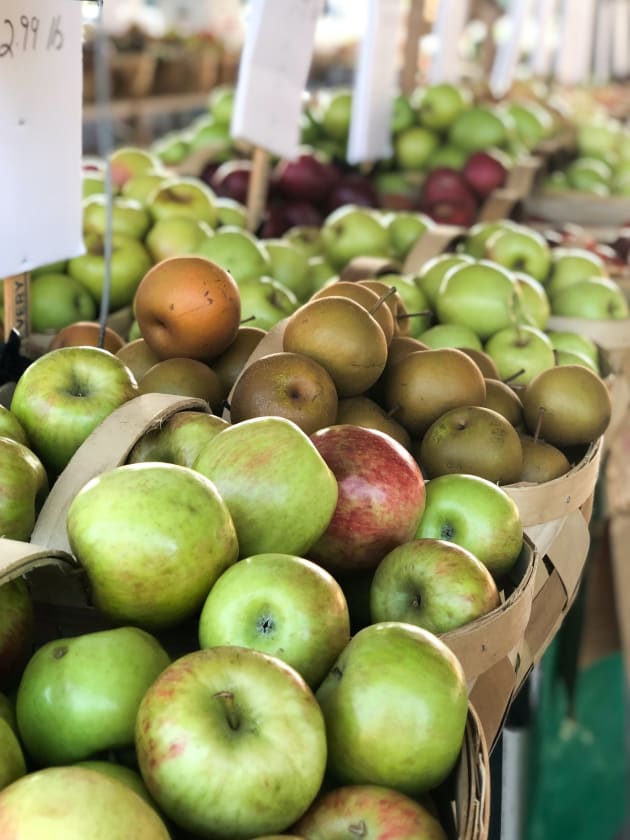
Selecting the right ingredients for your juice goes beyond just picking a variety; it’s about the quality of the individual fruit. When looking for the best apples for juicing, always prioritize firmness. A soft or “mealy” apple will produce more of a sauce than a juice, clogging your equipment and reducing your total servings. Look for apples that feel heavy for their size, as this indicates a high water content. Check the skin for bruises or soft spots, as these can introduce a fermented or “off” flavor to your final recipe.
Additionally, consider the sugar content. If you are monitoring your daily calories, leaning toward tart varieties like Granny Smith or Pink Lady is advisable. Organic apples are often preferred for juicing because you are processing the entire fruit, including the skin where most nutrients—and unfortunately, pesticides—reside. If you cannot find organic, ensure you follow thorough cleaning instructions, using a vinegar wash to remove wax and residues. Remember, there is no “cooking time” involved in fresh juicing, so the raw flavor of the apple is exactly what you will taste in the glass.
- The Power of the Blend: Don’t stick to just one variety. Mix a tart Granny Smith with a sweet Fuji for a balanced flavor profile that mimics premium store-bought cider.
- Temperature Matters: Always juice your apples cold, straight from the refrigerator. Cold apples yield more juice and the flavor is much crisper than room-temperature fruit.
- Prevent Oxidation: Add a small slice of lemon or a teaspoon of lemon juice to your recipe to prevent the juice from browning and to keep the calories low while adding Vitamin C.
Conclusion
Choosing the best apples for juicing is a personal journey that depends on whether you crave sweetness, tartness, or a blend of both. From the sugary Fuji to the zesty Granny Smith, each variety brings its own unique character to your morning glass. By understanding how these ingredients behave in your juicer, you can minimize prep time and maximize your nutritional intake. We recommend starting with a mix of Gala and Pink Lady for a crowd-pleasing balance. Happy juicing, and enjoy the vibrant flavors of fresh, homemade apple juice!
❓ Frequently Asked Questions
1
How long does fresh apple juice last in fridge?
Freshly pressed apple juice typically stays good in the refrigerator for up to 48 to 72 hours. To maintain its vibrant color and nutritional quality, store it in an airtight glass container filled to the top to minimize oxidation. If it smells sour or looks bubbly, discard it immediately.
2
Can I make apple juice ahead of time?
Yes, you can make apple juice up to two days ahead of time. However, because it lacks preservatives, it will begin to oxidize and lose its bright flavor and color quickly. Adding a splash of fresh lemon juice helps preserve the color if you plan to store it briefly.
3
What can I substitute for Granny Smith apples?
If you do not have Granny Smith apples, substitute them with other tart varieties like Braeburn, Pink Lady, or McIntosh. These apples provide the necessary acidity to balance out sweeter ingredients, ensuring your juice isn’t overly sugary while still maintaining a refreshing, crisp finish and a well-rounded flavor profile.
4
How do I know when apples are done juicing?
Apples are finished juicing once the machine stops emitting liquid and the pulp ejected into the waste container appears relatively dry. If the pulp is very wet, you may need to run it through the juicer a second time, depending on your specific juicer’s efficiency and the apple variety used.
5
Can I freeze fresh apple juice?
You can definitely freeze fresh apple juice to extend its shelf life for up to six months. Pour the juice into freezer-safe containers or silicone molds, leaving an inch of headspace for expansion. Thaw in the refrigerator overnight and stir well before drinking to redistribute the natural fruit solids.