Hemp Hearts vs Hemp Seeds: Ultimate Guide
In the world of superfoods, few ingredients have seen a more dramatic rise in popularity than the humble hemp plant. However, as you browse the aisles of your local health food store or scroll through online marketplaces, you are likely to encounter two distinct labels: hemp hearts and hemp seeds. While they originate from the same plant, Cannabis sativa, the difference between the two is far from cosmetic. Understanding the distinction between “hemp hearts vs hemp seeds” is essential for anyone looking to optimize their nutritional intake, enhance their culinary creations, or improve their digestive health. One represents the raw, whole state of the plant’s fruit, while the other is the refined, tender center. This comparison explores the nuances of texture, nutrient density, and kitchen utility to help you decide which belongs in your pantry.
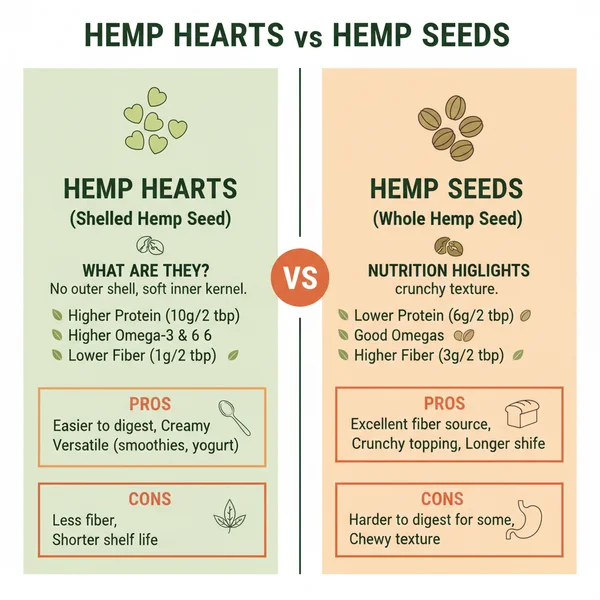
Hemp hearts are the clear winner for most consumers due to their soft texture, high protein bioavailability, and versatility in everyday meals. While whole hemp seeds offer superior dietary fiber, hemp hearts (which are essentially shelled hemp seeds) provide a more concentrated source of Omega fatty acids and a pleasant, nutty flavor that integrates seamlessly into smoothies, salads, and baked goods without the “crunchy” grit of the outer shell.
Hemp Hearts vs Hemp Seeds: Feature Comparison
| Feature | Whole Hemp Seeds | Hemp Hearts (Shelled) |
|---|---|---|
| Texture | Crunchy, hard outer shell | Soft, buttery, and tender |
| Fiber Content | Very high (mostly insoluble) | Low (outer hull removed) |
| Protein Density | Moderate (diluted by hull) | High (concentrated in the core) |
| Taste Profile | Earthy and very nutty | Mild, slightly sweet, creamy |
| Best Usage | Milling into flour or hemp milk | Topping for yogurt, salads, or bowls |
| Digestibility | Can be tough on sensitive stomachs | Easy to digest and absorb |
| Omega-3 & 6 | Good levels per gram | Superior concentration per gram |
Detailed Analysis: Understanding the Differences
To truly understand the “hemp hearts vs hemp seeds” debate, we must look at the processing. A whole hemp seed is the entire fruit of the hemp plant. It is encased in a hard, fibrous outer shell (the hull). When you remove that shell through a mechanical “hulling” process, the soft, inner kernel that remains is what we call a hemp heart. This simple physical change creates two very different culinary experiences.

Whole Hemp Seeds: The Fiber Powerhouse
Whole hemp seeds are a nutritional “time capsule.” Because they retain their outer shell, they are incredibly high in insoluble fiber. This makes them excellent for digestive regularity, acting as a “broom” for the digestive tract. However, the shell is quite hard—comparable to a popcorn kernel that hasn’t fully popped. For this reason, many people find eating whole seeds straight from the bag to be unpleasant. They are best utilized when ground into a meal or used as the primary ingredients in homemade hemp milk, where the solids are strained out after blending.
Hemp Hearts: The Gourmet Superfood
Hemp hearts are what most people are actually looking for when they want to upgrade their diet. By removing the hull, manufacturers expose the nutrient-dense core. Hemp hearts are rich in Gamma-Linolenic Acid (GLA) and contain all nine essential amino acids, making them a complete plant-based protein. From a culinary perspective, they are a dream. Their soft texture means they disappear into a recipe for smoothies or muffins, adding a boost of healthy fats without changing the mouthfeel. Because the weight of the heavy shell is removed, a single serving of hemp hearts contains more protein and calories from healthy fats than the same weight of whole seeds.
Nutritional Comparison and Serving Sizes
When looking at the nutrition label, the differences become stark. For typical servings of three tablespoons (approx. 30 grams), hemp hearts usually contain about 170-180 calories, whereas whole seeds may be lower in calories but significantly higher in carbohydrates due to the fiber in the shell. Hemp hearts provide roughly 10 grams of protein per serving, making them more efficient for athletes and those on a keto or plant-based diet. Whole seeds, while lower in protein by volume, are the better choice for those specifically targeting a high-fiber intake to manage blood sugar or gut health.

Incorporating Hemp into Your Kitchen Routine
Adding these seeds to your diet doesn’t require a complex recipe. In fact, one of the best ways to enjoy the benefits of hemp is through a simple homemade hemp milk, which showcases how both versions can be used. If you are using whole seeds, the instructions remain simple, though the prep time is slightly longer because you must strain the liquid to remove the gritty shells. If you use hemp hearts, straining is optional, as the hearts blend into a perfectly creamy consistency.
For a basic hemp milk, the cooking time is zero as no heat is required. You simply combine 1 cup of hemp (hearts or seeds) with 4 cups of water in a high-speed blender. The total prep time is less than five minutes. If you use hearts, you retain all the nutrients in the liquid. If you use whole seeds, you’ll end up with a high-fiber pulp that can be repurposed into crackers or bread ingredients, ensuring nothing goes to waste.
When to Choose Each: Scenarios for Success
Choosing between hemp hearts and hemp seeds depends entirely on your health goals and how you plan to use them in the kitchen. Here is a breakdown of the best scenarios for each:
Choose Hemp Hearts If:
- You want a protein boost: If you are adding hemp to a post-workout smoothie or morning oatmeal, hearts provide the most concentrated protein.
- Texture matters: If you are sprinkling them over avocado toast, yogurt, or salads, the buttery softness of hemp hearts is far superior.
- You have a sensitive digestive system: The heavy insoluble fiber in whole seeds can be irritating for some; hearts are much gentler on the gut.
- You are following a Keto diet: Hemp hearts have a higher fat-to-carb ratio, making them a staple for low-carb lifestyles.
Choose Whole Hemp Seeds If:
- You are on a budget: Whole seeds are often significantly cheaper than processed hemp hearts.
- You need more fiber: If your primary goal is to increase dietary fiber, the whole seed is one of the densest sources available.
- You are making “milled” products: If you have a powerful spice or coffee grinder, you can mill whole seeds into a nutritional flour for baking.
- You enjoy a “crunch”: Some people like the poppy-seed-like crunch of whole seeds on top of hearty artisan breads.
For 90% of home cooks, hemp hearts are the better investment. Their versatility and superior nutrient absorption make them much easier to incorporate into daily habits. However, if you are a “from-scratch” enthusiast who enjoys making your own plant milks and flours, keeping a bag of whole hemp seeds in the freezer can be a cost-effective way to add bulk fiber to your diet.
Conclusion
In the “hemp hearts vs hemp seeds” comparison, the best choice ultimately depends on whether you value convenience and protein (hearts) or fiber and cost-effectiveness (whole seeds). Hemp hearts are the refined, user-friendly version of the seed, perfect for almost any recipe where a mild, nutty flavor is desired. Whole seeds are the rustic, fiber-heavy alternative best suited for processing into other forms. Regardless of your choice, both options offer a wealth of Omega fatty acids and essential minerals, making them a worthy addition to any health-conscious pantry.
❓ Frequently Asked Questions
1
How long does hemp last in the fridge?
Both hemp seeds and hearts should be stored in an airtight container in the refrigerator to maintain freshness. When kept cool, they typically last for six to twelve months. If stored at room temperature, the natural oils may go rancid more quickly, which negatively affects the flavor and nutritional profile.
2
Can I make hemp milk ahead of time?
Yes, you can easily make homemade hemp milk by blending hemp hearts with water and straining if desired. It lasts about three to five days in the refrigerator. Since it contains no stabilizers, it may separate naturally, so be sure to give the container a good shake before each use.
3
What can I substitute for hemp hearts?
If you need a substitute in a recipe, sunflower seeds or chia seeds are excellent options. They provide a similar nutritional profile and texture. For a nuttier flavor similar to hemp, toasted sesame seeds or finely chopped walnuts can also work well in salads, smoothies, and various healthy baked goods.
4
How do I know when hemp is spoiled?
You can tell if hemp seeds or hearts have gone bad by their smell and taste. Fresh hemp has a mild, nutty aroma. If they smell paint-like, sour, or overly bitter, the oils have likely oxidized. Always check the expiration date on the package and look for mold.
5
Can I freeze hemp seeds?
Freezing is an excellent way to extend the shelf life of hemp products, especially if you buy them in bulk. When stored in a freezer-safe, airtight bag or container, they can stay fresh for up to a year or more without losing their essential omega-3 and omega-6 fatty acids.