
What to Do with Sugar Cane: Ultimate Guide
Sugar cane is an incredibly versatile plant that can be processed into fresh juice, used as a natural skewer for grilling, or chewed raw as a sweet snack. At home, you can peel the tough outer rind to reveal the fibrous core, which can then be pressed for juice or infused into syrups and desserts. Beyond its role as a sweetener, it serves as a flavoring agent in savory dishes, a base for fermented beverages like rum, and even as a sustainable mulch for gardening.

The Versatility of Sugar Cane: A Deep Dive
Sugar cane (Saccharum officinarum) is far more than just the source of granulated white sugar found in a pantry. It is a perennial grass that thrives in tropical climates, storing its energy in the form of sucrose within its tall, fibrous stalks. When you find yourself with raw sugar cane, you are holding a complex ingredient that offers a unique, earthy sweetness punctuated by grassy and floral notes. Unlike refined sugar, raw sugar cane juice contains trace minerals like potassium, magnesium, and iron, making it a popular “functional” beverage in many parts of the world.
The structure of the cane is the primary challenge for most home cooks. The exterior is a hard, protective rind that is rich in silica, making it inedible and tough on knife blades. Once this layer is removed, the interior “pith” is a bundle of vascular tissues soaked in sweet sap. This sap can be extracted through high-pressure rollers in commercial settings or via a heavy-duty juicer or blender at home.
In global cuisines, sugar cane is utilized in both its liquid and solid forms. In Vietnam, it is famously used as a savory skewer for minced shrimp (Chao Tom), where the heat of the grill releases the cane’s sugar, caramelizing the meat from the inside out. In the Caribbean and Brazil, it is the fundamental ingredient for aguardiente and cachaça. Understanding what to do with sugar cane requires looking at it not just as a sweetener, but as a structural and aromatic tool in the kitchen.
Processing Raw Sugar Cane: A Step-by-Step Recipe
If you have acquired fresh stalks, the most common and rewarding way to use them is by making a traditional, refreshing juice. While industrial presses are standard, you can achieve excellent results with common kitchen tools if you follow the correct instructions. Below is a foundational recipe for a Ginger-Lime Sugar Cane cooler.
Fresh Sugar Cane Juice Recipe
- Prep time: 25 minutes
- Cooking time: 0 minutes
- Servings: 2 servings
- Calories: 180 kcal per serving
Ingredients
- 2-foot length of fresh sugar cane
- 1 tablespoon fresh ginger, peeled and sliced
- 1 large lime, juiced
- 1 cup cold water (optional, for blending)
- Ice cubes for serving
Instructions
- Cleaning the Stalk: Start by scrubbing the outside of the sugar cane under cold running water. Use a stiff brush to remove any dirt or debris trapped in the nodes (the rings around the stalk).
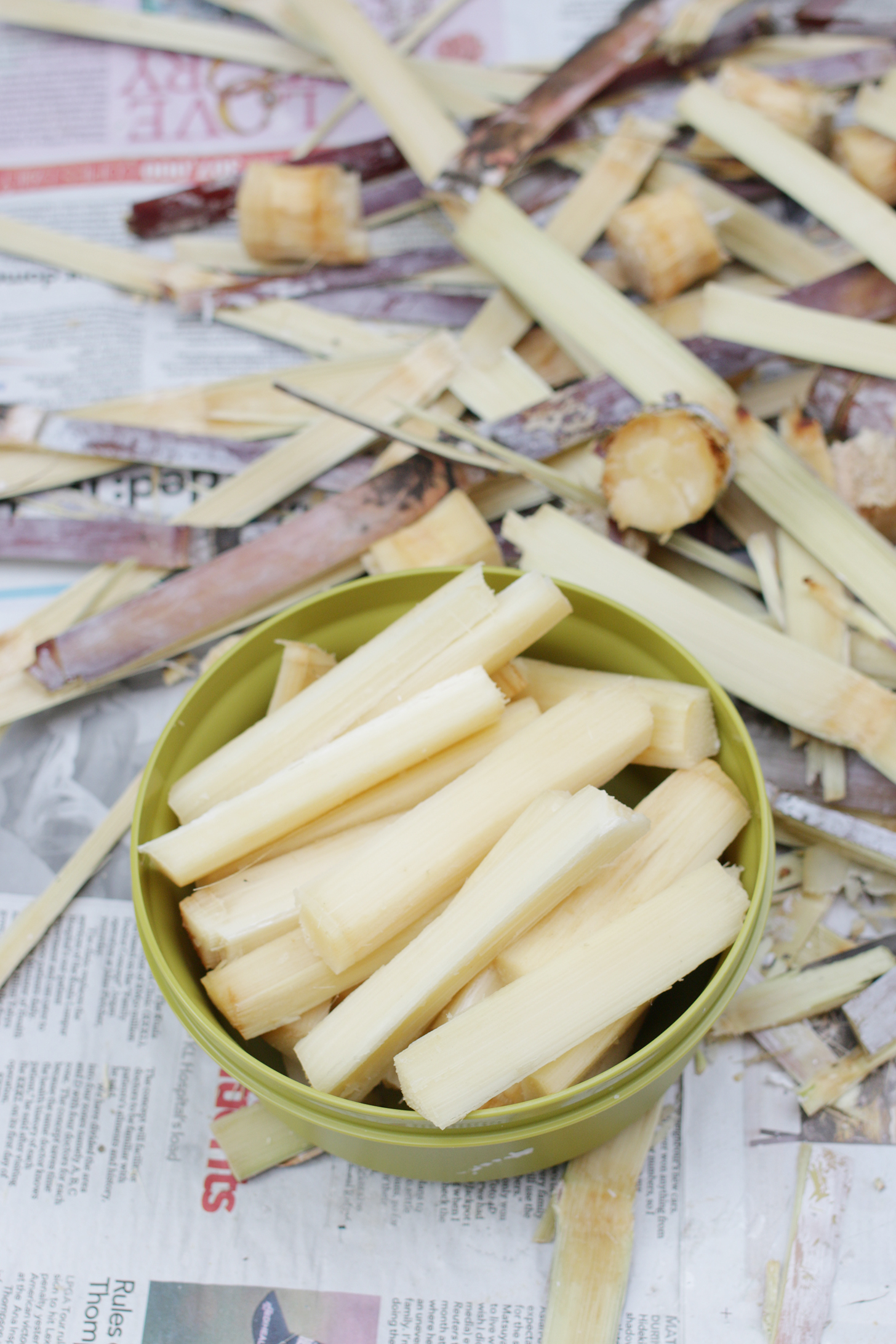
- Peeling the Rind: Use a very sharp chef’s knife or a heavy-duty cleaver. Cut the cane into manageable 6-inch sections. Stand each section upright on a stable cutting board and carefully slice downward to remove the green/yellow outer bark. Always cut away from your body.
- Slicing into Batons: Once the pith is exposed, slice the cane into thin strips or small cubes. This is essential to prevent damaging your blender or juicer.
- Extraction: If you have a masticating juicer, feed the strips through slowly. If using a high-powered blender, add the sugar cane cubes, ginger, and water. Blend on the highest setting for 2-3 minutes until the fibers are completely broken down.
- Straining: Pour the mixture through a nut milk bag or a fine-mesh sieve lined with cheesecloth. Squeeze firmly to extract every drop of liquid. Discard the dry, woody pulp (bagasse).
- Flavoring: Stir in the fresh lime juice. The acidity of the lime perfectly balances the deep sweetness of the cane.
- Serving: Pour over ice and consume immediately, as fresh juice oxidizes and loses flavor quickly.
Creative Culinary Applications for Sugar Cane
Once you have mastered the basic extraction, you can explore more advanced ways to utilize sugar cane in your cooking.
Natural Grilling Skewers
One of the most effective ways to use sugar cane is as a replacement for bamboo skewers. By cutting the peeled cane into sturdy, 5-inch pointed sticks, you create a flavor-infusing tool. As the meat or seafood grills, the heat causes the sugar cane juices to seep into the center of the food. This is particularly effective with ground pork, minced prawns, or chicken kebabs. The subtle sweetness provides a counterpoint to smoky char and spicy marinades.
Infused Simple Syrups
Instead of using white sugar to make a simple syrup for cocktails or coffee, you can simmer peeled sugar cane chunks in water. By boiling the pith for 30-40 minutes, you create a “cane water” that can be reduced further into a rich, golden syrup. This syrup carries the botanical profile of the plant, adding depth to Mojitos, Caipirinhas, or even your morning oatmeal.
Chewing for Oral Health
In many cultures, sugar cane is consumed by simply chewing on the peeled pith. As you chew, the sweet juice is released, and the fibrous texture of the plant acts as a natural mechanical cleanser for the teeth and gums. While it is high in sugar, the act of chewing the raw fiber is a traditional practice for strengthening the jaw and cleaning the mouth.
Important Considerations and Safety
Working with sugar cane requires a level of caution and awareness that differs from standard fruits and vegetables.
Knife Safety: The most common mistake is using a dull knife or a vegetable peeler. A vegetable peeler will not penetrate the rind and is likely to slip, causing injury. Use a heavy, sharp knife and ensure your cutting surface is non-slip.
Selecting Quality Stalks: When buying sugar cane, look for stalks that are heavy for their size, indicating they are full of juice. Avoid any stalks that show significant reddening inside the pith (often called “red rot”), as this indicates fungal growth and will result in a sour or fermented taste. The exterior should be firm and free of soft spots or excessive cracking.
Storage and Spoilage: Raw sugar cane stalks can last for up to two weeks in the refrigerator if wrapped in plastic to prevent drying out. However, once the juice is extracted, it is highly perishable. Due to its high sugar content, it begins to ferment almost immediately. It should be consumed within 24 hours or frozen in airtight containers.
Health Context: While sugar cane juice is a “natural” product, it is primarily composed of sucrose. Individuals monitoring their blood sugar levels or caloric intake should consume it in moderation. Each serving of juice is nutrient-dense but also high in calories compared to water or unsweetened tea.
- Enhance the Color: Adding a splash of citrus (lime or calamansi) not only improves flavor but also prevents the juice from turning a dark, unappetizing brown through oxidation.
- Don’t Waste the Pulp: The leftover fiber (bagasse) is excellent for the garden. It is high in carbon and makes for a fantastic mulch that helps retain soil moisture.
- Softening the Stalk: If the cane feels too woody to cut, briefly soaking the unpeeled sections in warm water can sometimes make the rind slightly more pliable.
- Freezing for Later: You can freeze peeled sugar cane batons. When you’re ready to make a drink, use them as “sweet ice cubes” that chill the beverage without diluting it.
Conclusion
Sugar cane is a remarkable ingredient that bridges the gap between a raw agricultural product and a refined culinary delicacy. Whether you are extracting its vibrant juice for a refreshing beverage, using the stalks as aromatic skewers for the grill, or crafting a homemade botanical syrup, the possibilities are vast. By following proper safety techniques for peeling and processing, you can unlock a world of flavor that goes far beyond standard sweeteners. Next time you see these tall stalks at the market, you can confidently bring them home, knowing exactly how to transform them into something delicious.
❓ Frequently Asked Questions
1
How long does sugar cane last in fridge?
Fresh, unpeeled sugar cane stalks can last up to two weeks in the refrigerator when wrapped in plastic. Once peeled or cut, the stalks should be kept submerged in water or tightly wrapped and used within three to five days to maintain their moisture and prevent fermentation.

2
Can I make sugar cane juice at home?
Making juice at home is possible but challenging without a heavy-duty press. You can peel and chop the cane into small pieces, blend them with a little water in a high-speed blender, and then strain the pulp through a fine mesh cloth or nut milk bag to extract the liquid.
3
What can I substitute for sugar cane?
While nothing perfectly mimics the texture, you can substitute sugar cane skewers with bamboo sticks soaked in simple syrup. For the flavor in recipes, use palm sugar, piloncillo, or raw turbinado sugar. For the juice, a mixture of water and brown sugar with a squeeze of lime works well.
4
How do I know when sugar cane is done?
Sugar cane itself doesn’t cook in the traditional sense. When used as skewers, it is done when the protein around it is cooked. When making juice, the cane is done when the fibrous pulp feels dry and all the sweet liquid has been extracted through pressing or straining.
5
Can I freeze sugar cane?
Yes, you can freeze sugar cane stalks. Peel and cut them into sticks or rounds first. Place them in airtight freezer bags for up to six months. They make excellent ice cube replacements in tropical drinks, slowly releasing sweetness as they thaw without diluting the beverage’s flavor profile.