Vegetable Bone Broth Recipe: Ultimate & Nutritious
The rise of plant-based nutrition has led many home cooks to seek a vegetable bone broth recipe that mimics the depth, mineral density, and viscosity of traditional animal-based stocks. While the term “bone broth” technically refers to animal connective tissue, the vegetable version focuses on extracting maximum nutrients from roots, fungi, and sea vegetables. This comprehensive chart and guide serve as a roadmap for mastering the art of the one-pot nutrient extraction. Whether you are using an instant pot for speed or a slow cooker for a long, gentle simmering process, the data below will help you choose the right ingredients and methods to achieve a hearty, creamy, and deeply satisfying comfort food base for all your culinary creations.
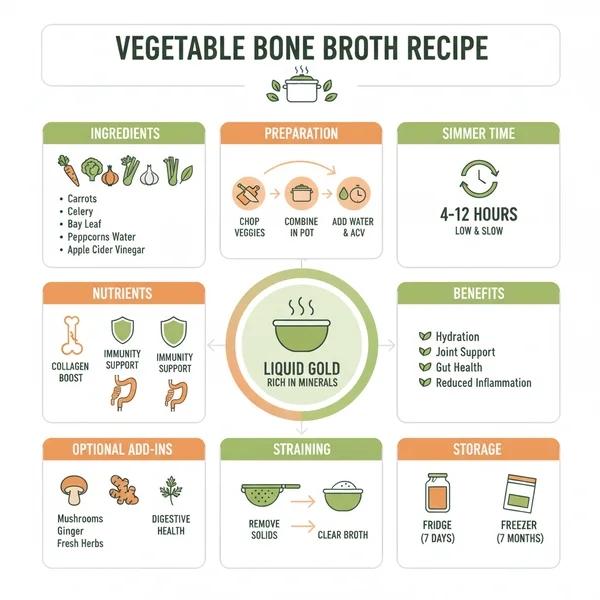
The most effective vegetable bone broth recipe relies on a combination of high-umami ingredients (like mushrooms and kombu) and long simmering times to replicate the collagen-rich mouthfeel of traditional stock. Using a pressure cooker reduces time by 70%, while a slow cooker maximizes mineral extraction from hardy root vegetables.
The Ultimate Vegetable Bone Broth Comparison Matrix
| Method & Type | Primary Equipment | Cooking Duration | Texture & Body | Key “Bone Broth” Substitute | Best Usage |
|---|---|---|---|---|---|
| The Classic Simmer | Stock Pot | 3–5 Hours | Light but complex | Dried Shiitake Mushrooms | General cooking & light soups |
| Pressure Infusion | Instant Pot | 45–60 Minutes | Clear and concentrated | Nutritional Yeast & Kombu | Quick weeknight meal prep |
| Overnight Extraction | Slow Cooker | 12–24 Hours | Dark, rich, and earthy | Burdock Root & Wakame | Sipping for health & immunity |
| Roasted Umami Base | Oven + Pot | 4 Hours | Hearty and “meaty” | Tomato Paste & Miso | French Onion or Beef-less stews |
| Creamy Root Blend | One-Pot & Blender | 1.5 Hours | Velvety and opaque | Starchy Potatoes & Cashews | Creamy chowders and bisques |
| Mineral Scraps | Any Pot | 2 Hours | Thin but nutrient-dense | Vegetable Peels & Ends | Zero-waste base for grains |
| Adaptogenic Brew | Stovetop | 6 Hours | Medicinal and herbal | Reishi & Astragalus Root | Wellness shots and tonics |
How to Use This Chart
This chart is designed to be your primary reference when deciding which vegetable bone broth recipe suits your current schedule and dietary needs. To use the table effectively, start by identifying the “Primary Equipment” you have available. If you are in a rush, the instant pot row highlights the most efficient path to a concentrated stock. However, if you are seeking a deep comfort food experience with maximum mineral extraction, the slow cooker or “Overnight Extraction” method is your best bet.
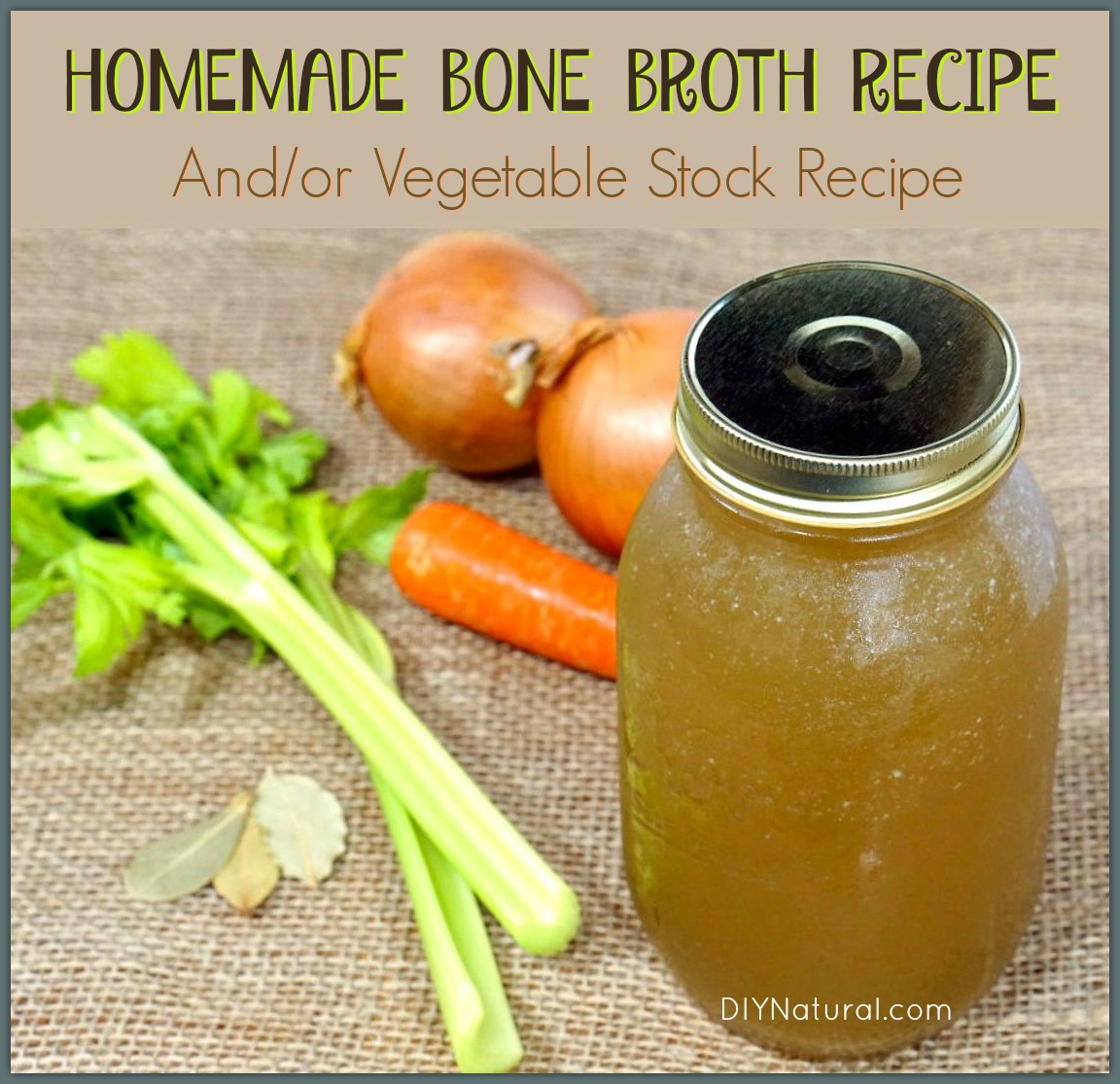
Next, look at the “Key Bone Broth Substitute” column. Unlike traditional animal stock, which relies on gelatin for body, vegetable-based versions require umami-rich ingredients to provide that same “mouthfeel.” If you want a creamy texture, focus on the “Creamy Root Blend” row. If you prefer a clear, savory liquid for hearty soups, prioritize the “Roasted Umami Base” or “Classic Simmer” methods. By matching your desired outcome with the corresponding method and duration, you ensure that your one-pot creation is both efficient and flavorful every time you cook.
Detailed Breakdown of Broth Categories
Understanding the nuances of each vegetable bone broth recipe is essential for achieving professional-grade results at home. The magic of a high-quality stock lies not just in the ingredients, but in the thermal process applied to them. Let’s delve into why these specific categories work so well for those seeking a plant-based alternative to bone broth.
The Role of Simmering and Equipment: The simmering process is the heart of any broth. When using a traditional stock pot, the gentle agitation of water breaks down the cell walls of vegetables like carrots, celery, and onions, releasing their sugars and minerals. However, when you switch to an instant pot, the high pressure forces moisture into the ingredients much faster, resulting in a very clear, clean-tasting broth. Conversely, a slow cooker keeps temperatures just below a rolling boil for extended periods, which is ideal for “medicinal” broths using dried mushrooms or seaweed, as it extracts delicate nutrients without scorching them.
Achieving the “Bone Broth” Profile: To replicate the hearty nature of bone broth, you must look to the “umami” fifth taste. Dried shiitake mushrooms, kombu (sea kelp), and nutritional yeast provide the glutamates that mimic the savory depth of meat. For the creamy, gelatinous texture usually provided by collagen, ingredients like burdock root or even a small amount of starches from potatoes or oats can be introduced. These ingredients create a “body” in the liquid that prevents it from feeling like mere vegetable water.
One-Pot Convenience and Flavor Layering: A one-pot vegetable bone broth recipe often starts with a roasting phase. By browning your vegetables in the pot before adding water (a technique common in the “Roasted Umami” method), you trigger the Maillard reaction. This adds a caramel-like sweetness and a darker color to the stock, making it the ultimate comfort food for winter months. This layering of flavors—sautéing, deglazing, and then long-term extraction—is the secret to a broth that tastes as if it has been aging for days.
Nutritional Density: Finally, the “Mineral Scraps” and “Adaptogenic” methods focus on health. By using every part of the vegetable—including the nutrient-rich skins of onions and the ends of kale—you create a liquid that is essentially a bioavailable mineral supplement. Adding adaptogens like ginger or turmeric enhances the anti-inflammatory properties of the broth, making it a functional food that supports the immune system while providing a delicious base for any soup or stew.
- Don’t Over-Boil: Keep your stovetop stock at a gentle bubble. A hard boil can make the broth cloudy and may turn some vegetables (like broccoli or cabbage) bitter.
- Deglaze the Pot: If you roast your vegetables first in a one-pot setup, use a splash of apple cider vinegar or white wine to scrape up the browned bits (fond) before adding the rest of your water.
- The “Body” Secret: For a creamy mouthfeel without dairy, add a handful of dried porcini mushrooms or a piece of kombu; both release natural thickeners and deep savory notes.
- Storage Hack: Freeze your vegetable bone broth recipe results in silicone ice cube trays for easy portioning into sauces and sautés.
Conclusion
Whether you are looking for a hearty base for a winter stew or a light, mineral-rich liquid for daily sipping, mastering the vegetable bone broth recipe is a vital skill for any home cook. By choosing the right method—be it the speed of an instant pot, the patience of a slow cooker, or the traditional simmering of a one-pot stovetop stock—you can create a versatile comfort food that rivals any animal-based alternative. Use the chart above to guide your ingredient selection and cooking times, and enjoy the deep, creamy, and nourishing results of your plant-based culinary efforts.
❓ Frequently Asked Questions
1
How long does vegetable bone broth last in fridge?
Your homemade broth will stay fresh and flavorful in an airtight container for up to 5 to 7 days. Always ensure the broth has cooled completely before sealing the jar. If you notice any sour smell or cloudiness beyond the natural sediment, it is time to discard it.
2
Can I make vegetable bone broth ahead of time?
Yes, this recipe is perfect for batch cooking and meal prep. You can make a large pot over the weekend and portion it out for the week ahead. It actually tastes even better the next day after the flavors have had more time to meld together in the fridge.
3
What can I substitute for shiitake mushrooms?
If you don’t have shiitake, dried porcini mushrooms or even fresh cremini mushrooms work well. To achieve that deep umami flavor without mushrooms, try adding a tablespoon of white miso paste or a splash of tamari at the end of the cooking process for a savory boost.
4
How do I know when vegetable bone broth is done?
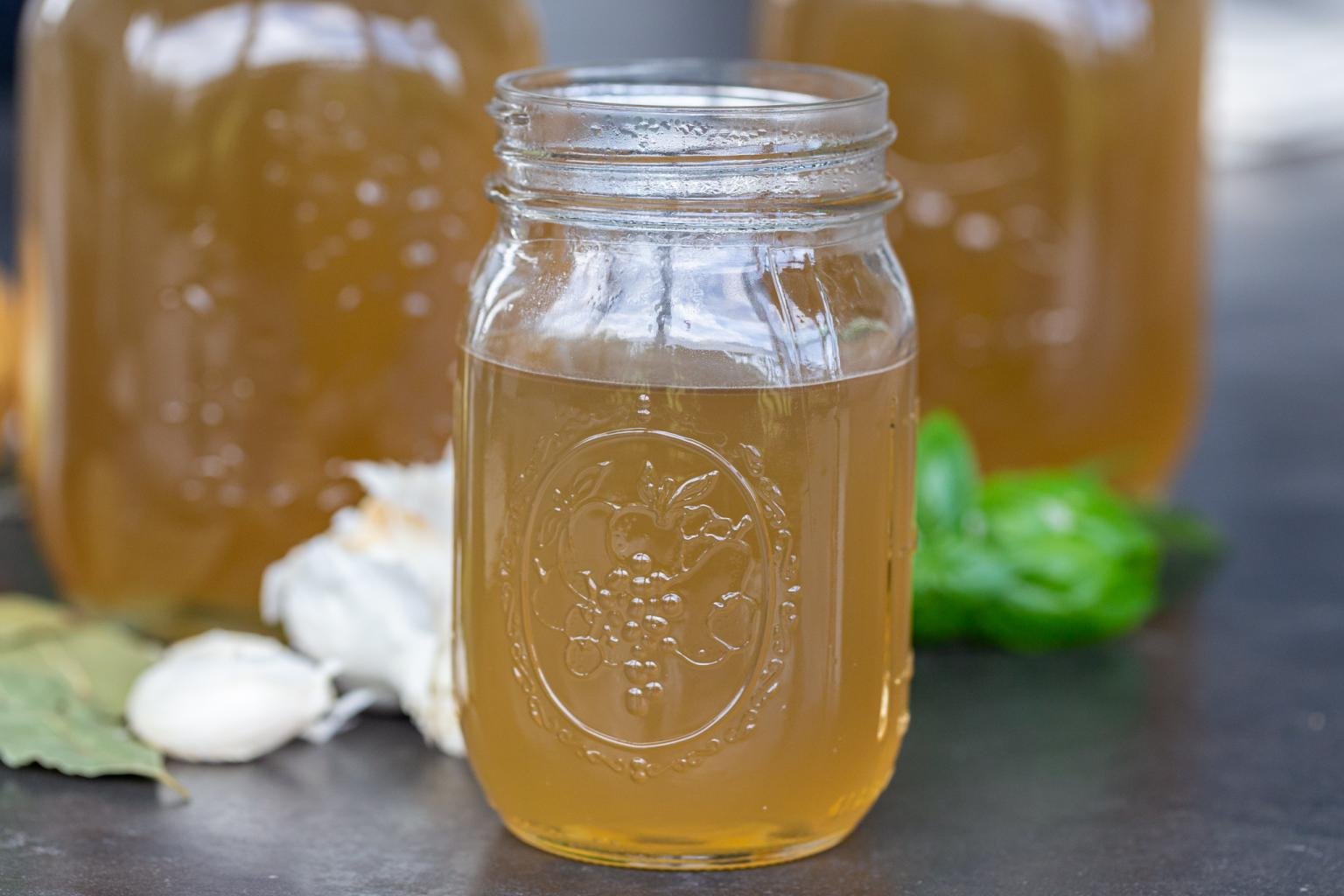
The broth is ready when it has reached a deep amber color and the liquid has reduced by about one-third. The aroma should be rich and savory. Taste a spoonful; it should feel hearty and full-bodied on the palate rather than thin or tasting like plain water.
5
Can I freeze vegetable bone broth?
Absolutely! This broth freezes beautifully for up to 6 months. Use silicone freezer molds or ice cube trays for small portions, or freezer-safe bags for larger amounts. This makes it incredibly easy to grab exactly what you need for a quick sauté or a comforting mug of broth.