Difference Between Hunger and Appetite: Ultimate Guide
Understanding the internal cues that drive us to eat is a fundamental part of maintaining a healthy lifestyle. However, many people struggle to distinguish between two very different physiological and psychological states: hunger and appetite. While we often use these terms interchangeably in daily conversation, knowing what is the difference between hunger and appetite can be the key to better weight management and a more mindful relationship with food. Hunger is a biological necessity, a primitive signal from the body that it requires fuel. In contrast, appetite is a psychological desire to eat, often triggered by sensory input or emotional states rather than a physical need for energy. This comparison explores the nuances of these two drives, helping you navigate your body’s signals with greater clarity.
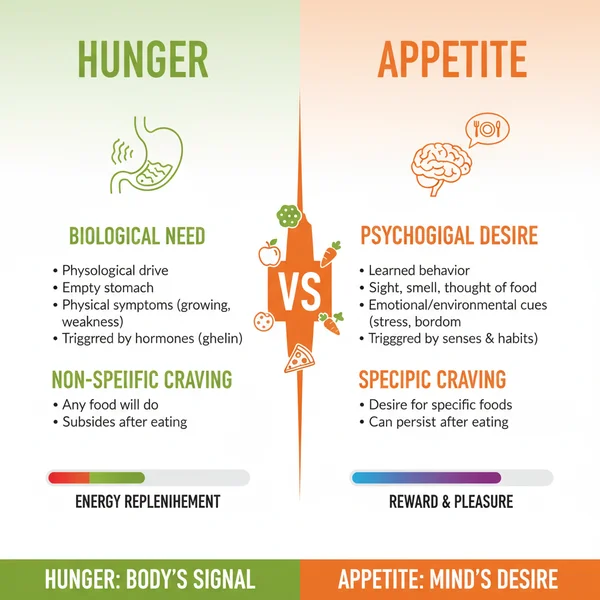
Hunger is a physical “need” driven by your body’s demand for calories and nutrients to function, manifesting as stomach growling or fatigue. Appetite is a “want” driven by the senses, emotions, or the thought of a delicious recipe, even if your stomach is physically full. To maintain health, one should prioritize responding to hunger while mindfully managing appetite.
Comparison Table
| Feature | Physical Hunger | Psychological Appetite |
|---|---|---|
| Primary Trigger | Low blood sugar, empty stomach, ghrelin hormone | Sight, smell, social settings, or emotions |
| Onset Speed | Gradual; builds over time since the last meal | Sudden; often triggered by a specific stimulus |
| Physical Symptoms | Stomach growling, lightheadedness, irritability | Salivation, “mouth-watering,” mental cravings |
| Food Specificity | Low; almost any nutritious food sounds good | High; craving a specific recipe or taste |
| Satiety Signal | Feeling of fullness/satisfaction after eating | Often leads to overeating; can persist after fullness |
| Impact of Time | Increases as the prep time for a meal drags on | May fade if the distraction is removed |
| Biological Purpose | Survival and energy maintenance | Pleasure, reward, and social connection |
Detailed Analysis
When analyzing the difference between hunger and appetite, we must first look at the biological ingredients that make up these sensations. Hunger is the body’s “emergency broadcast system.” It is regulated primarily by the hypothalamus and hormones like ghrelin (the hunger hormone) and leptin (the fullness hormone). When your stomach is empty for a prolonged period, it produces ghrelin, which travels to the brain to signal that the body’s calories are running low. This is a survival mechanism that ensures we seek out nourishment. Because hunger is purely functional, the body isn’t particularly picky about the source of energy. Whether it is a simple piece of fruit or a complex 15-ingredient meal, hunger is satisfied once the energy deficit is corrected. The instructions from the brain are clear: find fuel now.

The pros of hunger are that it provides a reliable metric for when to eat. If you follow your body’s natural hunger cues, you are less likely to experience the metabolic “crash” associated with low blood sugar. However, the downside is that hunger can impair judgment. If you wait too long to eat, your hunger becomes so intense that you might ignore healthy instructions for meal planning and instead grab the quickest, most processed option available. This is why managing the cooking time of your meals is essential; if the prep time is too long while you are already ravenous, you are more likely to snack on calorie-dense, low-nutrient foods.
Appetite, on the other hand, is a much more complex psychological construct. It is the desire to eat food, which can exist entirely independent of hunger. You might have just finished a large meal with multiple servings, feeling physically full, but the moment a dessert recipe is mentioned or the smell of fresh cookies wafts through the air, your appetite is stimulated. Appetite is heavily influenced by the environment. The sensory appeal of a dish—its color, texture, and aroma—can trigger the brain’s reward system, releasing dopamine. This is why we often have “room for dessert” even when our stomachs are at capacity.
The pros of appetite include the enjoyment of food and the cultural significance of eating. It allows us to appreciate the culinary arts and enjoy social gatherings. However, the cons are significant: an unregulated appetite is the leading cause of overconsumption. Since appetite isn’t based on a physical need for calories, it doesn’t have a “stop” switch in the same way hunger does. If we eat solely based on appetite, we risk ignoring the body’s satiety signals, leading to weight gain and metabolic issues. In modern society, where hyper-palatable foods are designed with specific ingredients to trigger our reward centers, appetite often overrides our biological hunger cues.
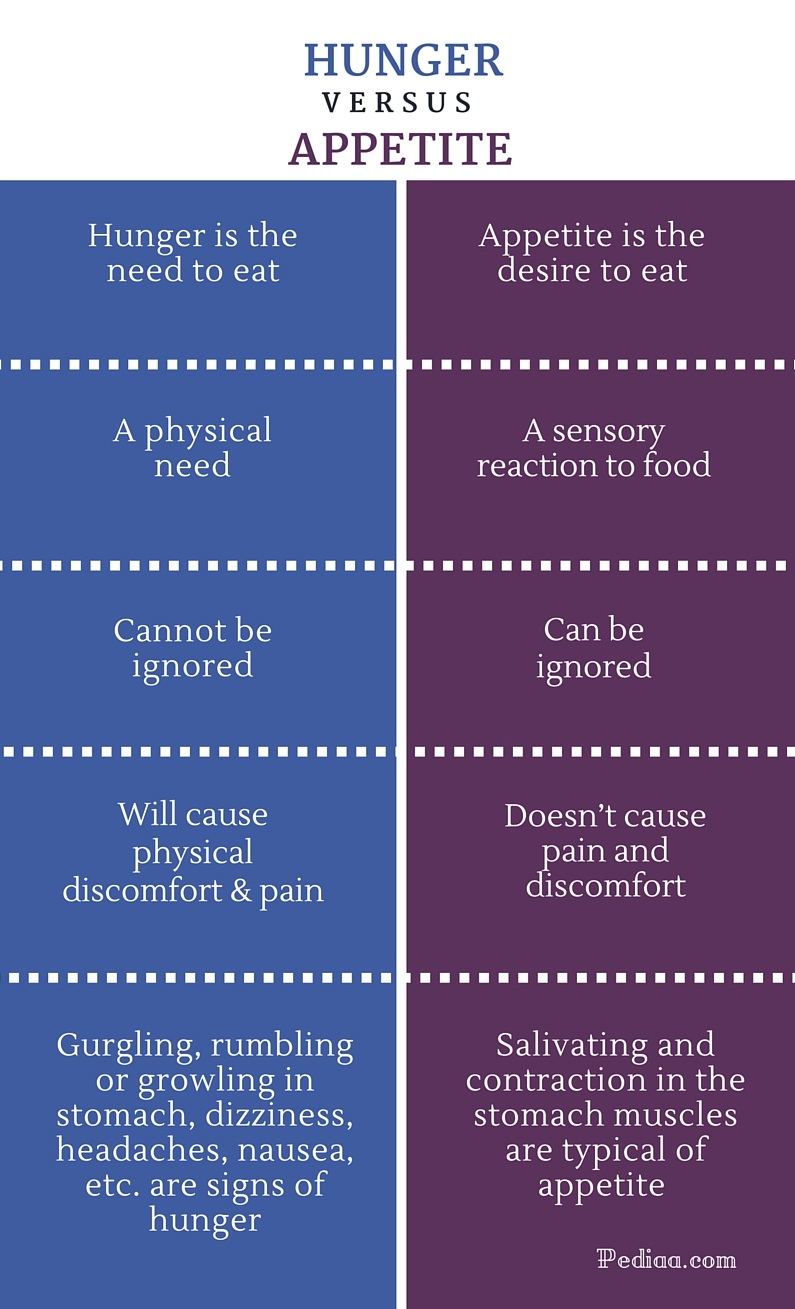
When to Choose Each
Knowing when to listen to hunger versus when to indulge your appetite is a skill that requires practice and mindfulness. You should “choose” to listen to hunger in almost all daily scenarios involving your primary meals. When your stomach growls or your concentration dips, your body is giving you the instructions to refuel. This is the optimal time to consume a balanced meal where the prep time is dedicated to whole foods. By eating when you are moderately hungry—rather than starving—you can make better choices about the ingredients you put into your body and more accurately judge the appropriate number of servings.
Conversely, you might “choose” to acknowledge and selectively indulge your appetite during special occasions or social events. It is perfectly healthy to enjoy a specific recipe because it tastes good or holds sentimental value, even if you aren’t physically famished. The key is moderation. If you are eating based on appetite, try to limit the portion sizes and be aware that you are eating for pleasure rather than necessity. If your appetite is being triggered by stress or boredom, it is often better to choose a non-food activity to satisfy that psychological void, as eating will not solve the underlying emotional trigger.
To master the difference, use the “Apple Test.” If you feel like eating, ask yourself if you would eat a plain apple. If the answer is yes, you are likely experiencing physical hunger. If the answer is no, and you only want a specific sugary or salty recipe, you are likely experiencing appetite. Always aim to fulfill hunger with nutrient-dense ingredients and treat appetite as an occasional guest rather than the permanent driver of your diet.
Conclusion
In the debate of what is the difference between hunger and appetite, the distinction lies between biological necessity and psychological desire. Hunger is your body’s way of requesting the calories and nutrients needed to maintain its daily instructions for survival. Appetite is the sensory-driven want for a specific flavor or experience. By recognizing the physical signs of hunger and the mental triggers of appetite, you can take control of your eating habits. Prioritize hunger for your main servings throughout the day, and use your appetite to enjoy food as a sensory experience in moderation. Balancing both leads to a healthier, more sustainable lifestyle.
❓ Frequently Asked Questions
1
How long does physical hunger last?
Physical hunger often comes in waves and increases gradually over time. If you ignore it, the sensation may temporarily subside but will return stronger until you provide your body with nutrients. Unlike appetite, true hunger is not satisfied by a specific flavor but by any nourishing meal or recipe.
2
Can I suppress my appetite naturally?
Yes, you can manage your appetite by consuming high-protein ingredients and fiber-rich foods that promote fullness. Drinking water before meals and getting adequate sleep also help regulate the hormones ghrelin and leptin, which control how hungry you feel throughout the day and reduce the urge for mindless snacking.
3
What can I substitute for emotional eating?
When you have an appetite triggered by stress rather than hunger, try substituting food with a short walk, meditation, or herbal tea. Identifying the emotion behind the craving helps you address the root cause without consuming unnecessary calories, making it easier to stick to your healthy eating instructions.
4
How do I know when I am truly full?
True fullness, or satiety, is a physical sensation of comfort in the stomach. It usually takes about 20 minutes for your brain to receive the signal that you are satisfied. Eating slowly and focusing on the textures of your ingredients helps you recognize this signal before you become overstuffed.
5
Can I freeze meals to help manage hunger?
Freezing pre-portioned healthy recipes is an excellent way to manage both hunger and appetite. Having a nutritious meal ready to go prevents you from reaching for high-calorie convenience foods when physical hunger strikes, ensuring you follow your dietary goals even when your prep time is limited or energy is low.