What License Do You Need to Sell Juice: Essential Guide
To sell juice, you typically need a General Business License, a Food Handler’s Permit, and a Health Department Permit. If you are selling bottled juice wholesale, you must also comply with FDA Juice HACCP regulations. Requirements vary by location, but most entrepreneurs also require a Seller’s Permit for sales tax and a dedicated commercial kitchen space, as many states prohibit selling “low-acid” or “raw” juices under cottage food laws.
Understanding the Legal Requirements for Selling Juice
Launching a juice business is an exciting venture that focuses on providing refreshing and hydrating beverages to a health-conscious public. However, because juice is a consumable product that can harbor pathogens if not handled correctly, the regulatory landscape is quite rigorous. The specific licenses you need are determined by how you produce the juice (fresh-pressed vs. blended), where you sell it (retail vs. wholesale), and your local municipal codes.
At the foundational level, every beverage business requires a General Business License from their city or county. This registers your entity as a legal operation. Following this, the most critical hurdle is the Health Department Permit. Health inspectors focus on your production process. If you are using a high-speed blender to create smoothies or a cold-press machine for green juices, the inspector will ensure your equipment is commercial-grade and easily sanitized. They will also verify that your facility has adequate refrigeration to keep products chilled at or below 41°F (5°C), as temperature control is the primary defense against bacterial growth in raw beverages.
The distinction between “retail” and “wholesale” is vital in the juice industry. Retail sales—where you serve a cup of juice directly to a customer at a juice bar or farmers’ market—fall under local and state health department jurisdictions. Wholesale sales—where you bottle the juice and sell it to a grocery store or cafe—fall under federal FDA regulations. The FDA requires juice wholesalers to implement a HACCP (Hazard Analysis and Critical Control Point) plan. This plan is a systematic approach to food safety that identifies biological, chemical, and physical hazards in the production process and establishes strict protocols to prevent them. This often includes a “5-log reduction” treatment, such as pasteurization or High-Pressure Processing (HPP), to ensure the juice is safe for shelf life.
Step-by-Step Guide to Getting Licensed
Navigating the bureaucracy of food licensing can be daunting. Following these steps will help you move from your kitchen blender to a fully licensed commercial operation.
1. Define Your Business Structure and Register: Before applying for specific food licenses, you must establish your business entity (LLC, Sole Proprietorship, or Corporation). Once registered with the Secretary of State, apply for a federal Employer Identification Number (EIN) through the IRS. This number is essential for tax purposes and for opening a business bank account.
2. Obtain a Food Handler’s or Food Manager’s Certification: Most jurisdictions require at least one person on-site (usually the owner or manager) to hold a Food Protection Manager Certification. This involves taking an accredited course and passing an exam that covers topics like cross-contamination, chilled storage protocols, and proper sanitation. General staff members will likely need a basic Food Handler’s Card.
3. Secure a Commercial Kitchen Space: Most states do not allow juice to be manufactured in a home kitchen due to the risk of foodborne illness. You will need to rent space in a shared commissary kitchen or build out your own commercial facility. This space must have NSF-approved surfaces, three-compartment sinks, and professional-grade plumbing. Ensure you have ample space for an ice machine, as ice is a critical component for keeping drinks refreshing and maintaining the texture of blended beverages.
4. Apply for a Public Health Permit: Once your location is secured, submit your floor plans and equipment list to the local health department. They will conduct a pre-opening inspection. During this time, they will check your refrigeration units to ensure they can keep the juice chilled and verify that your frozen ingredient storage is organized and safe. They will also look at your waste management systems for fruit pulps and rinds.
5. Register for a Seller’s Permit: To collect sales tax on the refreshing drinks you sell, you must obtain a Seller’s Permit (sometimes called a Sales Tax ID) from your state’s taxing authority. This also allows you to purchase your ingredients, such as bulk fruit and ice, tax-free from wholesalers.

6. Develop Your HACCP Plan (Wholesale Only): If you plan to bottle your juice for resale at other locations, you must draft a HACCP plan. This document outlines how you will achieve the required 5-log reduction in pathogens. It is a technical document that often requires consultation with a food safety expert.
Important Considerations for Juice Entrepreneurs
Beyond the basic paperwork, there are several operational nuances that can impact your licensing and success. One of the most common mistakes is ignoring labeling requirements. If you are selling pre-packaged juice, the FDA requires a specific label that includes the product name, net quantity, a full ingredient list, and nutrition facts. Furthermore, if your juice is not pasteurized or treated to achieve a 5-log reduction, you must include a specific warning statement on the label: “WARNING: This product has not been pasteurized and, therefore, may contain harmful bacteria that can cause serious illness in children, the elderly, and persons with weakened immune systems.”
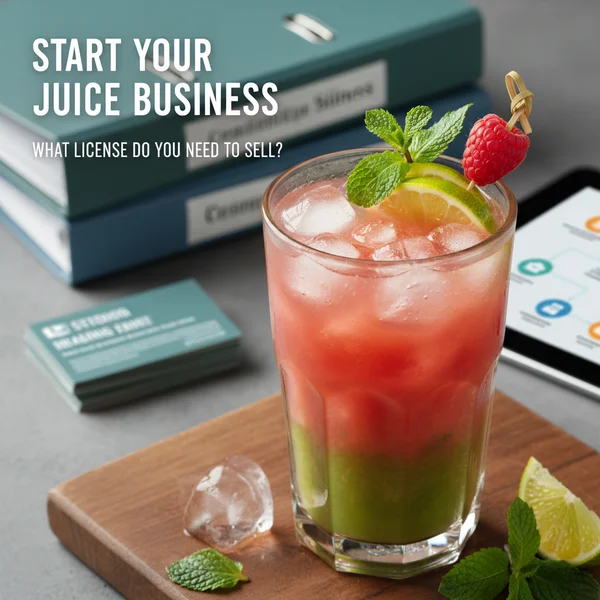
Another consideration is the use of a garnish. While a sprig of mint or a slice of citrus makes a drink look beautiful and more appealing, any garnish used must also be handled under strict food safety protocols. These garnishes must be washed and stored at the correct temperature, and the health inspector will check the “prep station” where these items are handled. Similarly, the ice used in your drinks is legally considered a food item. Your ice machine must be cleaned and descaled regularly, and the scoop must be stored in a sanitary holder, never left inside the ice bin.
Finally, consider the equipment you choose. A high-performance blender is necessary for creating hydrating smoothies that maintain a smooth consistency without separating. However, these blenders are loud and generate heat. Ensure your workspace has adequate ventilation and that your blending process doesn’t inadvertently warm the juice, which could push it into the “danger zone” for bacterial growth. Always serve your products chilled to maximize both safety and the refreshing experience for the customer.
- Stay Chilled: Always use a calibrated thermometer to check that your walk-in cooler and display cases remain at 41°F or below.
- Frozen Assets: When using frozen fruits for smoothies, ensure they are sourced from “approved sources” that follow GAPs (Good Agricultural Practices).
- Garnish with Care: Prepare your garnishes daily to ensure they are vibrant and fresh; never reuse garnishes from a previous shift.
- Documentation is Key: Keep a log of your refrigerator temperatures and cleaning schedules; health inspectors love to see organized records.
- Water Quality: Use a high-quality filtration system for your ice and any water used in the juicing process to ensure a clean, hydrating taste.
Conclusion
Selling juice is a rewarding way to contribute to the wellness of your community, but it requires a commitment to safety and legal compliance. By securing your business license, health permits, and food safety certifications, you
❓ Frequently Asked Questions
1
How long does it take to get a juice license?
The timeline for obtaining your business and food licenses typically ranges from two to eight weeks. This depends on your local health department’s inspection schedule and how quickly your city processes general business applications. Start early to ensure your hydrating, refreshing juice business is ready to open on schedule.
2
Can I sell juice from my home?
Selling juice from home depends on your state’s specific cottage food laws. Many states prohibit selling hydrating juices made at home because they are considered high-risk for bacteria. You usually need a commercial kitchen to safely use a blender or press, ensuring your refreshing products and ice supplies are contaminant-free.
3
What can I substitute for a commercial kitchen?
If you cannot afford a private commercial kitchen, you can substitute it with a shared commissary kitchen or a church kitchen that has been health-department certified. This allows you to prepare your refreshing, hydrating juices and prep garnish ingredients in a legal environment without the high overhead of your own facility.
4
How do I know when my permits are approved?
You will know your permits are approved once you receive official documentation from the health department and your local clerk’s office. Often, an inspector will visit your site to ensure your blender, ice machines, and refrigeration are up to code. Once you have the physical certificates, you can legally sell.
5
Can I sell unpasteurized juice?
Selling unpasteurized juice is regulated by the FDA and local authorities. Generally, if you sell refreshing, hydrating juice directly to consumers from your own shop or blender stand, you do not need to pasteurize. However, wholesale distribution to other stores or restaurants almost always requires a specialized HACCP safety plan.