Kitchen Garden Layout Diagram: Perfect Design Guide
Planning a productive edible landscape requires more than just scattering seeds in the dirt; it requires a strategic kitchen garden layout diagram to act as your master recipe for success. Much like a culinary masterpiece, a successful garden is the result of carefully selected ingredients—soil, light, and seeds—combined through precise instructions and timing. This comprehensive guide provides a structured visualization of various garden designs, helping you determine the prep time required for installation and the eventual servings you can expect at harvest. Whether you are working with a sprawling backyard or a tiny balcony, the following chart serves as a blueprint to transform your outdoor space into a high-yield food source.
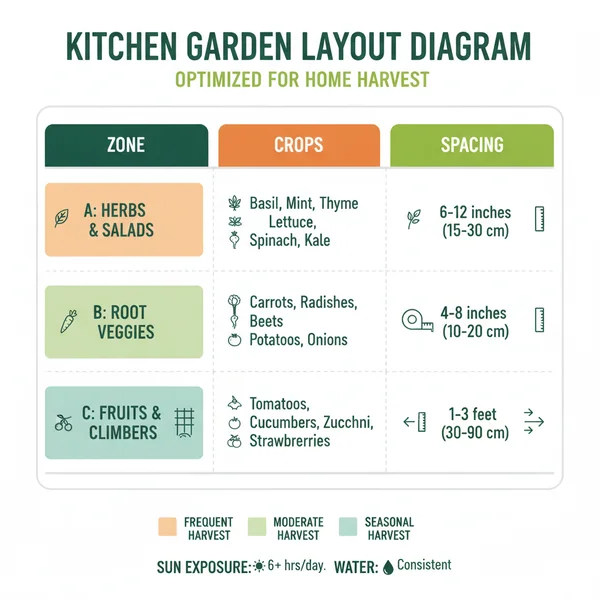
This kitchen garden layout diagram illustrates the relationship between garden configuration, the “ingredients” (plant types) required, and the expected yield (servings) based on different environmental footprints. It highlights that while “prep time” for setup varies, the “cooking time” (growth duration) remains a constant factor of the specific vegetable variety chosen.
Master Kitchen Garden Layout Diagram & Planning Table
| Layout Strategy | Key Ingredients (Crop Mix) | Prep Time (Setup) | Cooking Time (Growth) | Est. Servings/Week | Calorie Density |
|---|---|---|---|---|---|
| Square Foot Bed | Radishes, Leafy Greens, Carrots | 2-4 Hours | 30-60 Days | 4-6 Servings | Low |
| Vertical Trellis | Pole Beans, Peas, Cucumbers | 3-5 Hours | 55-75 Days | 8-10 Servings | Medium |
| Classic Raised Bed | Tomatoes, Peppers, Broccoli | 6-10 Hours | 70-90 Days | 12-15 Servings | High |
| Herb Spiral | Basil, Rosemary, Thyme, Mint | 4-6 Hours | 14-45 Days | Unlimited Garnishes | Very Low |
| Deep Root Rows | Potatoes, Sweet Potatoes, Corn | 8-12 Hours | 90-120 Days | 20+ Servings | Very High |
| Container Balcony | Cherry Tomatoes, Strawberries | 1-2 Hours | 60-80 Days | 2-4 Servings | Low/Medium |
| Companion Polyculture | Corn, Beans, Squash (3 Sisters) | 5-7 Hours | 80-110 Days | 15-18 Servings | High |
How to Use This Kitchen Garden Layout Diagram
Utilizing a kitchen garden layout diagram is very similar to following a complex culinary recipe. First, you must evaluate your “prep time”—this is the labor required to build beds, amend the soil with organic ingredients, and install irrigation. The chart provides a realistic estimation of how many hours you should set aside before a single seed is ever planted. If you are a beginner, starting with a Square Foot Bed or Container Balcony layout is recommended, as these require the least amount of initial setup while still providing a high density of fresh servings.
Once your layout is chosen, follow the “instructions” of the specific vegetable varieties. This involves understanding the “cooking time,” which in gardening terms refers to the days to maturity. By cross-referencing the servings column, you can scale your garden up or down based on your family’s dietary needs. For example, if you wish to provide 20 servings of carbohydrates per week, the Deep Root Rows layout should be your primary focus. Use this chart as a diagnostic tool to ensure your garden goals align with your available time and space constraints.
Detailed Breakdown of Layout Categories
In this section, we delve deeper into the specific “recipe” for each layout style, ensuring you understand how to maximize the calories and nutrients harvested from your soil.
1. Square Foot Bed: The Precision Recipe
This layout is the ultimate “ingredient” list for those with limited space. By dividing a 4×4 bed into sixteen individual squares, you can follow strict instructions on plant spacing. This method minimizes prep time by eliminating wasted space and focusing resources only where plants grow. It is ideal for low-calorie but high-nutrient crops like spinach and radishes, which have a very short cooking time (growth duration), allowing for multiple harvests in a single season.
2. Vertical Trellis: Reaching for the Sky
When horizontal space is at a premium, a vertical kitchen garden layout diagram becomes essential. Think of this as the “multi-layered cake” of gardening. By using trellises and A-frames, you allow climbing ingredients like pole beans and cucumbers to grow upward. This significantly increases the servings per square foot and helps prevent diseases by improving airflow, which is often a bottleneck in traditional flat-ground gardening.
3. Classic Raised Beds: The Professional Kitchen
Raised beds offer the most control over the “cooking environment.” Because you fill these beds with specific soil ingredients (compost, peat moss, perlite), you bypass poor native soil quality. While the prep time is higher due to construction, the yield is significantly higher in servings. Large, high-calorie vegetables like peppers and tomatoes thrive here because the soil stays warmer and drains more efficiently than ground-level rows.
4. Deep Root Rows: High-Calorie Production
If your goal is self-sufficiency, you need a layout that prioritizes calories. This strategy requires the most prep time, often involving tilling and heavy mulching. However, it allows for the cultivation of “heavy hitters” like potatoes and corn. These crops have a long cooking time—often taking the entire summer—but the payoff is a massive volume of servings that can be stored through the winter months, acting as the staple ingredients for your family’s pantry.
5. Herb Spirals and Containers: The Flavor Enhancers
Not every garden needs to produce a full meal. Herb spirals and container layouts focus on the “seasoning” ingredients. These layouts require minimal prep time and can be placed right outside the kitchen door. While they offer the fewest calories, they provide the highest concentration of flavor and medicinal benefits, with a cooking time that is practically instantaneous since many herbs are harvested as they grow.
- Batch Prep: Prepare your soil ingredients (compost and fertilizers) in the fall to reduce your spring prep time.
- Succession Planting: Much like a chef firing up dishes in stages, plant new seeds every two weeks to ensure a continuous stream of servings throughout the season.
- Monitor the “Heat”: Pay attention to the sun. Most vegetable “recipes” require at least 6-8 hours of direct sunlight to reach their full calorie potential.
- Watering Instructions: Consistency is key. Use drip irrigation to ensure your “ingredients” never dry out during their long cooking time in the summer sun.
Conclusion
Choosing the right kitchen garden layout diagram is the foundational step in becoming a successful home producer. By understanding the relationship between prep time, growth cycles (cooking time), and final servings, you can create a sustainable system that provides fresh ingredients and high-calorie produce for your table. Remember that gardening is an iterative process; you may start with a simple container and eventually graduate to a complex polyculture system. Use the data in our chart to guide your decisions, and soon your backyard will be the most productive “kitchen” in your home.
❓ Frequently Asked Questions
1
How long does a kitchen garden plan last?
A well-designed kitchen garden layout diagram can serve as your primary blueprint for several years. However, you should update it annually to account for crop rotation. Changing the location of plant families every season helps prevent soil-borne diseases and ensures nutrient levels remain balanced for long-term success.
2
Can I make a kitchen garden in a small space?
Absolutely. Even with limited space, a strategic layout diagram allows you to utilize containers and vertical planters. Focus on high-yield, compact ingredients like salad greens and herbs. By layering plants based on height and sunlight needs, you can grow a surprising amount of food on a balcony or patio.
3
What can I substitute for raised beds?
If you cannot build raised beds, you can substitute them with large pots, fabric grow bags, or traditional in-ground rows. The layout principles remain the same: ensure adequate drainage, quality soil, and accessibility. Grow bags are particularly useful for those who need a portable or temporary garden solution.
4
How do I know when my garden layout is done?
Your layout is complete when you have mapped out every square foot, ensuring each plant has enough space to mature. Check that your diagram includes paths for easy reaching and follows sun patterns. A finished plan should clearly list where each vegetable and herb will reside throughout the season.
5
Can I freeze my garden planning ideas?
While you cannot freeze a diagram like a meal, you should save your digital or paper plans to compare year-over-year. This record of past successes and failures is invaluable for improving future harvests. Tracking what worked in specific zones helps you refine your planting instructions for subsequent seasons.