How to Get the Most Juice Out of a Lime: Ultimate Guide
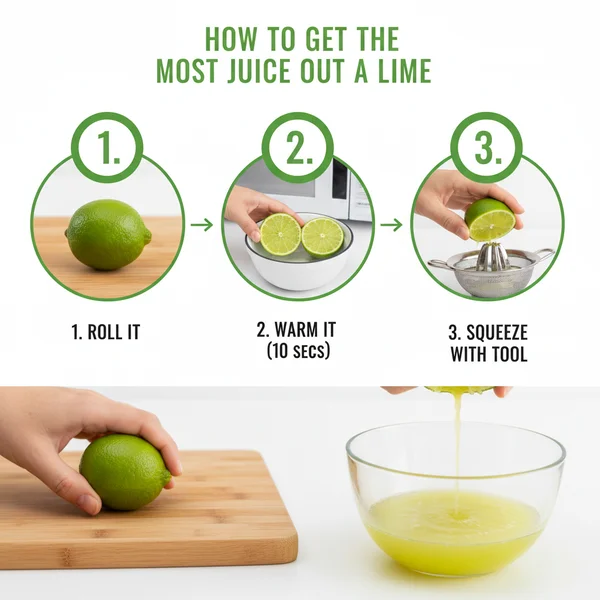
To get the most juice out of a lime, you must break down the internal membranes before cutting. Start by bringing the lime to room temperature or microwaving it for 15–20 seconds to soften the fibers. Next, roll the lime firmly against a countertop using the palm of your hand. Finally, instead of cutting it in half, use the “longitudinal” or “four-sided” cut method to expose the most surface area. Using a handheld citrus press (hinged squeezer) inside out will further maximize your yield for any refreshing beverage.
The Science of Citrus: Why Traditional Juicing Often Fails
To understand how to maximize your lime’s output, you first need to understand its anatomy. A lime is composed of tiny juice vesicles—small, tear-shaped sacs that hold the liquid. These vesicles are encased in segments, which are further protected by a tough, fibrous membrane and a thick outer rind. When you simply cut a cold lime in half and squeeze it with your bare hands, you are only rupturing a fraction of these vesicles. Much of the juice remains trapped within the stubborn internal structure.
Temperature plays a critical role in juice extraction. When a lime is chilled, the juice sacs are firm and the oils in the rind are constricted. By increasing the temperature, you decrease the viscosity of the juice and soften the cellulose walls of the membranes. This is why professional bartenders and chefs never juice fruit straight from the refrigerator. Whether you are preparing a hydrating lime water or a complex cocktail, warmth is your best friend.
Furthermore, the physical structure of the lime responds to pressure. Rolling the fruit against a hard surface serves to burst those internal juice sacs before the fruit is even opened. This creates a “puddle” of juice inside the rind, which flows out much more freely once the skin is pierced. If you are aiming for a highly refreshing drink, these preparation steps ensure you aren’t leaving half the flavor behind in the compost bin.
The Ultimate Step-by-Step Guide to Maximizing Lime Juice
Follow these refined steps to ensure every drop of liquid is extracted, turning a stubborn citrus fruit into a bountiful source of acidity for your recipes.
1. Bring the Fruit to Temperature: If your limes are in the fridge, take them out at least an hour before use. For immediate results, place the lime in a bowl of warm water for five minutes, or microwave it on high for 15 to 20 seconds. You aren’t trying to cook the fruit; you just want it to feel slightly warm to the touch. This heat expands the juice and relaxes the rind.
2. The Professional Roll: Place the lime on a sturdy countertop or cutting board. Place the heel of your hand on top of the lime and apply significant downward pressure—enough to deform the shape of the lime slightly without breaking the skin. Roll it back and forth for about 30 seconds. You should feel the fruit become noticeably softer and more “squishy” as the internal membranes rupture.
3. The “X” or Longitudinal Cut: Forget the standard “cut in half” method. To expose the most surface area, cut the lime into thirds lengthwise, avoiding the central core. Alternatively, use the “square” method: cut four sides off the central core (which looks like a long rectangular prism when you’re done). This method allows you to squeeze the individual planks and the core separately, reaching juice pockets that a standard half-cut misses.
4. The Inverted Squeezer Technique: If you are using a hinged citrus press, place the lime half in the well with the cut side facing down (toward the holes). As you close the press, the tool will turn the lime inside out. This mechanical force is far superior to hand squeezing and extracts nearly 20% more juice.
5. Utilize a Blender for Whole-Fruit Extraction: If you are making a large batch of limeade or a frozen margarita, consider using a blender. You can peel the lime (leaving some white pith for bitterness or removing it for sweetness) and blend the entire flesh with a small amount of water. Strain the mixture through a fine-mesh sieve. This “blender method” is the secret to Brazilian Lemonade and provides a much more intense, creamy lime flavor than simple squeezing.
Important Considerations and Common Mistakes
Not all limes are created equal, and your choice of fruit will dictate your success. The most common variety, the Persian lime, is generally larger and seedless, making it easier to juice. However, the smaller Key lime is much more aromatic but has thinner skin and more seeds, requiring a more delicate touch. When shopping, look for limes that feel heavy for their size; weight is a direct indicator of water content. A lime with smooth, thin skin is almost always juicier than one with a thick, bumpy, or “pitted” rind.
One common mistake is over-microwaving. If the juice inside the lime reaches a boiling point, it can change the flavor profile, making it taste “cooked” or slightly metallic. This ruins the refreshing quality of the juice. Always stick to short intervals of 10-15 seconds.
Another mistake is neglecting the zest. If you are making a chilled beverage, much of the lime’s essential oils are located in the green part of the skin. Consider zesting the lime before you juice it. You can use the zest as a garnish or muddle it with sugar to create an “oleo saccharum,” which provides a depth of flavor that juice alone cannot achieve. Finally, remember that lime juice begins to oxidize and change flavor within a few hours of extraction. For the most hydrating and flavorful results, juice your limes immediately before consumption.
- Use a Fork: If you don’t have a juicer, insert a fork into the center of a lime half and twist it vigorously while squeezing to break more juice sacs.
- Freeze for Later: If you have an abundance of limes, juice them all using the methods above and freeze the juice in ice cube trays for a quick addition to water later.
- Salt Rim Prep: Save the spent lime husks after squeezing; they make the perfect tool to moisten the rim of a glass before dipping it in salt or sugar for a garnish.
- Sieve the Pulp: For a professional, clear look in chilled cocktails, always pass your fresh juice through a fine-mesh strainer to remove excess pulp.
The Benefits of Fresh-Squeezed Lime Yields
Maximizing your lime juice isn’t just about saving money at the grocery store; it’s about enhancing the quality of your drinks and dishes. Fresh lime juice is a powerhouse of Vitamin C and antioxidants, making it an essential component of a hydrating lifestyle. When you use the rolling and heating techniques, you also release more of the lime’s natural oils, which contribute to a more complex aroma and flavor profile.
Whether you are blending a frozen daiquiri in a high-speed blender or simply squeezing a wedge over a chilled salad, the difference between a dry lime and a properly prepped, juicy one is palpable. By incorporating these professional techniques—temperature control, mechanical breakdown, and strategic cutting—you ensure that every lime you buy performs at its absolute peak.
Conclusion
Getting the most juice out of a lime is a simple matter of physics and preparation. By warming the fruit, rolling it to break down internal structures, and using a longitudinal cut or a citrus press, you can significantly increase your yield. These methods ensure your beverages remain refreshing and highly hydrating without wasting fruit. Whether you’re using a blender for a whole-fruit drink or garnishing a glass filled with ice, these small steps lead to much more flavorful results. Don’t settle for a dry squeeze—prep your citrus properly and enjoy the full zest of life.
❓ Frequently Asked Questions
1
How long does lime juice last in fridge?
Freshly squeezed lime juice typically lasts about 2 to 3 days in the refrigerator when stored in an airtight glass container. After this time, the flavor begins to turn bitter and loses its bright, zesty quality. For the best-tasting refreshing drinks, always use it within 48 hours for optimal flavor.


2
Can I make lime juice ahead of time?
Yes, you can squeeze lime juice ahead of time, but it is best used within a few hours. If you need to store it longer, freeze it in ice cube trays. This is a great way to keep your beverages hydrating and cold without diluting the flavor as the cubes melt.
3
What can I substitute for a lime?
If you are out of limes, lemons are the most common substitute. You can also use key limes or even a splash of vinegar in savory dishes. However, for a refreshing summer beverage or a cocktail garnish, lemon provides the closest acidity and citrus profile needed for that bright, tart finish.
4
How do I know when a lime is good for juicing?
Look for limes that feel heavy for their size and have smooth, thin skin. A lime with a bumpy, thick rind usually contains less juice. Give it a gentle squeeze; if it has some give, it is likely ripe and ready to be processed in your blender or juicer.
5
Can I freeze whole limes?
Yes, you can freeze whole limes, though the texture of the fruit will change. Once thawed, they actually become much easier to juice because the freezing process breaks down the internal cell walls. This is a secret trick for getting even more juice for your hydrating, ice-cold summer beverages.