How to Eat a Pineapple: Easy Perfect Guide
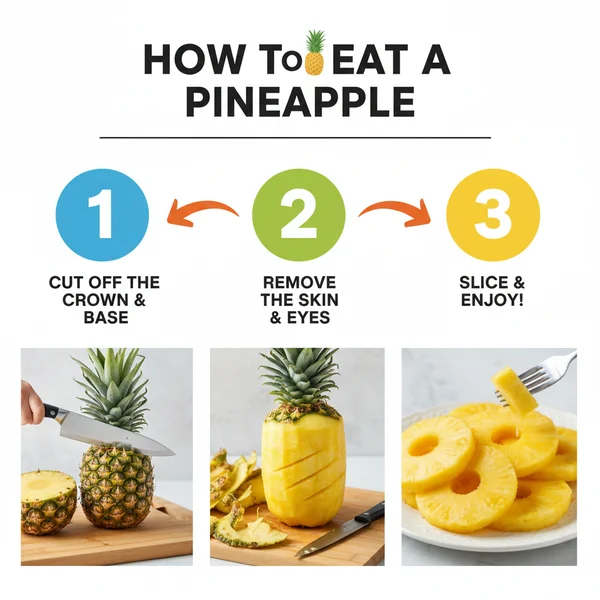
To eat a pineapple, start by selecting a ripe fruit that smells sweet at the base. Lay it on its side, slice off the green crown and the bottom base, then stand it upright to shave off the prickly skin. You can then slice it into rounds, wedges, or chunks, removing the tough inner core if desired. Pineapple can be enjoyed raw, grilled, or incorporated into various recipes, offering a burst of Vitamin C and tropical flavor.
Exploring the Best Ways to Enjoy Pineapple
Learning how to eat a pineapple properly is a culinary skill that opens the door to a world of tropical flavors and significant health benefits. This vibrant fruit, known scientifically as Ananas comosus, is more than just a sweet snack; it is a nutritional powerhouse packed with antioxidants, fiber, and the unique enzyme bromelain. Understanding the nuances of this fruit—from the moment you pick it up at the grocery store to the final bite—ensures you get the most out of its complex flavor profile.
The Science of Ripeness and Flavor
The journey of eating a pineapple begins with selection. Unlike many other fruits, pineapples do not continue to ripen significantly after they are harvested. Once they are removed from the plant, their sugar content remains relatively static. Therefore, choosing the right one is paramount. A ripe pineapple should feel heavy for its size, indicating a high juice content. The exterior should be firm but yield slightly to a gentle squeeze. Most importantly, the base of the fruit should emit a fragrant, sweet aroma. If it smells fermented or vinegary, it is past its prime; if it has no scent at all, it was likely picked too early.
Why Pineapple Tingles Your Tongue
A common experience when eating fresh pineapple is a slight tingling or burning sensation on the tongue and roof of the mouth. This is caused by bromelain, a group of enzymes that break down proteins. In essence, while you are eating the pineapple, the pineapple is technically “eating” you back at a microscopic level. This enzyme is highly concentrated in the core but is present throughout the flesh. While this sensation is harmless for most people, it can be mitigated by cooking the fruit, which denatures the enzymes, or by soaking the cut fruit in a light saltwater solution for a few minutes before consumption.
Culinary Versatility
While most people enjoy pineapple raw, its high sugar content makes it an excellent candidate for various cooking methods. When heat is applied, the sugars caramelize, creating a deeper, more complex sweetness. This makes pineapple a favorite for grilling, roasting, or even pan-searing. Beyond desserts, the acidity of the pineapple makes it a perfect pairing for savory dishes, particularly those involving fatty meats like pork or oily fish, as the acid cuts through the richness and balances the palate.
Step-by-Step Guide to Cutting and Serving
Preparation is often the biggest hurdle to enjoying fresh pineapple. The intimidating spikes and tough skin lead many to opt for canned versions, but the flavor of fresh fruit is incomparable. Follow these steps to master the art of the prep time and get your fruit ready for the table.
Step 1: The Initial Cuts
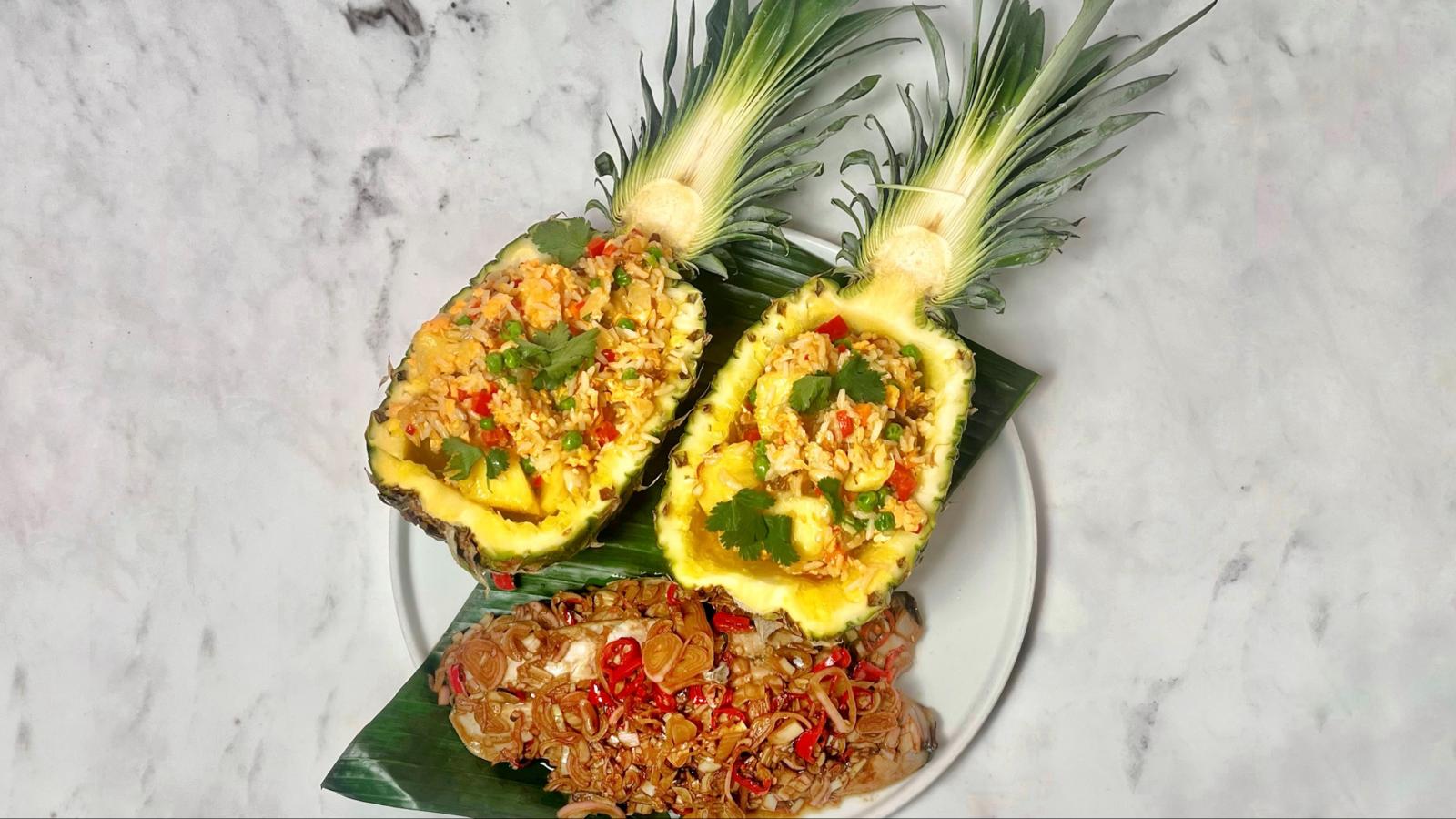
Place the pineapple on a sturdy cutting board. Using a sharp chef’s knife, slice off the top green crown and about half an inch from the bottom base. This creates two flat surfaces, making the fruit stable and much safer to handle during the skinning process.
Step 2: Removing the Skin
Stand the pineapple upright on its cut base. Starting from the top, follow the natural curve of the fruit and slice downward to remove the skin in strips. Aim to cut deep enough to remove the “eyes” (the small brown prickly spots), but not so deep that you lose too much of the precious yellow flesh. If some eyes remain, you can use a small paring knife to carve them out individually or cut small diagonal V-shaped grooves along the fruit to remove them in rows.
Step 3: Slicing into Your Preferred Shape
Once skinned, you have several options based on how you intend to serve the fruit:
- Rounds: Lay the pineapple on its side and slice into circles. Use a small circular cutter to remove the tough core from the center of each ring.
- Wedges: Cut the pineapple in half vertically, then into quarters. Stand each quarter up and slice the core away before cutting the remaining flesh into triangles.
- Chunks: Following the wedge method, simply cut the wedges into bite-sized pieces. This is the best method for fruit salads or snacking.
Step 4: Handling the Core
The core of the pineapple is fibrous and much harder than the surrounding fruit, but it is entirely edible and contains the highest concentration of bromelain. If you find it too tough to eat raw, don’t throw it away. You can thinly slice it for salads, blend it into smoothies, or freeze it to use as “ice cubes” that won’t water down your drinks.
Classic Grilled Pineapple Recipe
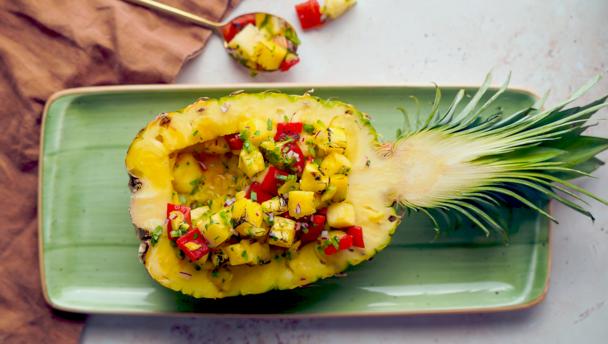
To truly understand how to eat a pineapple in a gourmet fashion, trying a simple grilled version is a must. This recipe highlights the fruit’s ability to transform under heat, turning a simple snack into a sophisticated dessert or side dish.
Prep time: 10 minutes
Cooking time: 8 minutes
Servings: 4 people
Calories: Approximately 95 calories per serving
Ingredients
- 1 whole fresh pineapple, peeled and cut into 1-inch thick rounds or wedges
- 2 tablespoons of honey or maple syrup
- 1 tablespoon of melted unsalted butter (optional)
- 1/2 teaspoon of ground cinnamon
- A pinch of sea salt
- Fresh mint leaves for garnish
Instructions
- Preheat your grill or a grill pan to medium-high heat. Ensure the grates are clean and lightly oiled to prevent sticking.
- In a small bowl, whisk together the honey, melted butter, cinnamon, and salt to create a light glaze.
- Brush both sides of the pineapple slices generously with the honey mixture.
- Place the pineapple slices on the grill. Cook for about 3 to 4 minutes per side, or until distinct grill marks appear and the fruit begins to soften and caramelize.
- Remove from the heat and serve immediately. Garnish with fresh mint if desired. This pairs beautifully with a scoop of vanilla bean ice cream or a dollop of Greek yogurt.
Important Considerations for Eating Pineapple
While pineapple is a healthy addition to most diets, there are several factors to keep in mind to ensure a positive experience. Awareness of these considerations helps prevent common mistakes and ensures maximum enjoyment.
Acidity and Dental Health
Pineapple is highly acidic. While this contributes to its refreshing taste, frequent consumption of highly acidic foods can weaken tooth enamel over time. To protect your teeth, it is best to eat pineapple as part of a meal rather than as a standalone snack throughout the day. Rinsing your mouth with water after eating can also help neutralize the acids.
Storage Best Practices
Once a pineapple is cut, it should be stored in an airtight container in the refrigerator. It will typically stay fresh for 3 to 5 days. If you find you have more pineapple than you can eat, it freezes exceptionally well. Spread chunks out on a baking sheet to freeze individually before transferring them to a bag; this prevents them from clumping together and makes them perfect for future smoothies or “nice cream” recipes.
Allergies and Sensitivities
Some individuals may have a true allergy to pineapple, often linked to latex allergies (known as latex-fruit syndrome). Symptoms can include hives, swelling, or digestive upset. Additionally, because of its high fiber and vitamin C content, eating excessive amounts of pineapple in one sitting can lead to temporary digestive issues or heartburn for sensitive individuals. Moderation is key.
- The Upside Down Trick: If you buy a pineapple a day before you plan to eat it, store it upside down (resting on its leaves). This helps the sugars, which often settle at the bottom, redistribute throughout the fruit.
- Don’t Waste the Juice: When cutting the pineapple, work on a board with a juice groove. Collect any escaping juice to add to marinades or cocktails.
- Meat Tenderizer: Because of the bromelain, pineapple juice or mashed pineapple makes an incredible natural meat tenderizer. Just don’t marinate meat for more than 30-60 minutes, or it may become too soft!
- Leaf Test: While not 100% foolproof, a common way to check for ripeness is to tug on one of the inner leaves of the crown. If it pulls out with very little resistance, the fruit is usually ready to eat.
Conclusion
Knowing how to eat a pineapple involves a mix of proper selection, careful preparation, and creative cooking. By mastering the basic cutting techniques and understanding how the fruit interacts with heat and other ingredients, you can elevate it from a simple fruit bowl staple to the star of your dining table. Whether you prefer it raw and chilled on a hot summer day or grilled with a hint of cinnamon for a cozy dessert, the pineapple remains one of nature’s most versatile and rewarding treats. Enjoy the process, experiment with different recipes, and savor every tropical bite.
❓ Frequently Asked Questions
1
How long does fresh pineapple last in fridge?
Once cut, fresh pineapple will last about 3 to 5 days in the refrigerator. To keep it at peak freshness, store it in an airtight container or a tightly sealed glass jar. If it starts to smell fermented or looks slimy, it is time to discard the fruit.
2
Can I make pineapple juice ahead of time?
You can juice a pineapple ahead of time, but it is best consumed within 24 to 48 hours for the best flavor. Keep the juice in a sealed pitcher in the fridge and give it a good stir before serving because the natural solids will likely settle.
3
What can I substitute for a whole pineapple?
If fresh whole pineapple is unavailable, high-quality canned pineapple in its own juice is the best substitute for this recipe. Frozen pineapple chunks are also an excellent option for smoothies or snacking once thawed, offering a similar sweetness and acidity to the fresh fruit version.
4
How do I know when a pineapple is ripe?
A pineapple is ready to eat when it yields slightly to gentle pressure and has a golden-yellow color. The most reliable indicator is a fragrant, tropical aroma coming from the stem end. If there is no smell at all, it likely needs another day on the counter.
5
Can I freeze fresh pineapple?
Yes, you can freeze fresh pineapple easily. Simply cut the fruit into chunks, spread them on a baking sheet to flash freeze, and then transfer them to a freezer-safe bag. They will keep well for up to six months and are perfect for cold smoothies or baking.