Best Time to Drink Vegetable Juice: Ultimate Guide
Determining the best time to drink vegetable juice can significantly impact how your body absorbs vital micronutrients and manages energy levels throughout the day. While many enthusiasts reach for their blender at the crack of dawn, the “perfect” timing often depends on your specific health goals, whether you are seeking a hydrating recovery drink or a nutrient-dense meal replacement. This comprehensive guide and accompanying chart are designed to demystify the science of nutrient timing. Below, you will find a detailed visualization of how different windows of consumption affect metabolic rates, digestion, and vitamin bioavailability, ensuring every refreshing sip works in harmony with your biological clock.
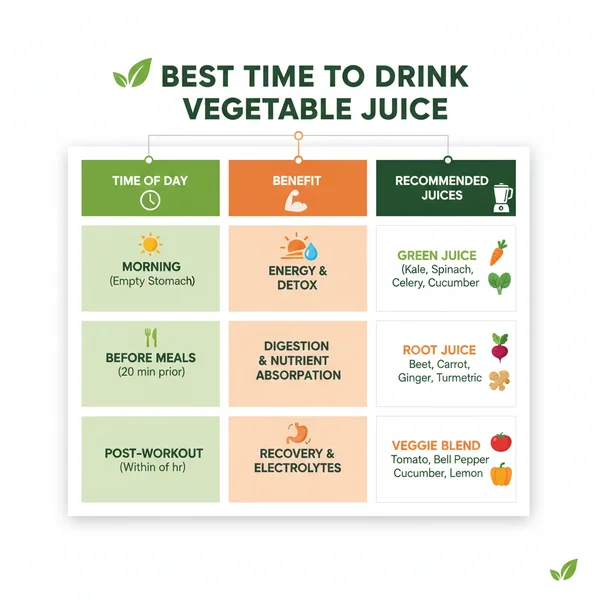
[CHART_IMAGE_PLACEHOLDER: Best Time to Drink Vegetable Juice Infographic]
The primary insight from our research indicates that consuming vegetable juice on an empty stomach in the morning yields the highest absorption rate for minerals and vitamins. However, consuming juice 30 minutes before a meal or as a mid-afternoon recovery drink offers the best results for blood sugar management and appetite control.
Optimal Timing for Vegetable Juice Consumption
| Time Window | Primary Benefit | Recommended Ingredients | Serving Suggestion |
|---|---|---|---|
| Early Morning (Empty Stomach) | Maximum nutrient absorption and detoxification. | Celery, Cucumber, Lemon, Ginger | Room temperature or slightly chilled for a gentle wake-up. |
| 30 Minutes Before Breakfast | Pre-digestion enzyme boost and appetite suppression. | Spinach, Green Apple, Kale | Served over ice to stimulate the metabolism. |
| Pre-Workout (45 mins prior) | Natural nitrate boost for increased stamina. | Beetroot, Carrot, Orange | Smooth texture from a high-speed blender; avoid heavy pulp. |
| Post-Workout Recovery | Rapid rehydration and electrolyte replenishment. | Coconut Water, Swiss Chard, Tomato | A refreshing frozen blend for muscle cooling. |
| Mid-Afternoon Slump | Cognitive clarity and sustained energy without caffeine. | Parsley, Wheatgrass, Pineapple | Add a fresh garnish of mint to revitalize the senses. |
| Pre-Dinner (Evening) | Prevents overeating and aids evening digestion. | Zucchini, Fennel, Lettuce | Enjoyed as a hydrating “mocktail” in a stem glass. |
How to Use This Chart
Utilizing this chart effectively requires an understanding of your daily routine and your body’s specific nutritional demands. To get the most out of the “best time to drink vegetable juice,” start by identifying your primary health goal. Are you looking to lose weight, or are you focused on athletic performance? If weight loss is the goal, refer to the “Pre-Dinner” or “30 Minutes Before Breakfast” rows. The high water content and fiber found in blended juices help you feel fuller, reducing the likelihood of consuming excess calories during your main meal.
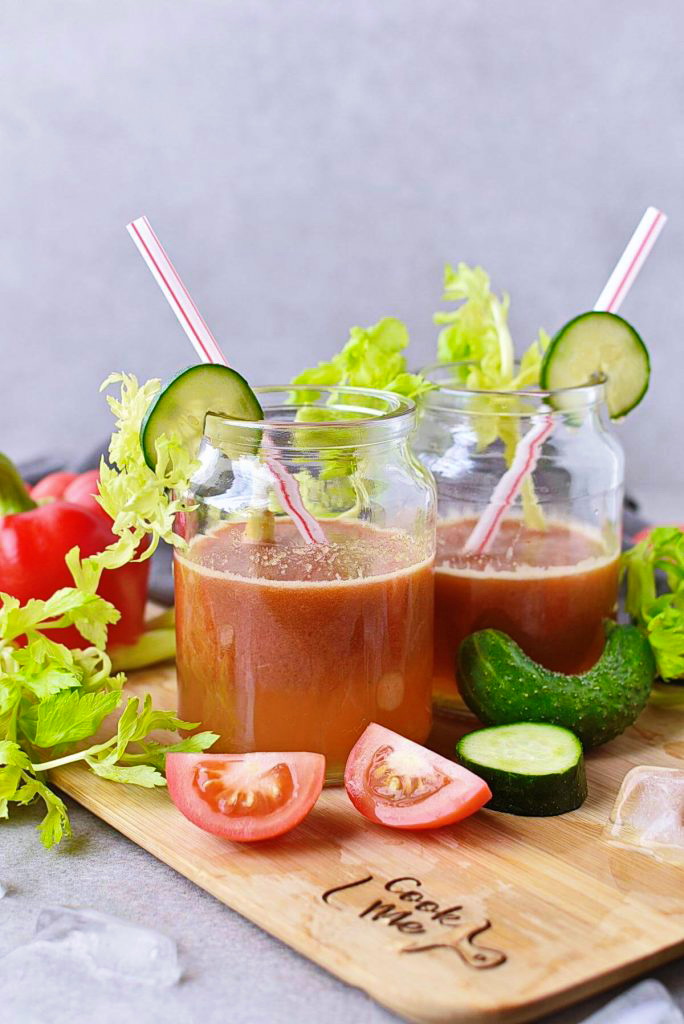
For those with a busy lifestyle, the “Mid-Afternoon Slump” category is a game-changer. Instead of reaching for a sugary snack or a second cup of coffee, use your blender to whip up a nutrient-dense green juice. This provides a steady release of energy rather than a spike and crash. When following the chart, pay attention to the “Serving Suggestion” column. For instance, a chilled juice might feel more refreshing after a workout, whereas a room-temperature juice is often easier on the digestive system first thing in the morning. You can even use frozen vegetables to ensure your drink remains cold without diluting the flavor with excess ice. By aligning your juice consumption with these windows, you optimize the hydrating properties and ensures your body isn’t working overtime to process nutrients when it should be resting.
Detailed Breakdown
To truly understand why these timings matter, we must look at the physiological interaction between raw vegetable nutrients and the human digestive tract. When you drink vegetable juice on an empty stomach in the morning, your body doesn’t have to compete with other solid foods for enzyme availability. This allows for a “fast-track” absorption of phytonutrients directly into the bloodstream. Using a blender to create a whole-food juice—one that retains some soluble fiber—can also help stabilize blood sugar levels from the very start of your day.
The “Pre-Workout” window is specifically designed to leverage the power of nitrates found in vegetables like beets and spinach. Nitrates convert into nitric oxide in the body, which dilates blood vessels and improves oxygen delivery to muscles. Drinking this 45 minutes before exercise ensures the peak concentration of these compounds coincides with your peak physical exertion. If the juice feels too heavy, serving it chilled with a bit of ice can make it more palatable during intense heat or humidity.
Conversely, the “Post-Workout” phase focuses on hydrating the body and replacing lost minerals. Vegetables such as tomatoes and celery are naturally high in sodium and potassium—the primary electrolytes lost through sweat. A refreshing post-workout juice acts as a natural recovery drink, far superior to many synthetic sports drinks filled with artificial dyes. Adding a garnish of cilantro or parsley can further aid in heavy metal detoxification, a common side effect of increased metabolic activity during exercise.
The “Mid-Afternoon” window addresses the common dip in glucose that occurs several hours after lunch. By choosing ingredients like pineapple or wheatgrass, you provide the brain with the necessary glucose and chlorophyll to maintain focus. Many people find that using frozen fruit or frozen kale in their blender creates a texture similar to a frappe, making the experience feel like a treat rather than a chore. Finally, the “Pre-Dinner” slot is essential for those who struggle with portion control. The hydrating nature of vegetable juice expands in the stomach, sending early satiety signals to the brain, which helps you make healthier food choices when the main course arrives.
- Use Frozen Produce: If you lack fresh ingredients, frozen spinach or berries can be tossed into the blender to create a thick, chilled texture without needing extra ice.
- Mind the Garnish: Never underestimate a fresh garnish. Adding a sprig of mint or a slice of lime makes the drink more refreshing and adds aromatic benefits that aid digestion.
- Clean Your Blender Immediately: To maintain the quality of your juices, wash your blender right after use to prevent vegetable residue from oxidizing and affecting future flavors.
- Hydration is Key: While juice is hydrating, it should supplement—not replace—your daily water intake. Always follow a vegetable juice with a glass of plain water to help flush the kidneys.
Conclusion
Identifying the best time to drink vegetable juice is more than just a matter of convenience; it is a strategic approach to wellness. Whether you are looking for a hydrating start to your morning or a refreshing recovery tool after a gym session, timing is the key that unlocks the full potential of your produce. By utilizing the blender to create nutrient-dense blends and serving them chilled or over ice, you can transform a simple beverage into a powerful health tonic. Remember to experiment with different windows to find what resonates best with your unique digestive system.
❓ Frequently Asked Questions
1
How long does vegetable juice last in fridge?
Freshly made vegetable juice typically lasts 24 to 48 hours when stored in the refrigerator. To maintain the highest nutrient density, use an airtight glass container and fill it to the very top to minimize air exposure. Always check for off-smells or color changes before drinking stored juice.
2
Can I make vegetable juice ahead of time?
Yes, you can prepare juice ahead of time, though it is best consumed fresh. If you use a masticating juicer, the juice stays stable longer than if you use a high-speed blender. For the best quality, try to consume your prep within 24 hours to maximize the health benefits.
3
What can I substitute for a juicer?
If you do not own a juicer, a high-speed blender works perfectly. Simply blend your vegetables with a small amount of water or coconut water, then strain the liquid through a nut milk bag or fine-mesh sieve. This creates a smooth, hydrating beverage while removing the heavy insoluble fiber.
4
How do I know when vegetable juice is bad?
You can tell vegetable juice has spoiled if it develops a sour or fermented odor, or if the color turns significantly dull or brown. If you see any signs of bubbling or if the taste is unpleasantly tangy, it is time to discard it and make a fresh batch.
5
Can I freeze vegetable juice?
Vegetable juice can be frozen for up to three months. Use freezer-safe containers and leave some space at the top for expansion. While freezing preserves most nutrients, the texture may change slightly. Thaw it in the refrigerator and give it a good shake before serving with a fresh garnish.