Beet Juice Recipe: Quick, Healthy & Refreshing
There is something truly captivating about the deep, ruby-red hue of freshly made beet juice. It is a color so vibrant that it immediately signals the abundance of nutrients packed into every drop. If you have been looking for a way to revitalize your morning routine or find a natural energy boost that tastes as good as it looks, learning how to make beet juice at home is a complete game changer. This recipe isn’t just about the earthy sweetness of the beets; it is a carefully balanced symphony of flavors where the zing of ginger meets the bright acidity of lemon. Whether you are a fitness enthusiast seeking a pre-workout edge or simply someone who appreciates a cold, refreshing beverage, this homemade juice will quickly become a staple in your kitchen. It is incredibly easy to prepare and offers a level of freshness that store-bought versions simply cannot match.
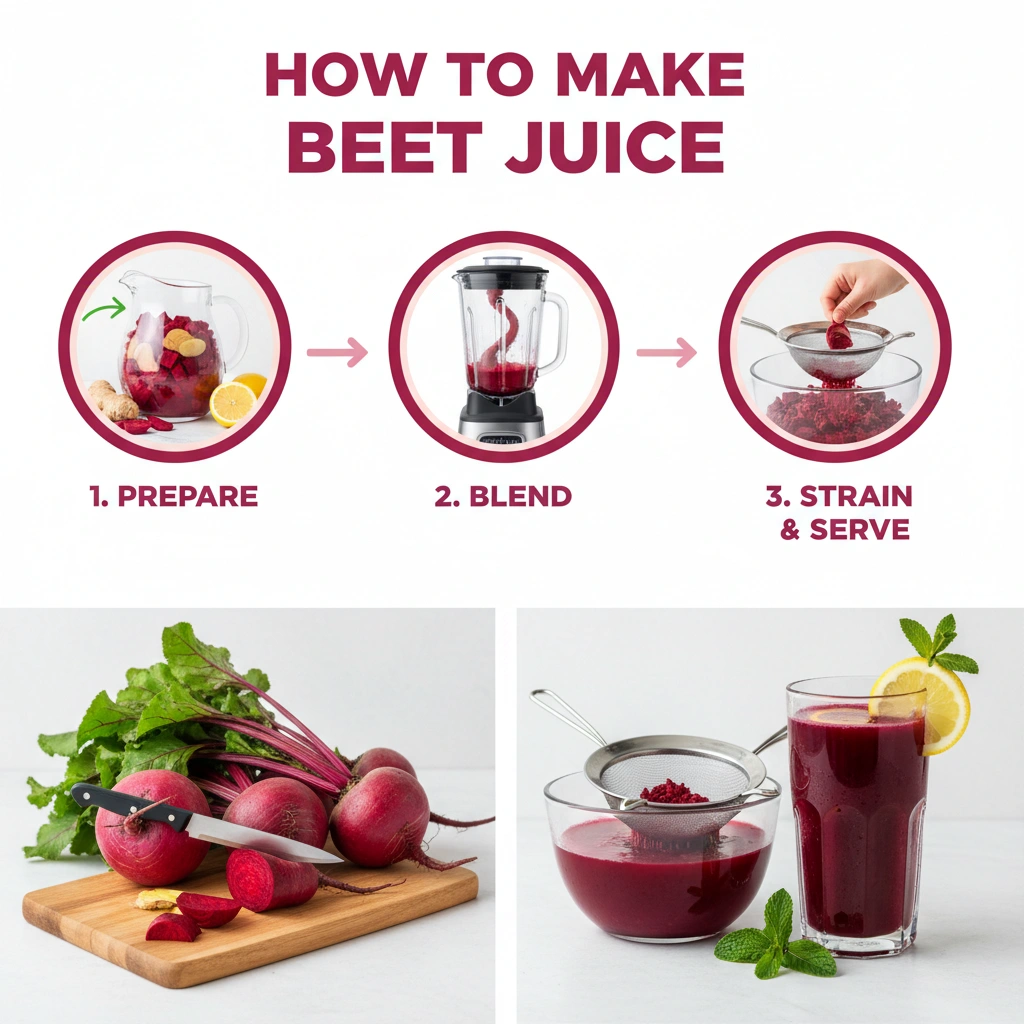
- ⏱️ Prep Time: 10 minutes
- 🍳 Cook Time: 0 minutes
- 👥 Servings: 2 servings
- 📊 Difficulty: Easy
Selecting the Best Ingredients for Your Juice
Before we dive into the blending process, it is important to talk about the quality of your produce. Since this recipe is raw and unprocessed, the flavor of your juice depends entirely on the ingredients you choose. Look for beets that are firm to the touch and have smooth, unblemished skins. If they still have their leafy greens attached, that is a great sign of freshness. Don’t throw those greens away, either—they are delicious sautéed with a bit of garlic! For the sweetness, we use crisp apples. A Granny Smith apple provides a lovely tartness, while a Fuji or Gala apple will lean more into the sugary side. The ginger should be tight-skinned and fragrant; avoid any pieces that look shriveled or moldy at the ends. High-quality ingredients ensure your drink is as hydrating and flavorful as possible.
Ingredients for Homemade Beet Juice
- Fresh Beets: 2 medium-sized beets, scrubbed and ends trimmed
- Sweet Apples: 2 large apples (Granny Smith or Fuji), cored and sliced
- Fresh Ginger: 1-inch knob, peeled (more if you like a spicy kick)
- Lemon Juice: 1 tablespoon of freshly squeezed lemon juice
- Filtered Water: 1/2 cup to 1 cup, depending on your preferred thickness
- Ice: 1 cup for serving to keep the drink chilled
- Fresh Mint: A few sprigs for an aromatic garnish
Step-by-Step Instructions
1. The first step in learning how to make beet juice is the preparation of the vegetables. Begin by thoroughly washing your beets under cold running water. Because beets grow in the earth, they can carry quite a bit of soil. Use a vegetable brush to scrub the skins clean. While you can peel the beets with a vegetable peeler if you prefer a smoother flavor, leaving the skins on adds extra nutrients. If you choose to leave the skin on, just ensure they are perfectly clean. Trim off the root end and the stem end, then chop the beets into small, manageable cubes about one inch in size. This ensures they will process easily in your blender.


2. Next, prepare your secondary ingredients. Core your apples and cut them into similar-sized chunks. There is no need to peel the apples, as the skin contains much of the fiber and flavor. For the ginger, use the edge of a spoon to gently scrape away the thin skin. This is much more efficient than using a knife and saves more of the ginger flesh. Roughly chop the ginger into smaller bits. Having all your ingredients prepped and ready to go makes the blending process smooth and stress-free.
3. Now, it is time to use your blender. Place the chopped beets, apple chunks, ginger, and lemon juice into the blender jar. Pour in half a cup of filtered water to start. The water acts as a “bridge” for the blades, helping them catch the solid pieces of produce. If you are using a high-powered blender, you may not need much water, but a standard blender will benefit from the extra liquid to get things moving. Secure the lid tightly to prevent any crimson splashes from decorating your kitchen walls.
4. Start the blender on its lowest speed setting. Once the blades have begun to break down the larger chunks of beet and apple, gradually increase the speed to high. Blend the mixture for about 60 to 90 seconds. You are looking for a completely liquefied consistency. If the mixture seems too thick or the blender is struggling, add the remaining half cup of water and continue to blend. The result should look like a thick, vibrant puree.
5. Since we are making juice and not a smoothie, we need to separate the liquid from the fibrous pulp. Place a fine-mesh sieve or a nut milk bag over a large glass bowl or pitcher. Pour the blended mixture into the sieve. If you are using a sieve, use the back of a large spoon to press down on the pulp, forcing as much juice through as possible. If you are using a nut milk bag, gather the top and squeeze the bag firmly with your hands. This method is often preferred because it extracts every single drop of juice, leaving the pulp completely dry.
6. Once you have extracted all the juice, give it a quick taste. If the beet flavor is too intense, you can add a little more lemon juice or a splash of water. If you prefer a colder experience, you can return the strained juice to the blender with a few handfuls of ice and pulse it briefly for a frozen, slushie-like texture, or simply move to the serving stage. Your homemade juice is now ready to be enjoyed.
7. To serve, fill two tall glasses with fresh ice. Pour the juice slowly over the ice, watching that incredible color swirl around the cubes. The ice helps keep the drink chilled and makes it even more refreshing on a warm day. For a professional touch, add a garnish of fresh mint or a thin slice of lemon on the rim of the glass. Serve immediately while the flavors are at their peak and the drink is most hydrating.
To prevent staining your hands when handling beets, you can wear a pair of thin kitchen gloves. If you do get beet juice on your skin, a little lemon juice and salt can help scrub the color away. Additionally, for the most refreshing experience, chill your beets and apples in the refrigerator for a few hours before blending. This ensures the juice is cold from the very first sip even before you add the ice cubes.
Variations & Substitutions
One of the best things about making your own beverages is the ability to customize. If you find the earthiness of beets a bit too strong, try a “Green Beet” variation by adding a handful of fresh spinach or kale to the blender; this adds a leafy freshness and even more nutrients. For those who love a bit of tropical flair, substitute one of the apples for a cup of frozen pineapple chunks. The pineapple adds a wonderful sweetness that pairs perfectly with ginger. If you are looking for an even more hydrating option, replace the filtered water with coconut water. For a sugar-free or low-carb version, replace the apples with cucumber and increase the lemon juice for a savory, refreshing tonic that is perfect for cooling down.
Storage & Make Ahead
Fresh beet juice is best enjoyed immediately to take full advantage of its nutritional profile and vibrant flavor. However, if you have leftovers, you can store them in an airtight glass jar or bottle in the refrigerator for up to 48 hours. Give the jar a good shake before drinking, as natural separation will occur. If you want to prep this long-term, you can pour the juice into ice cube trays and keep them frozen. These beet juice cubes can be dropped into smoothies later or added to a glass of water for a slow-release flavor boost. Avoid storing in plastic containers as the beets will likely stain them permanently.
Serving Suggestions for the Ultimate Refreshment
To truly elevate the experience of drinking this juice, consider the atmosphere. This drink is incredibly hydrating, making it the perfect post-yoga or post-run treat. If you are serving this at a brunch, it looks beautiful in glass carafes. You can also turn this into a “mocktail” by filling a glass halfway with the beet juice and topping the rest with sparkling mineral water or club soda. The bubbles add a celebratory feel to the drink. Adding a garnish like a sprig of rosemary instead of mint can introduce a sophisticated, herbal aroma that complements the earthiness of the beets beautifully.
Nutrition Information (Per Serving)
Calories: 110 kcal
Carbohydrates: 26g
Fiber: 5g
Sugars: 18g
Vitamin C: 25% DV
Learning how to make beet juice is a simple skill that yields high rewards. It is a beverage that feels like a treat but treats your body with kindness. By following these steps and using a high-speed blender, you can enjoy a café-quality drink right in the comfort of your own home. The combination of sweet, tart, and spicy notes ensures that every glass is a refreshing journey for your palate. Enjoy your vibrant creation!
❓ Frequently Asked Questions
1
How long does beet juice last in fridge?
Freshly made beet juice is best enjoyed immediately for maximum nutrients, but you can store it in an airtight container for up to 48 hours. Keep it chilled in the refrigerator and give it a quick shake or stir before drinking, as natural separation will occur over time.
2
Can I make beet juice ahead of time?
Yes, you can prep beet juice up to two days in advance. To maintain the vibrant color and prevent oxidation, add a splash of lemon juice before sealing the container. It makes a great grab-and-go option for busy mornings or a healthy post-workout recovery drink.
3
What can I substitute for ginger?
If you do not have fresh ginger, you can use a pinch of ground ginger or omit it entirely. For a different zing, try adding a squeeze of fresh lemon or lime juice. These citrus additions provide a similar brightening effect that balances the earthy sweetness of the beets.
4
How do I know when the juice is done?
Since this recipe uses a blender, you know it is ready when the beets and water are completely pulverized into a smooth, liquid pulp. After straining through a sieve or nut milk bag, the resulting liquid should be thin, vibrant red, and free of any large solid chunks.
5
Can I freeze beet juice?
Beet juice freezes exceptionally well! Pour the juice into ice cube trays for easy portioning later. These frozen cubes can be added to future smoothies for a nutritional boost or thawed in the fridge for a quick drink. Frozen juice stays fresh for about three months in the freezer.