Best Kale for Juicing: Perfect Guide
If you have ever embarked on a health journey, you likely know that green juice is the gold standard of liquid nutrition. However, not all greens are created equal. When searching for the best kale for juicing, you will quickly find that the variety you choose dictates the flavor profile, nutrient density, and even the liquid yield of your final drink. In this comprehensive guide, we break down the top ten kale varieties used by wellness enthusiasts, ranging from the peppery classic curly leaf to the sweet and tender Red Russian. You will discover which types are easiest to prep and which offer the most potent health benefits for your daily routine.
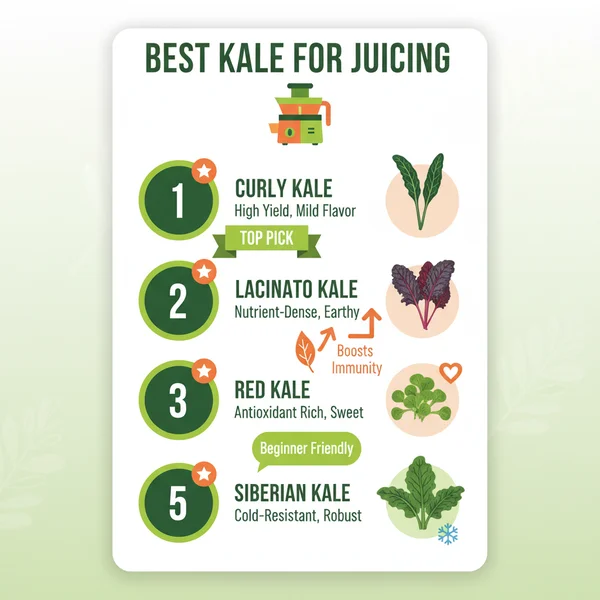
- Curly Kale (The Reliable Standard)
- Lacinato/Dinosaur Kale (The Flavor King)
- Red Russian Kale (The Sweetest Option)
- Baby Kale (The Low-Prep Choice)
- Siberian Kale (The High-Yield Giant)
- Scarlet Kale (The Antioxidant Powerhouse)
- Redbor Kale (The Vibrant Nutrient-Dense Pick)
- Premier Kale (The Smooth Leaf Variety)
- Beedy’s Camden Kale (The Juicy Heirloom)
- White Russian Kale (The Cold-Hardy Blend)
The Complete List of Best Kale Varieties for Juicing
#1: Curly Kale
Curly kale is perhaps the most recognizable variety and is often cited as the best kale for juicing due to its widespread availability. It features tight, ruffled leaves and a fibrous stalk that packs a punch of vitamin K and C. While it has a slightly bitter, peppery flavor, it provides an excellent yield when processed through a centrifugal or masticating juicer. Because the leaves are so sturdy, they hold up well in the refrigerator for days before use. If you are looking for a robust base for a green juice, curly kale is the standard starting point for most enthusiasts.
#2: Lacinato (Dinosaur) Kale
Commonly referred to as Dinosaur or Tuscan kale, Lacinato is a favorite among professional chefs and juicing experts alike. It is arguably the best kale for juicing if you prefer a smoother, less bitter taste profile. Its long, dark blue-green leaves are textured but lack the intense ruffles of curly kale, making them much easier to clean. Lacinato kale is rich in folate and offers a deep, earthy flavor that pairs beautifully with citrus and ginger. Many find that it produces a darker, more aesthetically pleasing juice that feels more concentrated in minerals than other lighter varieties.
#3: Red Russian Kale
If you are sensitive to the “green” taste of most brassicas, Red Russian might be the best kale for juicing for your palate. This variety features flat, fringed leaves with distinct purple veins. It is significantly sweeter than curly or Lacinato varieties, especially when harvested after a light frost. Because the stems are more tender, they are easier to pass through a juicer without causing as much friction or heat. This variety adds a subtle sweetness to your drink, reducing the need for high-sugar fruits like apples or pears to mask the vegetable flavor.
#4: Baby Kale
Baby kale is simply young kale leaves that have been harvested early. It is an excellent choice for those who prioritize convenience. Since the leaves are small and delicate, your prep time is virtually nonexistent; you don’t even need to remove the stems. While it is milder in flavor, it is still packed with the same essential nutrients as mature kale. It is the best kale for juicing when you are in a rush and want a light, refreshing beverage that doesn’t require heavy-duty cleaning or chopping. It blends effortlessly with lighter ingredients like cucumber and celery.
#5: Siberian Kale
Siberian kale is known for its massive, broad leaves and incredible cold-hardiness. For those who juice in large volumes, this is the best kale for juicing because of the sheer surface area of the leaves. It belongs to a different botanical group than curly kale, giving it a much milder, almost cabbage-like flavor. The leaves are high in moisture, which translates to a higher juice yield per pound of produce. If you are making juice for multiple servings, using Siberian kale ensures you get more liquid for your effort compared to the more fibrous, ruffed varieties.
#6: Scarlet Kale
Scarlet kale is a stunning variety that features deep purple and reddish leaves. It is often considered the best kale for juicing when you want to maximize your intake of anthocyanins—the powerful antioxidants responsible for the red and purple pigments in plants. When juiced, it contributes a complex, slightly nutty flavor and a darker hue to your beverage. It is nutritionally dense and provides a great alternative to standard greens if you are looking to rotate your ingredients to prevent “alkaloid buildup,” a common practice among dedicated daily juicers.
#7: Redbor Kale
Redbor kale is an ornamental and edible variety that looks like a purple version of curly kale. It is one of the best kale for juicing varieties because of its intense nutrient profile and striking color. The flavor is slightly more pungent than Red Russian, but it softens significantly when combined with a base of lemon and ginger. Redbor is particularly high in Vitamin A and C. Using this variety ensures that your juice is not only a nutritional powerhouse but also visually enticing, which can be a great way to encourage children or picky eaters to try green juices.
#8: Premier Kale
Premier kale, often sold as “Smooth Leaf Kale,” is a fast-growing variety that bridges the gap between the sweetness of Red Russian and the hardiness of Siberian kale. It is the best kale for juicing for people who grow their own produce, as it yields heavily and is easy to harvest. The leaves are smooth and broad, which makes them very easy to wash and feed into a juicer chute. It lacks the tough, woody stems found in some older curly varieties, making it a very efficient choice for those using smaller, vertical masticating juicers that might struggle with thick fiber.
#9: Beedy’s Camden Kale
An heirloom variety from the coast of Maine, Beedy’s Camden kale is prized for its large, silvery-green leaves. It is often touted as the best kale for juicing in the heirloom category because it stays tender and sweet even as the leaves grow quite large. It has a high water content compared to more leathery varieties, resulting in a cleaner, crisper juice. Because it is an heirloom, it often contains a wider spectrum of trace minerals compared to hybridized supermarket varieties. It is an excellent choice for a gourmet juice blend that focuses on high-quality, organic ingredients.
#10: White Russian Kale
White Russian kale is a sister variety to the Red Russian and is arguably one of the most resilient and sweet kales available. It features white veins and a flat leaf that is incredibly succulent. This variety is often considered the best kale for juicing during the winter months because its sugar content increases as the temperature drops. The flavor is exceptionally clean and lacks any bitter aftertaste, making it the perfect “gateway” kale for beginners. It integrates seamlessly into any green juice recipe without overpowering other delicate flavors like cucumber, parsley, or mint.
How to Choose the Best Kale for Juicing
Selecting the best kale for juicing involves more than just picking the first bunch you see at the supermarket. To ensure you get the most nutrients and the best flavor, look for leaves that are vibrant in color and firm to the touch. Avoid any bunches that show signs of yellowing or wilting, as this indicates a loss of enzymes and a potential increase in bitterness. If possible, choose organic kale, as the leaves have a large surface area that can trap pesticides. Texture also plays a role; if you have a slow masticating juicer, you can handle the tough stalks of curly kale. If you have a smaller machine, stick to the softer leaves of Lacinato or Red Russian.
When preparing your juice, remember that while there is zero cooking time involved, the prep time for washing and de-stemming is essential for flavor. A standard green juice recipe for 2 servings usually requires about 4 to 6 large kale leaves. By following these instructions—washing the ingredients thoroughly and alternating kale with juicy items like apples—you can create a drink that is under 150 calories but packed with life-changing micronutrients.
- Roll the Leaves: To get the maximum yield, bunch your kale leaves into a tight ball or roll them up before feeding them into the juicer. This helps the gears or blades grip the greens more effectively.
- Don’t Waste the Stems: Unless your juicer is very low-powered, juice the stems! They contain a high concentration of minerals and add more liquid to your final glass.
- Alternate Ingredients: Feed a piece of kale, then a piece of cucumber or apple. The water-rich fruit helps flush the fibrous kale through the machine, preventing clogs and maximizing extraction.
Conclusion
Finding the best kale for juicing depends largely on your personal taste and the type of equipment you use. If you are a beginner, starting with Lacinato or Red Russian will provide a sweeter, more approachable introduction to green juicing. If you are a veteran looking for the most “bang for your buck,” the high-yield Siberian or nutrient-dense Scarlet varieties are excellent choices. No matter which variety you choose, incorporating this leafy superfood into your daily routine is one of the most effective ways to boost your energy and overall health. Try a few different types this week and see which flavor profile you prefer!
❓ Frequently Asked Questions
1
How long does kale juice last in fridge?
Freshly pressed kale juice is best consumed immediately but can be stored in an airtight glass container for up to 24 to 48 hours. Keep it chilled in the back of the refrigerator to minimize oxidation, though you may notice some separation and a slight loss in nutritional potency over time.
2
Can I make kale juice ahead of time?
Yes, you can make kale juice up to a day ahead, though it is not ideal. To preserve freshness, fill your storage container to the very top to reduce oxygen exposure. Adding a splash of lemon juice helps preserve the vibrant green color and slows down the oxidation process significantly.
3
What can I substitute for Lacinato kale?
If Lacinato kale is unavailable, curly kale is the most common substitute, though it has a more bitter, peppery bite. You can also use baby kale for a much milder flavor or Swiss chard, which offers a similar nutritional profile and juicing consistency without the strong cabbage-like taste.
4
How do I know when kale juice is done?
Your juice is done once all ingredients have passed through the juicer and only dry pulp remains in the waste container. The resulting liquid should be a deep, vibrant green. If the juice tastes overly bitter, you can balance the flavor by adding more apple or fresh lemon.
5
Can I freeze kale juice?
Yes, you can freeze kale juice in silicone ice cube trays for long-term storage. This is a great way to preserve nutrients if you have a large harvest. Once frozen, transfer the cubes to a freezer bag and pop them into smoothies later for an easy nutritional boost.