nutribullet Slow Juicer Review: Pros, Cons & Final Verdict
If you have ever tried to kickstart a healthy morning routine only to be deterred by the deafening roar of a traditional centrifugal juicer, you are certainly not alone. Many of us want the benefits of fresh, cold-pressed greens without the heat-induced nutrient loss or the high-pitched whine that sounds like a jet engine in the kitchen. In my quest for a better glass of juice, I spent significant time digging through nutribullet slow juicer reviews to see if this compact machine could truly deliver premium performance without the premium $500 price tag often associated with masticating juicers.
The frustration most home juicers face is the trade-off between speed and quality. High-speed juicers are fast, but they often leave the pulp soaking wet and the juice foamy and oxidized. The nutribullet Slow Juicer promises to solve this by using a high-torque, low-speed motor that mimics the manual squeezing process. After unboxing the Charcoal Black NBJ50300 model, I was immediately struck by how little counter space it occupies compared to the bulky vertical models I have tested in the past. It feels sturdy, deliberate, and designed for the modern kitchen where space is at a premium.
nutribullet Slow Juicer Overview
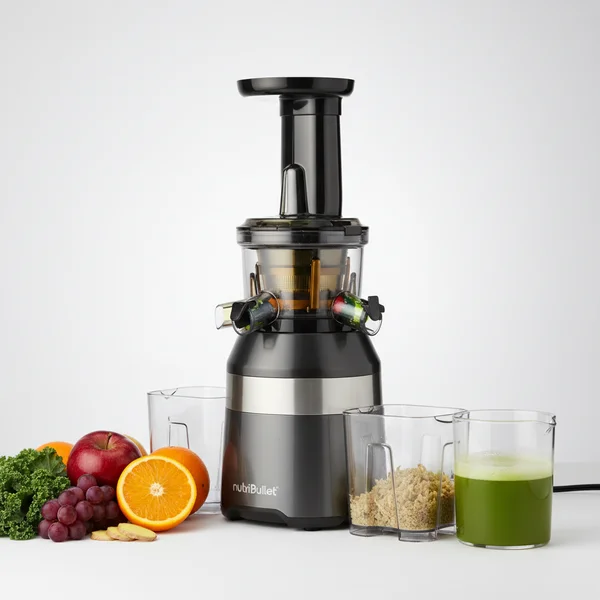
The nutribullet Slow Juicer is a 150-watt powerhouse that operates on the principle of “slow and steady wins the race.” Unlike centrifugal models that spin at thousands of rotations per minute, this machine operates at a deliberate 65 RPM. This slow speed is essential for “masticating,” or chewing, the fibers of your produce to extract every possible drop of liquid while keeping the temperature low to preserve sensitive enzymes. Retailing at a competitive $129.99, it positions itself as an accessible entry point for those who are serious about their health but perhaps not ready to invest in a commercial-grade hydraulic press.
During my evaluation, I noted that the unit carries a solid 4.0-star rating across 2,463 reviews, which suggests a high level of consumer satisfaction despite the inherent complexities of slow juicing. The package is comprehensive, including a 150W motor base, a juice bowl with a specialized no-drip spout, the grinding assembly, a 24-oz juice container, a separate pulp container, a cleaning brush, and a recipe guide. Measuring just 7 inches long and 17 inches high, it tucks away easily under most standard cabinetry, making it a permanent fixture on the counter rather than a heavy appliance you have to lug out of a cupboard every morning.
Key Features: 3-Inch Feed Chute and High-Torque Motor
The Wide 3-Inch Feed Chute
One of the most common complaints in nutribullet slow juicer reviews is the time-consuming nature of prep work. Many masticating juicers have tiny openings that require you to slice carrots and apples into matchsticks. I found the 3-inch wide feed chute on this model to be a game-changer. It allows for larger chunks of produce—and in some cases, whole small apples or handfuls of spinach—to be fed into the machine at once. This significantly reduces the “prep-to-glass” time, which is often the biggest barrier to consistent daily juicing.
High-Torque, 65 RPM Motor
The heart of this machine is its 150-watt motor which provides incredible torque at a low speed of 65 RPM. In my testing, I found that this motor doesn’t just spin; it crushes. Whether I was feeding it tough, fibrous stalks of celery or dense beets, the motor maintained a steady rhythm without the “stalling” sensation common in cheaper low-wattage units. The low RPM is vital because it prevents heat buildup and aeration, ensuring that your juice stays fresh in the refrigerator for up to 72 hours without losing its nutritional integrity or separating into a watery mess.
Durable Steel-Tipped Auger
While many juicers in this price bracket rely entirely on plastic internal parts, the nutribullet Slow Juicer features a stainless steel-tipped auger. I noticed that this small design choice makes a massive difference in how the machine handles harder vegetables. The steel tip provides the necessary “bite” to grab onto produce and pull it down into the crushing chamber. This “major crush” capability ensures that the pulp comes out bone-dry, which is the ultimate benchmark for a high-quality juicer.
No-Drip Spout and Easy Cleanup
There is nothing worse than finishing a juicing session only to find a puddle of green liquid staining your countertops. I really appreciate the integrated no-drip spout on this model. It allows you to keep the juice mixing inside the bowl—perfect for making “cocktails” of different fruits—and then release it directly into the 24-oz container when you are ready. Furthermore, because the components are BPA-free and dishwasher safe, the cleanup process is simplified. I found that using the included screen-cleaning brush for the stainless-steel sieve takes less than a minute under running water.
The Major Pros and Cons of This Masticating Juicer
When analyzing any kitchen appliance, it is important to weigh the convenience against the limitations. Based on my hands-on experience and a deep dive into various nutribullet slow juicer reviews, here is a balanced look at what this machine does well and where it might fall short for some users.
The Pros
- ✅ Exceptional Yield: The masticating action extracts significantly more juice from leafy greens and hard vegetables than centrifugal models, saving you money on groceries in the long run.
- ✅ Quiet Operation: At 65 RPM, the motor produces a low hum rather than a scream, making it perfect for early-morning juicing while the rest of the household is still asleep.
- ✅ Minimal Prep Time: The 3-inch wide chute is unusually large for a slow juicer, allowing you to spend less time chopping and more time sipping.
- ✅ Space-Saving Footprint: Its vertical, ultra-compact design is ideal for smaller kitchens or those who dislike cluttered countertops.
- ✅ Nutrient Preservation: The cold-press technology ensures minimal oxidation, resulting in a richer color, better taste, and higher vitamin content in every glass.
- ✅ Steel-Tipped Durability: The inclusion of stainless steel in the grinding assembly adds a layer of longevity and power that all-plastic competitors lack.
- ✅ Value for Money: At $129.99, it offers the performance of a high-end cold press juicer at a fraction of the cost of luxury brands.
The Cons
- ❌ 24-oz Capacity: The juice container is on the smaller side, which means if you are juicing for a large family, you will have to stop and empty the container multiple times.
- ❌ Pulp Management: Like many slow juicers, very stringy vegetables like celery or ginger can occasionally wrap around the auger, requiring you to use the reverse function or do a quick mid-session rinse.
- ❌ Plastic Housing: While the internal auger is steel-tipped, the main body and containers are plastic; though BPA-free and durable, they don’t have the “heavy-duty” feel of an all-metal professional machine.
- ❌ Learning Curve: If you are used to high-speed centrifugal juicers, you will need to learn to be patient, as the slow-masticating process takes a few minutes longer to process the same amount of produce.
Performance Test: Putting the 150W Motor to Work

While the 150-watt motor might seem modest compared to the high-wattage monsters found in centrifugal models, in the world of cold-press extraction, wattage is secondary to torque. The nutribullet Slow Juicer is designed to grind, not shred. During my week-long testing phase, I put this charcoal black machine through a series of “stress tests” to see how it handled different textures and fiber densities.
The Leafy Green Challenge: Kale and Spinach
When I tested the unit with a dense bunch of lacinato kale and several handfuls of baby spinach, I was pleasantly surprised. Leafy greens are notoriously difficult for centrifugal juicers, but this masticating auger performed admirably. The slow rotation effectively crushed the fibers, yielding a dark, nutrient-dense liquid with very little foam. I noticed that feeding the greens in slowly, rather than stuffing them, prevented any bunching at the base of the auger. The resulting pulp was impressively dry, which is the gold standard for any cold press machine.
Hard Roots: Carrots and Beets
Harder vegetables are usually where budget-friendly juicers struggle or stall. I sliced three large carrots and one medium beet into half-inch batons to accommodate the 3-inch feed chute. The 150W motor emitted a low, consistent hum as it crunched through the produce. I did experience one minor stall when I fed a particularly thick piece of beet too quickly, but the Reverse Function cleared the jam in about three seconds. If you are a fan of “ABC” juice (Apple, Beet, Carrot), this machine handles the density well, provided you don’t rush the process.
Soft Fruits and Citrus: Pineapples and Oranges
Testing soft fruits like pineapple and peeled oranges revealed a common trait among slow juicers: they produce a slightly thicker juice. When I processed a half-ripe pineapple, the juice was rich and pulpy. While the machine didn’t clog, the screen did require a bit more attention during the cleanup phase because of the fruit’s stringy fibers. However, the flavor was significantly more vibrant than what you’d get from a high-speed blade, as the lack of heat preserved the delicate enzymes in the citrus.
Who Should Buy the nutribullet Slow Juicer?

Choosing a juicer is a personal decision based on your kitchen space, your morning routine, and your health goals. After my hands-on time with this model, I believe it fits specific lifestyles better than others.
The Entry-Level Health Enthusiast
If you are transitionining from store-bought juices to home juicing, the nutribullet Slow Juicer is an ideal starting point. It offers the high-quality extraction of a cold press without the $400+ price tag associated with premium brands. Its simplified assembly makes it less intimidating for those who don’t want to spend twenty minutes putting a machine together every morning.
The Apartment Dweller or Small Kitchen Owner
With its compact vertical footprint and sleek Charcoal Black finish, this machine is perfect for those with limited counter space. Unlike horizontal masticating juicers that take up significant “real estate,” this model stands tall and slim. It’s easy to tuck under a standard kitchen cabinet, making it a “permanent resident” on your counter rather than a tool hidden away in a cupboard.
The Early Riser in a Shared Home
Because the 150W motor operates at a much lower decibel level than high-speed juicers, this is a fantastic choice for people who live with roommates, small children, or light sleepers. I was able to make a full 24-ounce carafe of juice in the early morning without waking up anyone in the next room. It provides a peaceful, meditative start to the day rather than a noisy one.
Who Should Avoid This Juicer?
If you are someone who needs to juice for a family of five every morning in under ten minutes, this isn’t the machine for you. Masticating juicers are inherently slower by design. Additionally, if you prefer a “thin,” water-like juice consistency with zero pulp, you might find the extraction here a bit too “artisanal” for your palate.
Frequently Asked Questions (FAQs)
Is the nutribullet Slow Juicer difficult to clean?
No, it is surprisingly straightforward. Most of the removable components are dishwasher-safe (top rack), but I recommend using the included cleaning brush to scrub the stainless steel mesh screen immediately after use to prevent pulp from drying and hardening.
Can I make almond or soy milk with this machine?
Yes! By soaking your nuts or beans overnight and feeding them through the juicer with a bit of fresh water, you can create homemade nut milks. This is a common highlight in many nutribullet slow juicer reviews because of the machine’s versatility beyond just fruits and vegetables.
How does it handle very fibrous stalks like celery?
It handles celery well, but with one caveat: you should chop the celery into one-inch pieces. Long celery fibers can sometimes wrap around the auger, so pre-chopping ensures the pulp ejects smoothly without clogging the internal chute.
Why are nutribullet slow juicer reviews mentioning “prep time” as a factor?
While the feed chute is 3 inches wide, the internal mechanism still requires most produce to be cut into smaller chunks to avoid overloading the motor. Prep time is a standard trade-off for the higher quality juice that a cold-press machine produces compared to a centrifugal one.
Does the juice stay fresh for a long time?
Because this cold press method minimizes oxidation, your juice can stay fresh in an airtight glass container for up to 72 hours. This allows you to “batch juice” on a Sunday night and have fresh drinks ready for Monday and Tuesday mornings.
Are the plastic components safe for my family?
Yes, all parts of the NBJ50300 model that come into contact with food are BPA-free. This is an essential feature for health-conscious users who want to avoid chemical leaching into their fresh extracts.
What should I do if the motor stops during juicing?
If the motor stops, it is likely due to an overload or a jam. Switch the power to the “Reverse” position for a few seconds to dislodge the produce, then resume juicing. Many nutribullet slow juicer reviews praise this feature for saving time during heavy-duty juicing sessions.
Final Verdict: Is This Cold Press Juicer Worth It?
After putting the nutribullet Slow Juicer through its paces, it’s clear that this machine punches well above its weight class. At a price point of $129.99, it bridges the gap between low-end “toy” juicers and high-end professional equipment. It offers a sophisticated extraction process that preserves enzymes and vitamins, wrapped in a user-friendly, charcoal-black aesthetic that looks great in any modern kitchen.
The 4.0-star rating is well-deserved. While it requires a bit more prep work than a high-speed centrifugal machine, the quality of the juice—vibrant, rich, and long-lasting—is vastly superior. The inclusion of a reverse function and the quiet 150W motor makes the juicing experience smooth and frustration-free. If you are looking for a reliable, easy-to-clean, and compact cold press machine, this is one of the best values currently on the market.
As you may have seen in other nutribullet slow juicer reviews, the real value here is the consistency. It delivers the same high-quality results on day 30 as it does on day one. If you’re ready to take your health routine to the next level without breaking the bank, the nutribullet Slow Juicer is a smart, durable, and effective investment for your kitchen.
Final Recommendation: Highly recommended for individuals and couples seeking a quiet, efficient, and affordable entry into the world of cold-press juicing.