
Tumis Kacang Panjang Tempe Recipe: Quick & Savory
Imagine a sizzling wok where the earthy, nutty aroma of fermented soybeans meets the fresh, snappy crunch of vibrant green long beans. Tumis kacang panjang tempe is a masterpiece of Indonesian home cooking, offering a perfect balance of sweet, savory, and subtle spicy notes that dance on your palate with every bite. This dish is a celebrated staple in Southeast Asian households because it manages to be both incredibly humble and deeply satisfying. The caramelization of the sweet soy sauce against the protein-rich tempeh creates a texture that is nothing short of addictive. Whether you are a seasoned fan of Indonesian cuisine or a curious beginner looking for a healthy, flavor-packed meal, this recipe will quickly become a favorite in your kitchen. It is the ultimate comfort food that brings a touch of tropical sunshine to your dining table.
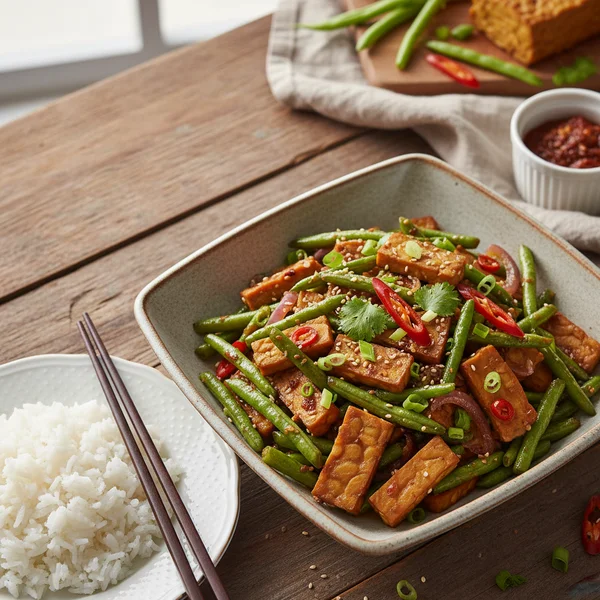
- ⏱️ Prep Time: 10 minutes
- 🍳 Cook Time: 10 minutes
- 👥 Servings: 4 servings
- 📊 Difficulty: Easy
Essential Ingredients for Success
To achieve the authentic flavor profile of a traditional Indonesian stir-fry, it is important to gather fresh ingredients. The quality of your produce will directly impact the final taste and texture of the dish. Here is everything you will need to prepare this classic recipe:
- Main Components:
- 300 grams long beans (kacang panjang), trimmed and cut into 3-4 cm lengths
- 200 grams fresh tempeh, cut into small cubes or thin matchsticks
- 100 ml water (to help create a light sauce)
- 3 tablespoons vegetable oil for sautéing and frying
- Aromatics and Spices:
- 5 cloves of garlic, thinly sliced
- 7 shallots, thinly sliced (red onions can be a substitute)
- 2 large red chilies, sliced diagonally (remove seeds for less heat)
- 3 bird’s eye chilies, kept whole or sliced (optional, for extra spice)
- 2 cm piece of galangal (laos), bruised to release its oils
- 2 Indonesian bay leaves (daun salam)
- Seasoning Liquid:
- 3 tablespoons sweet soy sauce (kecap manis)
- 1 tablespoon oyster sauce (optional, for extra umami)
- 1 teaspoon salt (adjust to taste)
- 1/2 teaspoon white pepper powder
- 1/2 teaspoon granulated sugar (to balance the savory notes)
Step-by-Step Instructions
The secret to a perfect tumis kacang panjang tempe lies in the timing. You want the tempeh to be golden and the beans to retain their bright green color and snappy texture. Follow these detailed instructions to ensure your stir-fry comes out perfectly every time.
- Preparing the Tempeh: Begin by taking your block of tempeh and cutting it into uniform shapes. I recommend small cubes of about 1 cm or thin matchsticks. The uniform size ensures that every piece cooks at the same rate. Heat two tablespoons of vegetable oil in a wok or large frying pan over medium-high heat. Once the oil is shimmering, add the tempeh. Fry the tempeh until it turns a light golden brown on all sides. You do not want it to be as hard as a crouton, but it should have a slight crust. This prevents the tempeh from becoming mushy when you add the liquid later. Once golden, remove the tempeh from the pan and set it aside on a paper towel to drain.
- Handling the Long Beans: While the tempeh is draining, prepare your long beans. Wash them thoroughly under cold running water. Trim off the stem ends and cut the beans into 3-4 cm pieces. In Indonesian cooking, these are often cut on a slight diagonal to create more surface area for the sauce to cling to. Keep the beans separate from your aromatics as they will be added later in the process.
- Sautéing the Aromatics: Using the same pan (add another tablespoon of oil if necessary), reduce the heat to medium. Add the sliced shallots and garlic. Sauté these slowly until they become translucent and highly fragrant. Be careful not to burn the garlic, as it can turn bitter. Once the shallots are soft, add the sliced red chilies, bird’s eye chilies, bruised galangal, and bay leaves. Stir-fry these for another 2 minutes until the chilies have softened and the aroma of the galangal fills your kitchen.
- The Primary Stir-Fry: Increase the heat back to medium-high. Add the prepared long beans to the wok. Toss them vigorously with the sautéed aromatics for about 2 minutes. You will notice the green of the beans becoming more vibrant as they hit the heat. This high-heat sautéing seals in the moisture and keeps the beans crunchy.
- Integrating the Tempeh: Return the fried tempeh cubes to the wok. Toss everything together so the tempeh is well-distributed among the beans and aromatics. At this stage, the ingredients are beginning to mingle, but they need the seasoning liquid to truly unite.
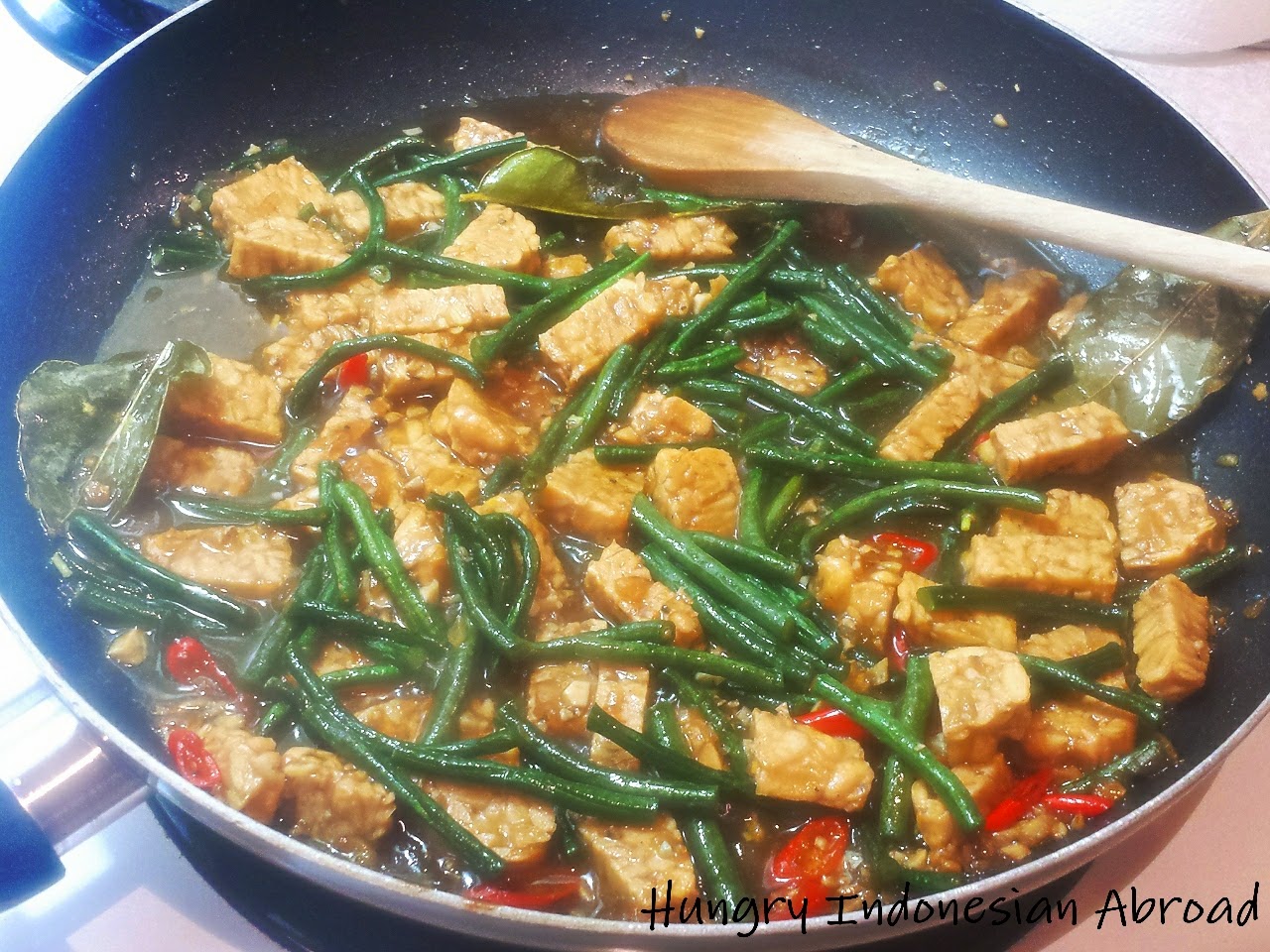
- Seasoning and Simmering: Pour in the 100 ml of water. Immediately follow this with the sweet soy sauce (kecap manis), salt, sugar, and white pepper. The sweet soy sauce is the star ingredient here; its thick, syrupy consistency and molasses-like flavor provide the signature Indonesian taste. Stir everything thoroughly to ensure every bean and piece of tempeh is coated in the dark, glossy sauce.
- The Final Reduction: Let the mixture simmer for about 3 to 4 minutes. You want the water to reduce and thicken into a light glaze that coats the ingredients without leaving a large pool of liquid at the bottom of the pan. This is what Indonesians call “nyemek”—a state where the dish is moist and saucy but not soupy. Taste the sauce during the final minute. If you prefer it sweeter, add a touch more kecap manis. If it needs more punch, a pinch of salt will do.
- Plating and Serving: Once the beans are tender-crisp (they should still have a “snap” when you bite into them), turn off the heat. Remove the bay leaves and the piece of galangal before serving. Transfer the tumis kacang panjang tempe to a serving platter. This dish is traditionally served warm alongside a steaming bowl of jasmine rice. The contrast of the hot rice with the savory-sweet stir-fry is culinary perfection.
For the best results, always use fresh, firm long beans. If you cannot find long beans, French green beans make an excellent substitute, though they may require 1-2 minutes less cooking time. When frying the tempeh, don’t overcrowd the pan; frying in batches ensures a crispy exterior. If you want a deeper flavor, you can add a tablespoon of fermented soybean paste (tauco) during the aromatic sautéing phase. Lastly, the “bruising” of the galangal is crucial—simply smash it with the side of your knife or a meat mallet to break the fibers and let the citrusy oils escape into the sauce.

Variations & Substitutions
The beauty of tumis kacang panjang tempe is its versatility. This recipe is naturally vegetarian, but it can easily be adapted to fit various dietary needs or flavor preferences.
If you want to make this dish vegan-friendly, simply ensure your oyster sauce is a mushroom-based vegetarian version, or omit it entirely and use a splash of light soy sauce instead. For those who enjoy seafood, adding 100 grams of small peeled shrimp during the sautéing stage adds a wonderful briny sweetness that complements the tempeh perfectly.
For a gluten-free version, you must be careful with the sweet soy sauce. Most traditional kecap manis contains wheat. Look for a certified gluten-free sweet soy sauce or make your own by reducing gluten-free tamari with brown sugar until syrupy. If you find tempeh too earthy, you can substitute half of the tempeh with firm tofu cubes, which provide a softer, silkier contrast to the crunchy beans.
Storage & Make Ahead Instructions
Tumis kacang panjang tempe is an excellent candidate for meal prep because the flavors actually deepen as the dish sits. You can store leftovers in an airtight container in the refrigerator for up to 3 days. When you are ready to eat, simply reheat it in a pan over medium heat with a tablespoon of water to loosen the sauce, or use a microwave for 1-2 minutes.
While you can freeze this dish, the texture of the long beans will become much softer upon thawing. If you do choose to freeze it, store it in a freezer-safe bag for up to one month. For the best “make-ahead” results, you can prep all the ingredients (slice the aromatics and cut the beans) the night before, so the actual cooking time remains a lightning-fast ten minutes.
Nutrition Information
This dish is not only delicious but also packs a nutritional punch. Tempeh is a fermented soy product that is high in protein, probiotics, and minerals like magnesium and phosphorus. Long beans provide a healthy dose of fiber, Vitamin A, and Vitamin C.
Approximate Nutrition per Serving:
- Calories: 210 kcal
- Protein: 12g
- Carbohydrates: 18g
- Fat: 11g
- Fiber: 5g
Note: Nutritional values are estimates based on standard ingredients. Actual values may vary based on specific brands used.
By following this comprehensive guide, you are now ready to create a restaurant-quality tumis kacang panjang tempe in your own kitchen. This recipe proves that you don’t need a long list of ingredients or hours of prep time to create a meal that is healthy, flavorful, and deeply satisfying. Enjoy your cooking journey!
❓ Frequently Asked Questions
1
How long does tumis kacang panjang tempe last in fridge?
This dish lasts up to 3 days in the refrigerator when stored in an airtight container. Reheat it quickly in a pan over medium heat to maintain the texture. Note that the long beans may soften slightly over time, but the savory flavors will deepen as they marinate.
2
Can I make tumis kacang panjang tempe ahead of time?
Yes, you can prep the ingredients or even fry the tempeh a day ahead. However, for the best texture and color, it is highly recommended to perform the final stir-fry right before serving. This ensures the long beans stay crisp and the sauce remains glossy and fresh.
3
What can I substitute for long beans?
If you cannot find long beans, green beans or snap peas work as excellent substitutes. For the tempeh, firm tofu or even fried chicken strips can be used. If sweet soy sauce is missing, a mix of regular soy sauce and brown sugar can replicate the signature flavor profile.
4
How do I know when the dish is done?
The dish is ready when the tempeh is fully coated in the caramelized sauce and the long beans have turned a bright, vibrant green. The beans should be tender-crisp—soft enough to bite through easily but still offering a satisfying crunch. Do not let them turn mushy or brown.
5
Can I freeze tumis kacang panjang tempe?
Freezing is not recommended for this specific recipe. The high water content in long beans causes them to become limp and mushy once thawed. Additionally, tempeh’s texture can become grainy after being frozen in a sauce. It is best enjoyed fresh or from the fridge within a few days.