Buko Juice Recipe: Refreshing & Easy Guide
Imagine yourself lounging on a sun-drenched tropical beach, the sound of rhythmic waves crashing against the shore, and a gentle breeze rustling through palm leaves. In your hand is the ultimate tropical treat: a tall, condensation-beaded glass of freshly prepared buko juice. This iconic Filipino beverage, made from the water and tender meat of young green coconuts, is more than just a drink; it is a cultural staple that brings instant relief from the sweltering heat. Whether you are hosting a summer backyard barbecue, looking for a natural post-workout recovery drink, or simply want to treat your family to a healthy, hydrating beverage, this buko juice recipe is your ticket to paradise. It is incredibly easy to make, remarkably refreshing, and carries a natural sweetness that no bottled juice can ever replicate. Anyone who appreciates clean, crisp flavors and the nourishing benefits of Mother Nature will absolutely fall in love with this recipe.
- ⏱️ Prep Time: 10 minutes
- 🍳 Cook Time: 0 minutes
- 👥 Servings: 2 servings
- 📊 Difficulty: Easy
Ingredients
- 🥥 2 Large Young Coconuts (Buko): Look for green coconuts that feel heavy for their size, ensuring they are full of water.
- 💧 1 Cup Cold Filtered Water: This helps stretch the juice if the coconuts are small, though it is optional if you prefer 100% pure coconut water.
- 🍬 2-3 Tablespoons Simple Syrup or Honey: Adjust according to your preference and the natural sweetness of the coconut.
- 🧊 2 Cups Ice Cubes: Essential for keeping the beverage chilled and invigorating.
- 🥛 1/4 Cup Evaporated Milk or Condensed Milk (Optional): Use this if you want to create the popular “Buko Samalamig” creamy version.
- 🌿 Fresh Mint Leaves or Lime Slices: For a sophisticated garnish.
Step-by-Step Instructions
Following the correct buko juice ingredients and procedure is the key to achieving that authentic, street-side Filipino taste while ensuring the highest level of hygiene and freshness in your own kitchen.

Step 1: Selecting and Preparing the Coconuts
The first step in your journey to a refreshing drink is choosing the right fruit. A “buko” refers specifically to a young coconut. Unlike the brown, hairy mature coconuts used for milk and oil, young coconuts have a green or white outer husk. When you shake them, you should hear a sloshing sound, but it shouldn’t sound hollow—hollow sounds mean the water has begun to absorb back into the meat. To open the coconut safely, place it on a stable cutting board. Using a heavy chef’s knife or a cleaver, carefully shave off the top of the green husk until you see the hard inner shell. Give the top of the shell a few firm strikes in a circular pattern until it cracks open, creating a “cap” that you can lift off.
Step 2: Extracting the Liquid Gold
Once the coconut is open, pour the clear water through a fine-mesh strainer into a large pitcher. Straining is vital because it removes any small bits of the brown husk or shell that might have fallen in during the opening process. This water is incredibly hydrating and filled with electrolytes, making it the perfect base for our beverage. Repeat this for the second coconut. If you find you have less than three cups of liquid, you can supplement it with a little chilled filtered water.
Step 3: Harvesting the Buko Meat
Now comes the most satisfying part of the buko juice ingredients and procedure: the meat. Use a sturdy metal spoon or a specialized coconut shredder to scrape the white flesh from the inside of the shell. For the best texture, aim for long, thin strips. The meat of a young coconut should be soft, translucent, and jelly-like (often called “malauhog” in the Philippines). Avoid coconuts where the meat is hard and opaque, as these are better suited for cooking rather than refreshing drinks. Add these succulent strips directly into the pitcher with the water.
Step 4: Sweetening to Perfection
Taste your natural coconut water first. Some coconuts are naturally very sweet, while others can be slightly salty or bland. If you desire more sweetness, stir in your simple syrup or honey. If you are going for the creamy version, this is the stage where you would whisk in the evaporated or condensed milk. Stir gently with a long-handled spoon to ensure the sweetener is fully dissolved and the coconut strips are evenly distributed throughout the liquid.
Step 5: The Chill Factor
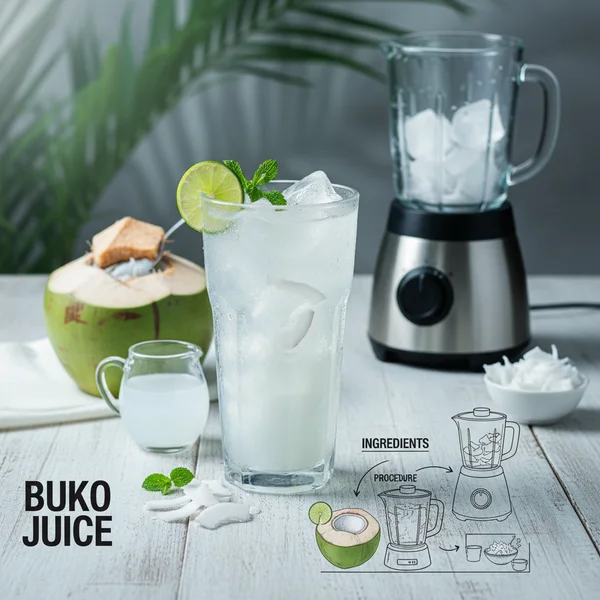
A buko juice is only as good as its temperature. You have two choices here depending on your equipment. You can simply add ice cubes to the pitcher and stir until the liquid is thoroughly chilled. Alternatively, for a more modern twist, you can take half of the coconut water and a cup of ice and put them in a blender. Pulse until you achieve a slushy, frozen consistency, then fold this back into the pitcher with the rest of the water and the meat. This creates a textured, icy experience that stays cold much longer in high heat.
Step 6: Final Garnish and Presentation
To serve, pour the mixture into tall glasses, making sure each glass gets a generous portion of the coconut strips. Add a few more cubes of ice if necessary. For a professional touch, add a garnish of fresh mint or a thin slice of lime on the rim of the glass. The acidity of the lime cuts through the richness of the coconut meat beautifully. Serve immediately while the drink is at its most refreshing and hydrating peak.
For the most flavorful buko juice, try to find “aromatic” coconuts, often labeled as Thai Young Coconuts in grocery stores. Also, always chill your coconuts in the refrigerator for at least 4 hours before opening them; this ensures the water stays cold throughout the preparation process without needing to dilute it with too much ice. If your coconut meat is a bit firm, you can pulse it briefly in the blender to create smaller bits that are easier to sip through a straw.

Variations & Substitutions
The beauty of the buko juice ingredients and procedure is how easily it adapts to different dietary needs and flavor profiles. If you are following a vegan diet, skip the traditional condensed milk and use sweetened coconut condensed milk or a splash of almond milk for creaminess. For a low-calorie version, replace the sugar with stevia or monk fruit sweetener, or simply enjoy the natural sugars of the coconut water. If you want a “Buko Pandan” twist, add a single drop of pandan extract to the pitcher; the floral aroma complements the coconut perfectly. For an adult version during a summer party, a splash of white rum or vodka transforms this chilled beverage into an exotic tropical cocktail. You can also experiment by adding other fruits into the blender, such as lychees or strawberries, to create a fruit-infused coconut fusion.
Storage & Make Ahead
Buko juice is best enjoyed immediately after the coconut is cracked open to benefit from its maximum nutritional value and fresh taste. However, if you have leftovers, store the juice in an airtight glass jar or bottle in the refrigerator. It will stay fresh and chilled for up to 24 hours. Because coconut water oxidizes quickly when exposed to air (it may even turn a slight pinkish hue, which is natural but signals aging), it is not recommended to keep it longer than two days. You can also pour the mixture into popsicle molds and keep them frozen for a healthy, icy treat for kids on a hot afternoon. If making ahead for a party, keep the water and the shredded meat separate in the fridge and combine them just before serving to maintain the best texture.
Nutrition Information (Per Serving)
Calories: 120 kcal | Carbohydrates: 22g | Protein: 2g | Fat: 3g | Sodium: 150mg | Potassium: 600mg | Vitamin C: 10% DV
Note: Nutritional values are estimates based on the use of natural coconut water and a moderate amount of simple syrup. Adding condensed milk will increase the calorie and sugar count significantly.
By mastering this buko juice ingredients and procedure, you are bringing a piece of tropical tradition into your home. It is a drink that satisfies the palate while nourishing the body, proving that sometimes the simplest ingredients provided by nature are the most spectacular. Enjoy your homemade, hydrating masterpiece!
❓ Frequently Asked Questions
1
How long does buko juice last in fridge?
Fresh buko juice is best consumed immediately but can stay fresh in the refrigerator for up to 24 hours. Ensure it is stored in a clean, airtight container to prevent it from absorbing other fridge odors or fermenting quickly due to the natural sugars present in the water.
2
Can I make buko juice ahead of time?
Yes, you can prepare the coconut water and shredded meat a few hours in advance. However, avoid adding ice or sweeteners until you are ready to serve to prevent the juice from becoming diluted or losing its bright, refreshing flavor profile before it reaches your guests.
3
What can I substitute for condensed milk?
For a lighter version, you can substitute condensed milk with evaporated milk and a dash of honey. If you prefer a dairy-free option, coconut milk or simply a bit of cane sugar works perfectly to enhance the natural sweetness of the hydrating coconut water and tender meat pieces.
4
How do I know when buko juice is done?
The juice is ready once the sweetener is fully dissolved and the shredded coconut meat is evenly distributed throughout the liquid. Give it a quick taste; it should be perfectly balanced between sweet and nutty, served cold enough to be deeply hydrating and refreshing for any occasion.
5
Can I freeze buko juice?
You can freeze buko juice into ice pops or cubes for a fun treat. While the texture of the meat might change slightly upon thawing, the frozen coconut water remains delicious and can even be tossed into a blender for a quick and easy tropical slushy consistency.