Bone Building Juice Recipe: Healthy & Strong
Imagine starting your morning with a vibrant, nutrient-dense elixir designed to strengthen your skeletal system from the inside out. This bone building juice is the perfect addition to your wellness routine, offering a refreshing burst of flavor that appeals to health enthusiasts and busy families alike. Whether you are looking to support your athletic recovery or simply want a hydrating beverage to sip on a sunny afternoon, this recipe delivers essential vitamins and minerals in every glass. Its special blend of leafy greens and citrus fruits makes it a powerhouse of calcium, magnesium, and vitamin K, ensuring your body gets exactly what it needs to stay resilient and strong throughout the day. Your family will love how the natural sweetness of the fruit masks the earthy greens, creating a drink that is as delicious as it is functional.
- ⏱️ Prep Time: 10 minutes
- 🍳 Cook Time: 0 minutes
- 👥 Servings: 2 servings
- 📊 Difficulty: Easy
Ingredients
To create this bone building juice, you will need to gather a variety of fresh produce and pantry staples. Each ingredient has been selected for its specific bone-supporting properties. Using high-quality, organic ingredients whenever possible will maximize the nutritional density of the beverage.
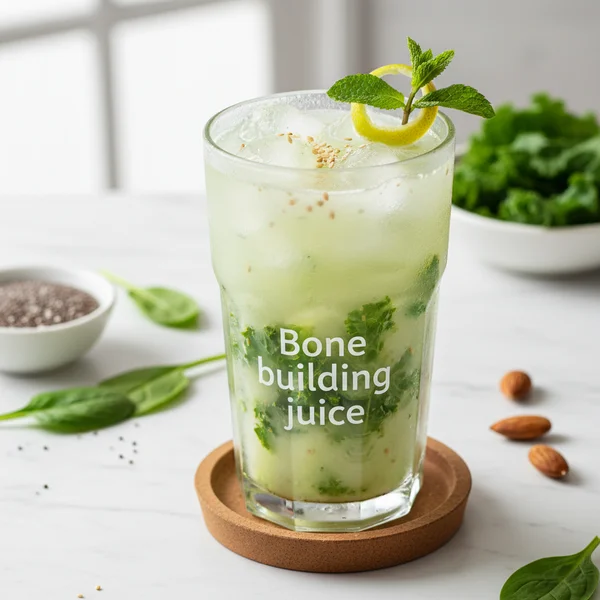
- The Green Base: 2 cups of fresh kale (stems removed) or baby spinach
- The Vitamin C Boost: 1 large orange, peeled and quartered
- The Tropical Sweetener: 1 cup frozen pineapple chunks or mango
- The Mineral Source: 1 cup unsweetened fortified almond milk or coconut water
- The Binding Agent: 1 tablespoon chia seeds or ground flaxseeds
- The Cooling Element: 1/2 cup ice cubes for a chilled finish
- Optional Garnish: A fresh sprig of mint or a thin slice of lime
Step-by-Step Instructions
- Prepare Your Greens: Begin by thoroughly washing your leafy greens. Whether you choose kale or spinach, it is important to rinse them under cold, running water to remove any grit or debris. If you are using kale, take an extra moment to strip the leaves away from the tough, fibrous center stems. These stems can sometimes impart a bitter flavor and may not break down fully in your blender. Pat the leaves dry with a clean kitchen towel or use a salad spinner to ensure no excess water dilutes your flavorful juice.
- Prep the Citrus and Fruit: Peel your orange carefully. Try to leave as much of the white pith as possible, as this part of the fruit is rich in bioflavonoids which aid in the absorption of vitamin C. Vitamin C is crucial because it helps produce the collagen matrix that holds bone minerals together. If you are using fresh pineapple instead of frozen, dice it into small cubes. If you are using frozen fruit, keep it in the freezer until the exact moment you are ready to blend to ensure the drink remains perfectly chilled.
- Load the Blender: The order in which you layer your ingredients in the blender can significantly affect the final texture. Start by pouring in your liquid base, such as fortified almond milk or coconut water. Following the liquid, add your washed greens. Placing the greens near the blades helps them pulverize more quickly and efficiently. Next, add the orange quarters and the frozen pineapple chunks. The weight of the fruit will help push the greens down toward the blades.
- Add the Nutrient Boosters: Sprinkle the chia seeds over the fruit. These tiny seeds are an excellent source of phosphorus and magnesium, both of which are secondary but vital components for maintaining high bone density. Finally, add your ice. Using ice transforms the drink from a room-temperature juice into a refreshing, slushy-like beverage that is incredibly pleasant to drink.
- The Blending Process: Secure the lid on your blender firmly. Start the motor on the lowest speed setting to begin breaking up the larger chunks of frozen fruit and ice. Gradually increase the speed to high. Blend for approximately 60 to 90 seconds. You are looking for a completely smooth, homogenous consistency where no visible pieces of green leaves remain. If your blender has a “smoothie” or “juice” preset, this is the perfect time to use it.
- Consistency Check: Stop the motor and take a look at the mixture. If the juice seems too thick for your preference, you can add an additional splash of almond milk or water and pulse the blender a few more times. If you prefer a thicker, more frozen texture, you can add a few more ice cubes and blend until smooth. The goal is a pourable, hydrating consistency that feels light on the palate.
- Serve and Garnish: Pour the vibrant green liquid into two tall glasses. For a truly professional presentation, add a garnish to each glass. A fresh sprig of mint provides an aromatic element that complements the pineapple, while a thin slice of lime on the rim adds a touch of sophistication. Serve immediately while the drink is still perfectly chilled for the best flavor profile.
To get the most out of your bone building juice, try using frozen fruit instead of fresh. This eliminates the need for excess ice, which can sometimes water down the nutrients. If you find the taste of kale too strong, start with baby spinach and gradually work your way up to a kale-spinach mix. For an extra creamy texture, you can add half an avocado, which also provides healthy fats that help your body absorb the fat-soluble Vitamin K found in the greens.
Variations & Substitutions
This recipe is highly versatile and can be easily adapted to suit various dietary needs or flavor preferences. If you are following a vegan diet, ensure your fortified milk is plant-based, such as soy or pea milk, which often have higher protein and calcium content than other nut milks. For those who want a protein boost, a scoop of unflavored or vanilla collagen peptides can be added to the blender; collagen is a major component of bone tissue and works synergistically with the vitamin C in the orange.
If you find yourself without pineapple, kiwi is an excellent substitution. Kiwis are exceptionally high in Vitamin C and add a delightful tang to the juice. For a lower-sugar version, you can replace the orange with a squeeze of fresh lemon juice and use a handful of frozen berries instead of pineapple. Berries are lower on the glycemic index but still packed with antioxidants that protect bone cells from oxidative stress.
Storage & Make Ahead
For the best results and the highest nutrient retention, it is always recommended to drink your bone building juice immediately after blending. However, if you are short on time in the mornings, you can prep the dry and solid ingredients (the greens, orange, and pineapple) in a freezer-safe bag or container the night before. In the morning, simply dump the contents into the blender, add your liquid and seeds, and you are ready to go.
If you have leftovers, store them in an airtight glass jar in the refrigerator for up to 24 hours. Because this is a natural juice, some separation is normal. Simply give the jar a vigorous shake before drinking to re-incorporate the ingredients. Avoid keeping the juice longer than a day, as the vitamin C will begin to degrade once exposed to light and air.
Estimated Nutrition (Per Serving)
Calories: 165 kcal
Calcium: 35% DV
Vitamin K: 150% DV
Vitamin C: 90% DV
Fiber: 6g
*Nutrition values are estimates based on standard ingredient sizes.
❓ Frequently Asked Questions
1
How long does bone building juice last in fridge?
It is best enjoyed fresh to maximize nutrient potency, but you can store it in an airtight glass jar for up to 24 hours. Oxidation will occur over time, potentially changing the color and flavor, so try to consume it as soon as possible for the best results.
2
Can I make bone building juice ahead of time?
Yes, you can prep the ingredients the night before or blend the juice a few hours in advance. If storing, fill the container to the top to minimize air exposure. Give it a good shake before drinking, as natural separation will occur while it sits in the fridge.
3
What can I substitute for kale?
If you find kale too bitter, bok choy or collard greens are excellent alternatives that are also high in calcium. Spinach is another great choice, though it contains oxalates which can slightly hinder calcium absorption; lightly steaming it first can help if you use it in large amounts.
4
How do I know when bone building juice is done?
Since you are using a blender, the juice is done when the mixture looks completely smooth and vibrant green. If you prefer a thinner consistency, you can strain it through a nut milk bag or fine-mesh sieve, but keeping the pulp ensures you get all the beneficial fiber.
5
Can I freeze bone building juice?
Yes, you can freeze this juice in silicone ice cube trays for later use. Once frozen, transfer the cubes to a freezer-safe bag. They are perfect for dropping into future smoothies or thawing for a quick, hydrating boost, lasting about two to three months in the freezer.