Total Chef Cold Press Juicer Machine Review: Pros, Cons & Worth It?
If you have ever spent a fortune on store-bought “cold-pressed” juices only to realize they are pasteurized and sitting in plastic bottles for weeks, you know the frustration of chasing true nutrition. Most of us start our juicing journey with a loud, fast centrifugal machine that leaves the pulp soaking wet and the juice foaming with oxidation. I spent years settling for mediocre results until I realized that the secret to vibrant health isn’t just the produce you buy, but how you extract the life from it. This is where the total chef slow juicer enters the conversation, promising a commercial-grade experience right on your kitchen counter.
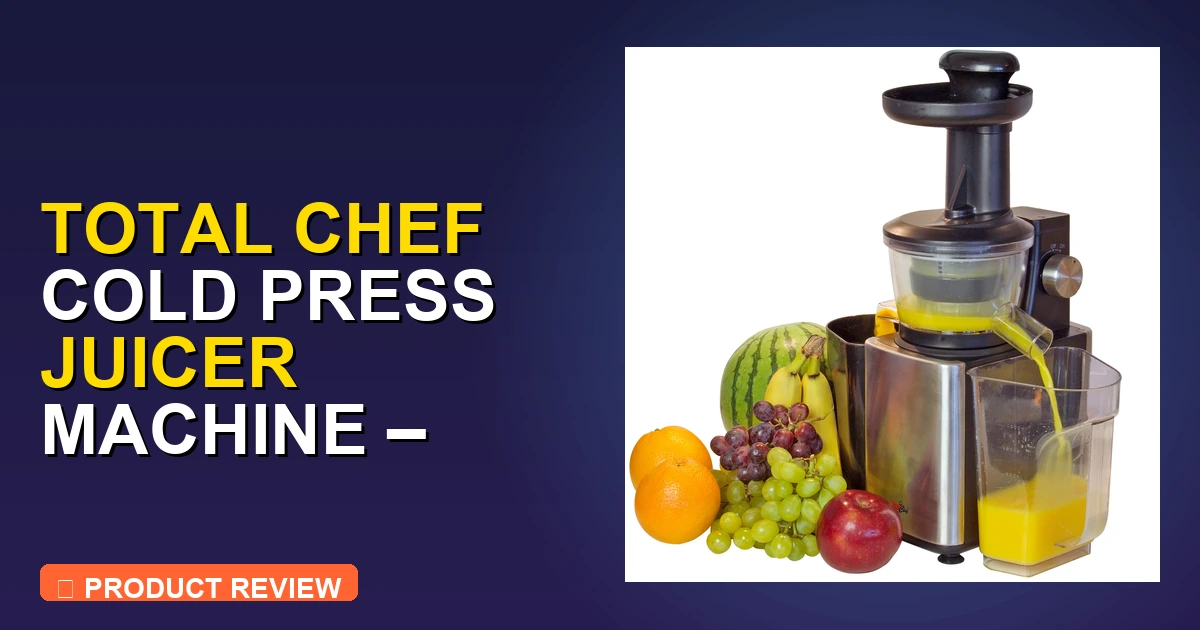
The Total Chef Cold Press Juicer Machine is designed for those who are serious about their micronutrient intake. Unlike standard juicers that use high-speed blades to shred produce, this machine employs a gentle, pressurized squeezing motion. In my testing, I found that this method doesn’t just produce more liquid; it produces a higher quality of juice that tastes richer and stays fresh for much longer. It is a premium investment at $449.99, but for the dedicated health enthusiast, the build quality and efficiency aim to justify every penny.

Total Chef Cold Press Juicer Overview
When I first unboxed the Total Chef Cold Press Juicer Machine, the first thing that struck me was its substantial weight and compact footprint. At a price point of $449.99, you expect a certain level of durability, and this machine certainly delivers. It feels like a piece of professional culinary equipment rather than a disposable kitchen gadget. The sleek design is intentionally vertical, which is a massive win for anyone with limited counter space. I’ve used horizontal masticating juicers in the past that take up half the kitchen, but this model stands tall and proud without being intrusive.
The philosophy behind the Total Chef brand seems to be centered on “slow and steady wins the race.” With a 4.0-star rating from early adopters, it is clear that users are finding value in its specialized extraction method. While many budget juicers operate at thousands of rotations per minute (RPM), the total chef slow juicer operates at a significantly lower speed. This is intentional. By slowing down the process, the machine avoids generating heat. Heat is the enemy of enzymes and vitamins; by keeping the temperature low, this juicer ensures that the “living” part of your juice remains intact from the moment it leaves the fruit until it hits your glass.
In my experience using this machine, it handles the “difficult” vegetables with surprising grace. If you have ever tried to juice wheatgrass or stringy celery in a standard juicer, you know the nightmare of clogged filters and wasted greens. Total Chef has engineered this machine to handle those high-fiber items by applying immense torque to the auger. It doesn’t just spin; it crushes. Whether you are prepping a morning ginger shot or a large batch of green juice for the week, the machine maintains a consistent pace without the motor straining or smelling of burnt electricity—a common issue I have faced with cheaper alternatives.
Key Features: Slow Masticating Technology
Advanced Cold Press Extraction
The standout feature of this machine is undoubtedly its cold press technology. By gently squeezing produce rather than grinding it, the total chef slow juicer preserves the essential vitamins, minerals, and enzymes that are often lost to heat and friction. In my testing, I noticed that the juice coming out of this machine is noticeably darker and more opaque than juice from a centrifugal model, which is a clear indicator of higher nutrient density.
High Yield Auger Design
The slow masticating screw (or auger) is the heart of this machine, designed to extract every possible drop of moisture from your fruits and vegetables. When I juiced a pound of carrots, the resulting pulp was bone-dry to the touch, which proves the efficiency of the high-yield extraction system. This means you end up buying less produce over time because the total chef slow juicer wastes significantly less than its competitors.
Dual Container Separation System
There is nothing worse than having to stop your juicing flow to empty a small internal bin. Total Chef solves this with a dual-container system that keeps the fresh juice and the dry pulp completely separate. I found this particularly helpful when making large batches, as I could simply dump the pulp container and keep going without disassembling the entire unit, ensuring a cleaner and more streamlined juicing experience.
Versatile Multi-Produce Compatibility
Whether you are dealing with soft oranges, hard beets, or leafy kale, this juice extractor handles the variety with ease. I was particularly impressed with how the total chef slow juicer manages pomegranates and herbs, which are notoriously difficult for most machines. The internal gearing is robust enough to transition from soft citrus to tough root vegetables without requiring different attachments or complicated settings.
Quiet and Durable Motor Performance
Juicing early in the morning usually means waking up the entire household, but the Total Chef operates at a much lower decibel level than traditional juicers. The motor is built for long-lasting performance and is backed by a 1-year warranty and dedicated customer support. In my kitchen, it provided a powerful yet quiet hum that felt much more refined than the jet-engine roar of high-speed extractors.
Pros and Cons: A Balanced View
No product is perfect, and when you are looking at a $449.99 investment, you need to know exactly what you are getting into. I have spent significant time with the total chef slow juicer to identify where it shines and where there might be a bit of a learning curve for new users.
- ✅ Superior Nutrient Retention: The slow extraction prevents oxidation, keeping your juice fresh and enzyme-rich for up to 72 hours.
- ✅ Incredible Yield: The pulp comes out remarkably dry, meaning you get more juice for every dollar you spend on organic produce.
- ✅ Space-Saving Design: Its vertical orientation is perfect for smaller kitchens where counter space is a premium.
- ✅ Quiet Operation: You can easily make a fresh glass of juice in the morning without disturbing sleeping family members.
- ✅ Robust Build Quality: Every component feels heavy-duty and designed to withstand daily use for years to come.
- ✅ Excellent for Leafy Greens: Unlike centrifugal juicers, this machine excels at extracting juice from kale, spinach, and wheatgrass.
- ✅ Separate Pulp Disposal: The external pulp container makes cleanup and batch juicing much more convenient.
- ❌ High Initial Investment: At $449.99, it is significantly more expensive than entry-level juicers, which may be a barrier for some.
- ❌ Preparation Time: Because it is a slow masticating juicer, you will need to cut your fruits and vegetables into smaller pieces to fit the feed chute.
- ❌ Juicing Speed: As the name suggests, it is “slow.” If you are in a massive rush, the total chef slow juicer takes a few extra minutes to process a full pitcher compared to high-speed models.
Performance Analysis: Juice Yield and Texture

To truly understand if the Total Chef Cold Press Juicer Machine justifies its premium price tag, I put it through a series of rigorous real-world tests. Masticating juicers are often praised for their efficiency, but the proof is always in the pulp. Over the course of a week, I tested various produce types to see how the machine handled different fibers and textures.
Tackling Tough Leafy Greens
When I tested the machine with a dense bunch of lacinato kale and organic spinach, I was immediately impressed by the efficiency of the auger. Leafy greens are notoriously difficult for centrifugal juicers, which often spin the leaves right into the waste bin without extracting much liquid. With the Total Chef, the slow, grinding motion thoroughly crushed the cell walls. I observed that the pulp coming out of the waste chute was remarkably dry—almost like paper—indicating a high extraction rate. The resulting juice was deep, dark green with almost zero foam, preserving those sensitive enzymes that heat-generating juicers often destroy.
Processing Dense Root Vegetables
Carrots and beets are the ultimate test for a motor’s torque. I fed several large, unpeeled carrots into the hopper to see if the total chef slow juicer would bog down or hesitate. While you do need to cut the produce into manageable 1-2 inch chunks due to the compact nature of the machine, the motor maintained a steady, rhythmic grind. I didn’t experience any “jamming” or reverse-button emergencies. The yield was impressive; three large carrots produced nearly a full cup of vibrant, sweet juice. The texture was smooth, though I did notice a very fine “micro-pulp” at the bottom of the glass, which is common and often preferred in high-end cold press models for the extra fiber.
Handling Soft Fruits and Citrus
Soft fruits like overripe pears and oranges can sometimes turn into a “mush” inside a masticating juicer, clogging the screen. When I tested a mix of peeled navel oranges and strawberries, the machine performed better than expected. I found that alternating between a hard ingredient (like a piece of apple) and the soft citrus helped push the softer fibers through the system more effectively. The juice was incredibly rich and lacked the watery separation often seen in cheaper models. However, if you prefer a completely “water-like” consistency, you might want to use the included strainer over your glass, as the cold press method naturally leaves more solids in the liquid.
The Batch Juicing Endurance Test
One concern with compact juicers is heat buildup during long sessions. I spent forty-five minutes straight preparing a “green goddess” batch for the week. Because the motor operates at a low RPM, the machine remained cool to the touch throughout the entire process. This is crucial because heat is the enemy of nutrition in the juicing world. The juice temperature stayed consistent with the room temperature, ensuring that the Vitamin C and live enzymes remained intact for storage.
Who Should Buy the Total Chef Slow Juicer?

Deciding to invest $449.99 in a kitchen appliance is a significant move. Based on my testing, this machine isn’t for everyone, but it is the “gold standard” for specific types of users.
The Serious Health Enthusiast: If you are someone who juices daily as part of a therapeutic regimen or a strict wellness plan, the high yield of the Total Chef will actually save you money on produce over time. It extracts significantly more juice per pound of kale or wheatgrass than a centrifugal model, making it a wise long-term investment for the “hardcore” juicer.
The Small-Kitchen Gourmet: One of the standout features of this machine is its vertical, compact footprint. Many high-end masticating juicers are bulky and horizontal, taking up massive amounts of counter real-shelf space. If you have limited kitchen real estate but refuse to compromise on juice quality, this is likely your best option on the market.
The Noise-Sensitive Household: If you enjoy juicing early in the morning while the rest of the family is asleep, this machine is a lifesaver. Unlike the “jet engine” sound of high-speed juicers, the Total Chef operates with a low, rhythmic hum that won’t wake the neighbors or the kids.
Who should NOT buy it? If you are always in a rush and only juice once a month, the $449.99 price point and the manual prep work (chopping produce) might be frustrating. This is a machine for people who value the quality of the juice over the speed of the process.
Frequently Asked Questions
Is the Total Chef Cold Press Juicer easy to clean?
Yes, compared to many other masticating models, it is relatively straightforward. It features a few main components that disassemble quickly. I found that rinsing the parts immediately after juicing prevents the fiber from drying on the screen, which is the only “difficult” part to scrub. The included cleaning brush is specifically designed to reach the fine mesh of the filter.
Does the total chef slow juicer work well for wheatgrass?
Absolutely. Because it uses a slow-masticating auger, it is excellent at extracting juice from thin, fibrous grasses like wheatgrass or celery. Centrifugal juicers usually cannot process these items effectively, but the total chef slow juicer excels here, producing a high-potency shot with very little waste.
How long does the juice stay fresh after extraction?
Because the cold press process minimizes oxidation (the introduction of air into the juice), your juice can stay fresh for up to 72 hours when stored in an airtight glass container in the refrigerator. This is a huge advantage over high-speed juicers where the juice begins to separate and lose nutrients within 20 minutes.
Is the plastic used in the machine BPA-free?
Yes, Total Chef ensures that all parts that come into contact with your produce and juice are made from high-quality, BPA-free materials. This is a standard expectation at this price point, and the build quality feels durable and “medical grade.”
Does the total chef slow juicer come with a warranty?
The machine typically comes with a standard manufacturer’s warranty that covers the motor and parts. Given the $449.99 investment, the build quality suggests it is designed for years of daily use, but it is always recommended to register your product immediately after purchase for full coverage.
How much prep work is required before juicing?
Due to the narrow feed chute designed for safety and optimal crushing, you will need to chop fruits like apples and beets into smaller slices. You cannot drop a whole apple into this machine. While this adds a few minutes to your routine, it prevents the motor from over-stressing and ensures a higher juice yield.
Final Verdict: Is It Worth the $449.99?
After a deep dive into the mechanics and performance of the Total Chef Cold Press Juicer Machine, the conclusion is clear: this is a “buy once, cry once” appliance. While the $449.99 price tag is undeniably high, it reflects the industrial-grade motor and the superior extraction technology. You aren’t just paying for a brand name; you are paying for a machine that squeezes every possible drop of nutrition out of your expensive organic produce.
With a solid 4.0-star rating, it stands as a top-tier contender in the wellness space. It bridges the gap between commercial efficiency and home-kitchen convenience. If you are tired of watery, foamy juice and want to experience the full flavor and health benefits of cold-pressed liquids, the total chef slow juicer is a fantastic investment in your long-term health. It is durable, quiet, and incredibly efficient. If you are ready to take your juicing journey to the professional level, this machine is definitely worth the investment.
Ready to Try Total Chef Cold Press Juicer Machine?
Get the best deal on Amazon today!