How to Make Stock Concentrate: Easy & Rich
Imagine walking into your kitchen after a long day and being greeted by the savory, deep aroma of a slow-simmered essence that promises to elevate any meal from ordinary to extraordinary. Learning how to make stock concentrate is more than just a culinary skill; it is a way to capture the very soul of your ingredients and preserve them in a convenient, space-saving format. This recipe is designed for those who appreciate the richness of a professional kitchen base but prefer the control and purity of home-cooked food. Whether you are a weekend meal prepper or a gourmet enthusiast, this liquid gold will become your most-prized secret weapon. It transforms simple soups, sauces, and stews into masterpieces with just a single spoonful, making it a favorite for home cooks who value both flavor and efficiency.
- ⏱️ Prep Time: 15 minutes
- 🍳 Cook Time: 4 hours
- 👥 Servings: 32 servings
- 📊 Difficulty: Medium
Ingredients
To create a truly robust concentrate, you need high-quality ingredients that offer deep complexity. This recipe focuses on a poultry or meat-based version, but you can easily adapt it for vegetables.
- The Foundation: 5 pounds of raw chicken or beef bones (knuckles and marrow bones are best for gelatin content)
- The Aromatics: 3 large yellow onions, skin-on and halved to add color
- The Mirepoix: 4 large carrots and 5 stalks of celery, roughly chopped
- The Flavor Boosters: 1 whole head of garlic, sliced horizontally across the middle
- The Herbs: 1 bunch of fresh thyme, 1 bunch of parsley stems, and 4 dried bay leaves
- The Spices: 2 tablespoons of whole black peppercorns
- The Liquid: 6 quarts of cold filtered water
- Optional Umami: 2 tablespoons of tomato paste (for beef concentrate)
Step-by-Step Instructions
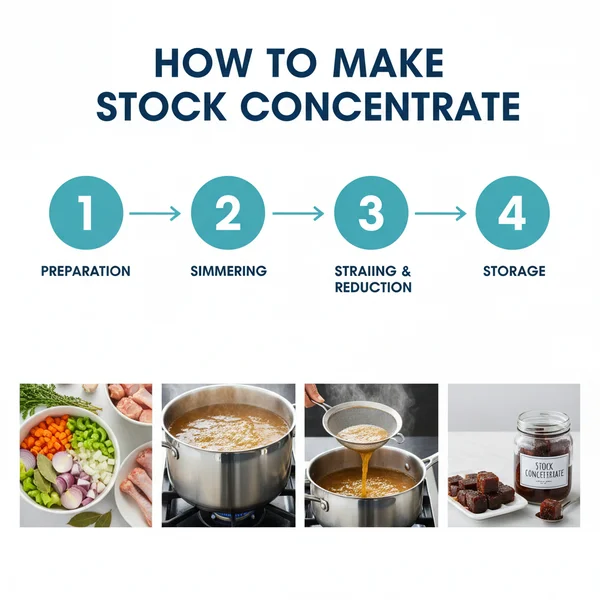
The process of how to make stock concentrate requires patience, but the active work is quite minimal. The goal is to extract every bit of collagen and flavor before reducing the liquid into a potent syrup.
Step 1: Roasting for Deep Flavor
Begin by preheating your oven to 425 degrees Fahrenheit. Arrange your bones and chopped vegetables across two large baking sheets. If you are making a beef concentrate, this is the time to rub the tomato paste over the bones. Roast everything for about 45 to 60 minutes. You are looking for a deep brown caramelization, not a charred black color. This roasting stage, known as the Maillard reaction, is essential for the dark color and complex flavor profile of the final recipe.
Step 2: Deglazing the Pans
Once roasted, transfer the bones and vegetables into a very large stockpot. Do not leave the brown bits behind on the baking sheets! Place the pans over your stovetop burners on low heat and add a cup of water to each. Use a wooden spoon to scrape up all those flavorful toasted bits. Pour this liquid into the stockpot with the bones. This ensures that every ounce of flavor makes it into your concentrate.
Step 3: The Initial Simmer
Add the garlic, herbs, and peppercorns to the pot. Cover the ingredients with 6 quarts of cold water. It is important to start with cold water as it allows the proteins to dissolve slowly, resulting in a clearer stock. Bring the pot to a very gentle simmer over medium-high heat. Once it reaches a simmer, immediately turn the heat down to low. You should only see a few bubbles breaking the surface every few seconds.
Step 4: Skimming and Tending
During the first hour of cooking, you will notice a gray foam rising to the top. Use a fine-mesh skimmer or a large spoon to remove this foam and discard it. This step ensures your concentrate has a clean, pure taste. Allow the stock to simmer uncovered for at least 4 hours. The long cooking time is necessary to break down the connective tissues in the bones into gelatin, which gives the concentrate its signature body.
Step 5: The First Strain
After the simmering time is complete, turn off the heat. Use a slotted spoon to remove the large bones and vegetable pieces. Set a large colander over a clean pot and line it with cheesecloth. Pour the liquid through the cloth to catch any small fragments. You should now have several quarts of beautiful, aromatic stock.
Step 6: The Reduction Process
This is the most critical stage in how to make stock concentrate. Wash your stockpot to ensure no debris remains, then pour the strained stock back into it. Bring the liquid back to a steady simmer over medium heat. You are now evaporating the water to concentrate the flavor. Watch as the volume drops. You want to reduce the liquid until only about 2 to 3 cups remain. The liquid will become darker, thicker, and slightly syrupy.
Step 7: Final Finishing and Cooling
Once the liquid has reduced significantly and can coat the back of a spoon, turn off the heat. At this stage, the recipe is extremely potent. Do not add salt yet! Since the liquid is so concentrated, adding salt now can make it overwhelmingly salty once it cools. Pour the concentrate into a glass heat-safe container and let it cool to room temperature before moving it to the refrigerator. As it chills, the high gelatin content will cause it to set into a firm, jelly-like consistency.
Always start with cold water to ensure a clearer end product. When reducing the liquid, avoid a rolling boil, as high heat can make the fats emulsify into the liquid, making it cloudy. For the best flavor, use a mix of “meaty” bones and “joint” bones to get a balance of taste and texture. If you want a perfectly clear concentrate, strain it one final time through a coffee filter while it is still hot.
Variations & Substitutions
The beauty of this recipe is its versatility. If you prefer a vegetarian option, you can learn how to make stock concentrate using mushrooms as the primary base. Substitute the bones with two pounds of cremini and dried porcini mushrooms. The dried mushrooms provide a deep, earthy umami that mimics the richness of meat.
For a gluten-free or keto-friendly version, ensure your tomato paste and any optional spices are certified gluten-free. If you want a “White Stock” concentrate, skip the roasting step and simply blanch the bones in boiling water for five minutes before starting the simmering process. You can also vary the herbs; use rosemary and sage for a concentrate that pairs perfectly with fall roasted meats, or add ginger and lemongrass for an Asian-inspired base.
Storage & Make Ahead
Because this recipe makes approximately 32 servings (at about 1 tablespoon per serving), storage is key. The best method is to pour the room-temperature concentrate into silicone ice cube trays. Each cube usually holds about two tablespoons, making them perfect for individual use. Freeze the cubes until solid, then pop them into a labeled freezer bag.
In the freezer, these flavor bombs will last for up to six months. In the refrigerator, the concentrate will stay fresh in an airtight jar for about one week. Since this is a time-consuming process, many chefs prefer to double the batch to ensure they always have a supply on hand for busy weeknights.
Nutrition Info
- Calories: 15 kcal
- Protein: 2g
- Total Fat: 0.5g
- Carbohydrates: 1g
- Sodium: 45mg (naturally occurring)
*Nutritional values are estimates based on standard bone broth reduction ratios and may vary depending on the specific bones and vegetables used.
By following these instructions, you have mastered the art of how to make stock concentrate. No longer will you need to rely on store-bought versions filled with preservatives and excessive sodium. You now have a pure, intense ingredient that will improve the quality of your cooking significantly. Use a single cube to deglaze a pan for a quick pan sauce, drop one into your pasta water for extra depth, or melt a few into a pot of hot water for an instant, high-quality soup base. Enjoy the culinary freedom that comes with having a professional-grade concentrate at your fingertips!
❓ Frequently Asked Questions
1
How long does stock concentrate last in fridge?
When stored in an airtight container, your homemade stock concentrate will stay fresh for up to one week. Because it is highly concentrated, it is susceptible to spoilage if not sealed properly. For the best quality and safety, always use a clean spoon when scooping it out.
2
Can I make stock concentrate ahead of time?
Yes, this recipe is perfect for making ahead of time. Since it requires a significant cooking time to reduce the liquid, preparing a large batch and freezing it into portions will save you hours of work during your busy weekday meal preparation later on.
3
What can I substitute for animal bones?
For a vegetarian version, use a variety of mushrooms, kombu, and tomato paste as your base ingredients. These provide the necessary savory depth. Follow the same reduction instructions to create a thick, flavorful vegetable essence that works beautifully in any meat-free dish.
4
How do I know when stock concentrate is done?
The concentrate is ready when the liquid has reduced by approximately 80% and has a syrupy, viscous consistency. It should easily coat the back of a spoon. The flavor will be extremely intense and the color will be much darker than a standard stock.
5
Can I freeze stock concentrate?
Absolutely, freezing is the recommended storage method. Once cooled, pour the liquid into silicone molds. These frozen cubes maintain their flavor for up to six months and can be dropped directly into boiling water or hot pans without needing to thaw first.