Fruit and Vegetable Juice Recipes: Refreshing & Healthy
Navigating the world of home juicing can often feel overwhelming given the endless combinations of produce available at your local market. Whether you are looking to boost your morning energy, recover after a strenuous workout, or simply incorporate more vitamins into your diet, having a structured guide is essential. This comprehensive reference chart is designed to simplify the process of creating delicious and nutritionally balanced fruit and vegetable juice recipes. By categorizing recipes based on their primary benefits and flavor profiles, this guide allows you to quickly identify which ingredients work best together, ensuring your creations are always refreshing and palate-pleasing.
In the following sections, we provide a curated selection of blends that utilize common household produce. From earthy root vegetables to vibrant citrus fruits, these recipes are optimized for both traditional centrifugal juicers and high-speed extraction methods. Beyond just the ingredients, we explore how to elevate your beverage experience using techniques such as adding ice for a chilled texture or using a garnish to transform a simple drink into a spa-quality treat. Use this table as your foundational blueprint for a healthier, more hydrating lifestyle.
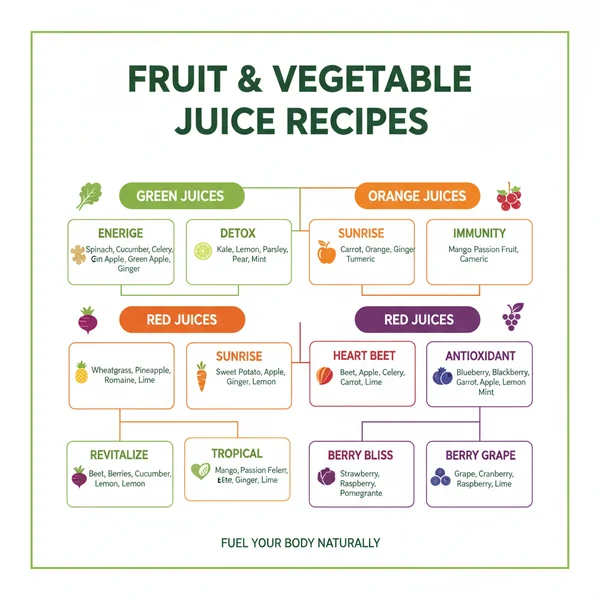
This chart serves as a master guide for balancing sweetness, acidity, and earthiness in juice blends. It highlights that the most hydrating recipes often rely on high-water content bases like cucumber and celery, while the most nutrient-dense options utilize dark leafy greens balanced with citrus to improve mineral absorption.
The Ultimate Fruit and Vegetable Juice Recipe Matrix
| Recipe Name | Core Ingredients | Primary Benefit | Flavor Profile | Serving Suggestion |
|---|---|---|---|---|
| The Green Energizer | Kale, Spinach, Green Apple, Lemon, Ginger | Iron & Chlorophyll Boost | Tart & Spicy | Over ice with a lemon wheel |
| Sunset Glow | Carrots, Oranges, Turmeric, Black Pepper | Anti-inflammatory & Beta-Carotene | Sweet & Earthy | Chilled with an orange zest garnish |
| Cooling Cucumber Crush | Cucumber, Celery, Lime, Mint Leaves | Deep Hydrating & Electrolytes | Ultra Refreshing | Served in a salt-rimmed glass |
| Ruby Red Detox | Beets, Red Apple, Blueberries, Lemon | Stamina & Liver Support | Rich & Berry-forward | Use frozen blueberries for a slushy texture |
| Tropical Turmeric Twist | Pineapple, Mango, Yellow Bell Pepper | Vitamin C & Digestion | Tropical & Vibrant | Processed in a blender for a thick nectar |
| Garden Vitality | Tomato, Parsley, Romaine, Cayenne | Lycopene & Metabolism | Savory & Piquant | Served cold with a celery stalk |
| Pear & Parsnip Purifier | Parsnips, Pears, Ginger, Cinnamon | Fiber & Digestive Ease | Warm & Mellow | Lightly whisked before serving |
| Purple Powerhouse | Red Cabbage, Red Grapes, Plum | Anthocyanins & Eye Health | Deeply Sweet | Best served chilled in a flute |
| Zesty Watermelon Wakeup | Watermelon, Basil, Lime | Kidney Health & Recovery | Light & Herbal | Garnish with fresh basil leaves |
| Golden Citrus Guard | Grapefruit, Clementine, Kiwi | Immune Defense | Tangy & Bright | Strained for a clear, crisp finish |
How to Use This Chart for Maximum Flavor
Using this chart effectively requires an understanding of your equipment and personal preferences. While many of these fruit and vegetable juice recipes are designed for a standard juice extractor, several can be adapted for a high-speed blender. If you choose the blender method, you will essentially be creating a “whole juice” which retains the fiber. To achieve a traditional juice consistency from a blender, simply pour the mixture through a fine-mesh nut milk bag or strainer. This is particularly effective for the “Tropical Turmeric Twist” or “Ruby Red Detox,” where the pulp can be quite dense.
When selecting ingredients from the table, pay attention to the “Flavor Profile” column. If you are new to juicing, start with recipes that feature a higher ratio of fruit, such as the “Golden Citrus Guard” or “Purple Powerhouse.” As your palate adjusts to the earthy notes of vegetables, you can move toward the “Garden Vitality” or “The Green Energizer.” Always remember that temperature plays a critical role in taste; vegetable juices are far more refreshing and palatable when served chilled or over ice. A warm vegetable juice can often taste overly “leafy,” whereas a cold one tastes crisp and clean.
Furthermore, don’t overlook the “Serving Suggestion” column. The visual appeal of a beverage significantly impacts the sensory experience. Adding a simple garnish like a sprig of mint, a slice of lime, or a dusting of cinnamon can elevate these recipes from a simple health supplement to an enjoyable culinary treat. If you prefer a thicker, more smoothie-like texture, try using frozen fruit components instead of fresh ones, which will naturally chill the drink while adding body.
:max_bytes(150000):strip_icc()/1793443-9a502bc964f44c058b072675735e89a7.jpg)
Detailed Breakdown of Juice Categories
To truly master fruit and vegetable juice recipes, it helps to understand the roles each category of produce plays within a blend. Below is a detailed look at the core groups featured in our master chart and why they are essential for your juicing routine.
The Leafy Green Foundation
Leafy greens like kale, spinach, and romaine are the nutritional heavyweights of the juicing world. They provide high concentrations of Vitamin K, Vitamin A, and chlorophyll. However, their flavor can be quite intense and slightly bitter. In our “Green Energizer” and “Garden Vitality” recipes, we balance this bitterness with the acidity of lemon and the natural sugars found in green apples. This creates a refreshing profile that masks the “grassy” taste while delivering all the micronutrients.
The Hydrators
Cucumber, celery, and watermelon are composed of over 90% water, making them the perfect base for hydrating juices. These ingredients provide a massive volume of liquid with very few calories. In the “Cooling Cucumber Crush,” the cucumber acts as a neutral canvas that allows the sharp lime and aromatic mint to shine. Because these ingredients are so watery, they are the best candidates for being served chilled with extra ice during hot summer months.
The Root Revitalizers
Carrots and beets add a velvety texture and a significant amount of natural sweetness to fruit and vegetable juice recipes. Beets are particularly famous for their ability to improve blood flow and athletic performance. However, because they are so earthy, they require a strong counterpoint. Pairing them with ginger (as seen in the “Sunset Glow”) or tart berries (as seen in the “Ruby Red Detox”) creates a complex flavor profile that satisfies the sweet tooth while providing long-lasting energy.
The Citrus and Tropical Brighteners
Citrus fruits like lemon, lime, and orange, along with tropical favorites like pineapple and mango, serve as the “high notes” in a juice blend. Their acidity cuts through the heaviness of vegetable juices and acts as a natural preservative, keeping the juice looking vibrant for longer. These ingredients are often best processed in a blender if you want to keep some of the vitamin-rich pith. For a truly refreshing finish, a garnish of citrus zest or a few frozen mango chunks can make a world of difference.
- Temperature Control: Always store your produce in the refrigerator before juicing. Chilled ingredients produce a much better-tasting juice than room-temperature ones.
- The Blender Hack: If you don’t own a juicer, use a high-speed blender with a little water, then strain through a cheesecloth for the same result.
- Frozen Elements: For a slushy consistency, use frozen grapes or berries instead of ice cubes to avoid diluting the flavor.
- Garnish for Success: Never underestimate a garnish. A simple sprig of rosemary or a cucumber ribbon makes the juice feel like a luxury.
- Hydration First: Drink your hydrating green juices on an empty stomach for the fastest nutrient absorption.
Conclusion
Incorporating a variety of fruit and vegetable juice recipes into your weekly routine is one of the most effective ways to increase your intake of vital nutrients. By using the master chart provided, you can experiment with different flavor profiles—ranging from spicy and tart to sweet and earthy—while ensuring your body remains hydrating and energized. Remember to utilize your blender for thicker blends, keep your produce chilled, and always finish with a garnish for that extra touch of elegance. With these tools and tips, you are well on your way to mastering the art of the perfect refreshing juice.
❓ Frequently Asked Questions
1
How long does fruit and vegetable juice last in fridge?
Homemade fresh juice is best consumed immediately to get the maximum nutrient value. However, you can store it in an airtight container for up to 48 hours. If the juice begins to change color or smell sour, it is best to discard it and make a fresh batch.
2
Can I make fruit and vegetable juice ahead of time?
Yes, you can prepare the juice up to 24 hours in advance. To keep it fresh, fill your container to the very top to minimize air exposure and store it in the coldest part of your refrigerator. Give it a good shake before drinking as separation is natural.
3
What can I substitute for a juicer?
If you do not own a juicer, you can use a high-speed blender. Simply blend your fruits and vegetables with a splash of water until smooth, then pour the mixture through a fine-mesh strainer or a cheesecloth to remove the pulp and extract the liquid juice.
4
How do I know when the juice is done?
Since there is no cooking involved, your juice is done once all ingredients are fully processed and the liquid is smooth. If using a blender, ensure there are no large chunks remaining. The flavor should be balanced; you can taste and adjust with extra lemon or ginger.
5
Can I freeze fruit and vegetable juice?
You can freeze fresh juice for up to three months. Use silicone ice cube trays or freezer-safe glass jars, leaving room at the top for expansion. Thaw in the refrigerator overnight. While the flavor remains, some texture and nutrient loss may occur during the freezing process.