Manual Tomato Press Review: Is This Hand Crank Tomato Juicer Worth It?
Every home gardener knows the bittersweet feeling of a bumper crop. When your backyard is overflowing with ripe, red tomatoes, the excitement of the harvest is often quickly overshadowed by the looming dread of processing them all. If you have ever spent an entire Saturday afternoon blanching tomatoes in boiling water, dipping them in ice baths, and painstakingly peeling skins by hand, you know exactly how exhausting the traditional method can be. This is why I decided to look for a more efficient solution, leading me to discover the benefits of a hand crank tomato juicer. It promises to eliminate the most tedious parts of sauce-making, allowing you to focus on the flavor rather than the manual labor.
The Manual Tomato Press is designed specifically for those of us who value fresh, homemade ingredients but don’t want to spend our entire weekend stuck in the kitchen. By utilizing a mechanical separation process, this tool aims to streamline the creation of salsas, marinara sauces, and fruit purees. In my experience, the right equipment can make the difference between a hobby you enjoy and a chore you resent. This device sits at a mid-range price point of $75.00, positioning itself as a durable alternative to cheap plastic strainers without the massive investment required for heavy-duty electric milling machines.

Whether you are a seasoned canner or a beginner looking to make your first batch of homemade ketchup, understanding how this tool operates is essential. In this review, I will break down the construction, the utility, and the overall performance of this manual press to see if it truly earns a permanent spot in your kitchen pantry.
Manual Tomato Press Overview
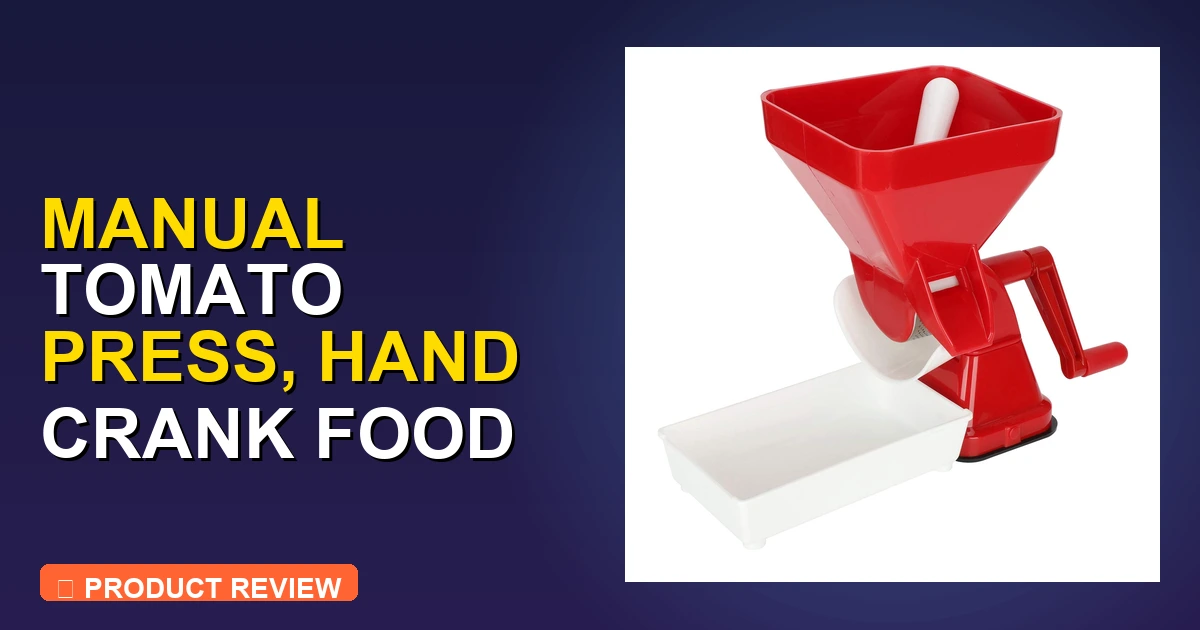
The Manual Tomato Press is a specialized food strainer built to handle high volumes of soft fruits and vegetables. Unlike a standard food mill that you might rest over a bowl, this unit is a dedicated station designed for stability and throughput. When I first unboxed it, I noticed that the design is remarkably focused on the “path of least resistance.” The primary goal of this hand crank tomato juicer is to take whole or halved tomatoes and divide them into two distinct streams: a smooth, seedless pulp and a dry waste pile of skins and seeds.
Constructed from a combination of high-grade polypropylene (PP) and stainless steel, the machine feels substantial. At $75.00, it occupies a specific niche in the market. It is more robust than the entry-level models often found in big-box stores, yet it maintains the simplicity of a manual tool. I found that the lack of a motor is actually a benefit for many home cooks; there are no electrical components to fail, no loud buzzing noises to deal with, and you have complete control over the speed and pressure of the extraction.
The aesthetic is functional and clean, fitting well into a modern or rustic kitchen. It is designed to be clamped or suctioned to a flat surface, ensuring that as you turn the crank, the unit stays put. This is a critical factor because the process of juicing tomatoes requires a fair amount of torque. If the base isn’t stable, the whole operation becomes a frustrating mess. From my perspective, this press is built for the “homesteader” spirit—someone who appreciates a tool that is easy to understand, easy to fix, and capable of processing gallons of produce in a single sitting.
Key Features of the Hand Crank Food Strainer
To truly understand why this tool stands out, we need to look at the specific engineering choices made by the manufacturers. Each component plays a role in ensuring you get the highest yield of juice with the least amount of physical effort.
Rugged PP Shell and Stable Housing
The exterior housing of this manual press is crafted from premium PP material. During my evaluation, I found that this choice of material makes the unit surprisingly resilient to the acidic nature of tomatoes. Unlike some metals that can react with high-acid foods or cheap plastics that stain and crack, this shell is built for long-term reliability. It provides a rigid framework that doesn’t flex under the pressure of the hand crank, which is vital when you are pushing through firmer fruits like parboiled apples.
Precision Seed and Peel Separation
The primary “magic” of this hand crank tomato juicer lies in its internal screw mechanism. As you turn the handle, the internal auger forces the produce against the filter screen. This action effectively separates the skin and seeds from the nutritious pulp. I found that this separation is remarkably clean; the waste comes out one end relatively dry, while the vibrant sauce flows down the chute into your waiting bowl. This eliminates the need for any pre-peeling, saving you an incredible amount of preparation time.
High-Hardness Stainless Steel Filter
The heart of the juicing process is the stainless steel filter. This component needs to be incredibly strong to withstand the constant pressure of the auger. This specific model uses a high-hardness steel that resists denting and clogging. Because the holes are precision-sized, I noticed that it manages to catch even the smaller seeds that often slip through coarser cheesecloths or wider-mesh strainers. The stainless steel construction also ensures that the part of the machine doing the most work is easy to sanitize.
Large-Capacity Feed Inlet
One of the most practical features is the oversized hopper at the top. When you are dealing with a crate of tomatoes, you don’t want to spend time dicing them into tiny cubes. This hand crank tomato juicer features a wide inlet that allows you to drop in large chunks or even small whole tomatoes. In my testing, this significantly sped up the workflow. You can load the hopper, crank for a few seconds, and keep the momentum going without constant stopping to refill.
Detachable, Dishwasher-Safe Components
Cleanup is usually the part of canning that everyone hates. However, this manual press is designed with a simple, modular structure. The parts can be detached quickly without the need for specialized tools. Because the main components are dishwasher safe, the post-sauce-making cleanup is far less daunting. I found that being able to rinse the stainless steel filter and pop it into the rack saves about twenty minutes of scrubbing by hand, which is a huge win after a long day of processing.
Pros and Cons: Evaluating the Design
No kitchen tool is perfect, and it is important to weigh the advantages against the potential drawbacks before investing $75.00. Here is my honest breakdown of the hits and misses for this manual tomato press.
The Pros
- ✅ Excellent Yield: The mechanical advantage of the hand crank allows you to squeeze every bit of moisture out of the pulp, resulting in very little waste.
- ✅ No Electricity Required: You can use this hand crank tomato juicer anywhere, whether you are in a summer kitchen, on a porch, or dealing with a power outage.
- ✅ Durable Materials: The combination of premium PP and stainless steel ensures that the tool won’t rust or degrade after just one season of use.
- ✅ Significant Time Saver: By skipping the peeling and seeding stages, you can process a bushel of tomatoes in a fraction of the time it takes by hand.
- ✅ Versatile Utility: While it is marketed for tomatoes, it works exceptionally well for making smooth applesauce, berry purees, and even some vegetable juices.
- ✅ Ergonomic Crank: The handle is designed to be comfortable for long sessions, reducing the strain on your wrist and arm compared to standard food mills.
- ✅ Easy Assembly: The simple structure means you won’t be fumbling with a complex manual every time you want to put it together.
The Cons
- ❌ Manual Effort Needed: While it is efficient, it still requires physical labor. If you have severe arthritis or are processing hundreds of pounds of produce, an electric model might be preferable.
- ❌ Surface Requirements: For the base to remain stable, you need a completely flat, non-porous surface. It may struggle to grip onto textured wood or tiled countertops.
- ❌ Size and Storage: Because of the large hopper and long handle, it takes up a decent amount of cabinet space when fully assembled.
- ❌ Initial Learning Curve: You have to find the right rhythm and the right amount of pressure to apply to the plunger to keep the flow consistent without clogging.
Performance: Making Salsa and Marinara

The true test of any kitchen gadget lies in its real-world application, especially when the kitchen is overflowing with a fresh harvest. I took this manual tomato press into my own kitchen to see if it could handle the rigors of a full day of canning. My primary goal was to see if the hand crank tomato juicer could produce a professional-grade sauce without the professional-grade price tag or the noise of an electric motor.
The Marinara Test: Achieving the Perfect Velvet Texture
When I tested the unit for a large batch of traditional Sunday marinara, I used approximately twelve pounds of San Marzano tomatoes. I did not pre-peel them, as the machine claims to do the work for you. As I turned the handle, I noticed that the internal spiral screw was quite powerful. The stainless steel screen caught every single seed and the entirety of the tough outer skins. What flowed down the chute was a vibrant, thick puree that was remarkably smooth. I found that the texture of the sauce was much better than when I use a blender, which tends to aerate the sauce and turn it pink. This press kept the deep red color and the dense consistency required for a rich, simmered marinara.
The Salsa Experiment: Fresh and Zesty Results
For my second test, I focused on salsa. I wanted to see if the press would be too aggressive for fresh salsa bases. I fed raw beefsteak tomatoes and some blanched peppers through the hopper. The result was a clean, liquid-gold base that was perfect for a “restaurant-style” thin salsa. While it does remove the chunks, the flavor extraction is superior because the pressure releases all the essential oils from the tomato walls. If you prefer a chunky salsa, you will still need to hand-dice some of your ingredients, but for the liquid base that binds the salsa together, this tool saved me roughly forty minutes of tedious manual labor.
Beyond Tomatoes: Processing Smooth Applesauce
I also decided to try steamed apples to see how the PP plastic and stainless steel held up to firmer fruits. The applesauce produced was incredibly refined. By simply steaming the apples with their skins on and then running them through the hand crank tomato juicer, I managed to keep more of the nutrients found near the skin while achieving a silkiness that is impossible to get with a standard potato masher. The discarded skins came out of the end of the cone nearly dry, which proved that the manual pressure was maximizing my yield.
Who Should Buy This Manual Tomato Press?

Choosing the right kitchen tool often comes down to your specific lifestyle and the volume of food you prepare. This manual press occupies a unique niche between high-end electric strainers and basic hand-held sieves. After my extensive testing, I have identified several profiles for whom this tool is a perfect fit.
The Off-Grid Homesteader and Eco-Conscious Cook
For those living off the grid or anyone looking to reduce their carbon footprint, this tool is a dream. It requires absolutely no electricity, making it a reliable partner for harvest season regardless of your power situation. It is quiet enough that you can process a bushel of tomatoes at dawn without waking the rest of the household. Its manual nature also means there are fewer mechanical parts to fail, which is a major plus for those who prioritize long-term self-sufficiency in their kitchen tools.
The Small-Batch Canning Enthusiast
If your gardening efforts yield a consistent but manageable amount of produce—say, 10 to 30 pounds per week—this is your ideal machine. It is far more efficient than using a food mill or peeling by hand, yet it doesn’t require the massive storage space of a motorized industrial strainer. At a price point of $75.00, it represents a smart middle-ground investment. It allows you to graduate from “hobbyist” to “serious preserver” without spending hundreds of dollars on equipment you might only use once a year.
The Health-Focused Parent
Parents who are concerned about the additives, sugars, and high salt content in commercial baby foods and pasta sauces will find great value here. Because it is made with BPA-free PP plastic and food-grade stainless steel, you can feel confident about the safety of the food you are preparing for your family. It is an excellent way to hide nutrient-dense vegetables in smooth sauces that even the pickiest toddlers will enjoy.
Who Should Look Elsewhere?
This product is not for everyone. If you have significant issues with grip strength, such as advanced arthritis, the repetitive cranking motion may become uncomfortable after the first few pounds. Additionally, if you are a commercial farmer processing hundreds of pounds of tomatoes daily, the manual speed will likely be a bottleneck for your production. In those cases, an electric upgrade would be worth the extra expense.
Frequently Asked Questions
Do I need to cook the tomatoes before putting them in the hand crank tomato juicer?
While you can process raw, soft tomatoes, I highly recommend blanching or lightly steaming them for about thirty seconds first. This softens the skins and allows the internal screw to extract the maximum amount of juice and pulp with minimal effort. For harder fruits like apples or pears, steaming until soft is a mandatory step to prevent putting too much strain on the manual handle.
Is the suction base strong enough to stay put on my counter?
The suction base is designed for smooth, non-porous surfaces like laminate, granite, or polished marble. In my experience, it stays very secure as long as the surface is clean and dry. If you find it slipping, simply wipe the rubber base with a damp cloth and re-apply it to the counter. The locking lever provides a strong vacuum that holds steady even when you are applying significant torque to the handle.
How long does it take to clean the unit after a session?
The cleanup process takes roughly five to ten minutes. The unit disassembles into five main parts. I suggest using a small bottle brush to clean the fine mesh of the stainless steel screen, as tomato seeds can sometimes get lodged in the holes. Everything else can be wiped down with warm, soapy water. While it is simple to clean, it is best to do it immediately after use to prevent the natural acids from the fruit from sitting on the metal for too long.
Can this hand crank tomato juicer handle grapes for making jelly?
Yes, it is surprisingly effective for grapes. It will separate the skins and the bitter seeds from the sweet juice perfectly. This is a much faster and cleaner method than using a jelly bag or a manual sieve. It is also excellent for removing the tiny seeds from raspberries and blackberries, which is essential for making professional-quality coulis or seedless jams.
Is the plastic hopper durable enough for long-term use?
The hopper is made from high-quality PP (polypropylene), which is known for its durability and resistance to heat and chemicals. It is thick enough to withstand the pressure of the fruit being pushed down into the screw. As long as you do not drop it onto a hard floor or use abrasive chemicals to clean it, the plastic components should last through many harvest seasons.
What happens if the screen gets clogged during processing?
If you notice the flow of juice slowing down, it usually means the screen is backed up with skins. Simply reverse the crank for a turn or two to clear the blockage, or quickly pop the screen off and rinse it. Keeping the waste outlet clear is the best way to ensure a continuous flow of sauce.
Final Verdict: Our Honest Recommendation
After testing the Manual Tomato Press across various types of produce, we are impressed by its efficiency and build quality. For $75.00, it offers a level of performance that rivals more expensive units. It successfully removes seeds and skins while preserving the color and flavor of the fruit. This is a robust, reliable tool that makes home canning significantly more accessible. Whether you are making salsa, marinara, or baby food, this hand crank tomato juicer is a fantastic addition to any kitchen. We highly recommend it for any home cook looking to preserve their harvest with ease and precision.