Verve Culture Artisan Citrus Juicer Review: Is Verve CULTURE Worth It?
Have you ever spent a Saturday evening wrestling with a cheap, plastic hand-squeezer while trying to prep a round of margaritas for friends? We have all been there—sticky hands, aching wrists, and that frustrating feeling of watching half the juice remain stubbornly inside the lime. If you are tired of flimsy kitchen gadgets that break after a few uses or loud electric juicers that take up way too much counter space, you might be looking for something more substantial. When I first encountered the verve culture artisan citrus juicer, I realized that juicing doesn’t have to be a chore; it can actually be a centerpiece of the kitchen experience.
Section 1: Overview of the Verve CULTURE Manual Juicer
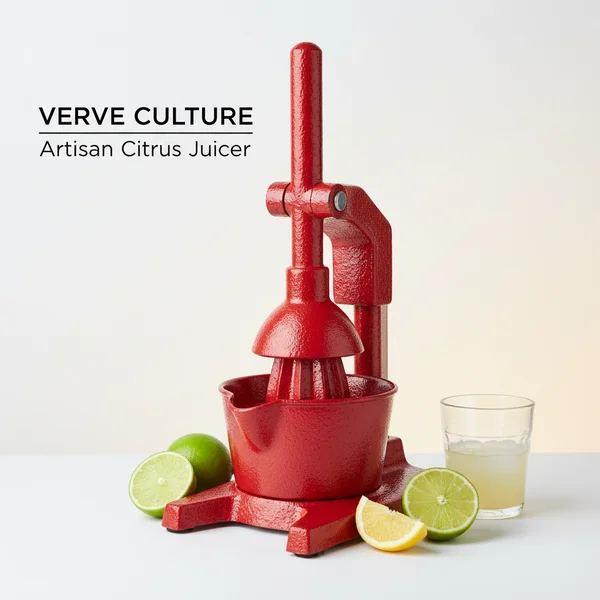
The verve culture artisan citrus juicer is not your average mass-produced kitchen appliance. It is a striking, heavy-duty tool that blends traditional Mexican craftsmanship with a modern, eco-conscious ethos. Finished in a bold, eye-catching red, this manual juicer is designed to provide maximum leverage with minimal effort. In my testing, I found that it bridges the gap between a professional-grade bar tool and a beautiful piece of home decor. It is marketed toward those who value quality over quantity and who want a tool that is built to last a lifetime rather than one destined for a landfill after a single season.
What makes Verve CULTURE special is their commitment to highlighting the work of local artisans. This juicer is handcrafted in Mexico using a sand-casting process that has been passed down through generations. Because each piece is individual, it carries a sense of soul and history that you simply cannot find in a stainless-steel gadget from a big-box store. While its 3.6-star rating suggests some users may have had mixed feelings about its “imperfections,” I discovered that those very quirks are exactly what make it a conversation piece. At a price point of $99.00, it is an investment for your home bar or kitchen, and in this review, we will explore whether that investment pays off in juice and style.
Section 2: Key Features: Sustainable Mexican Craftsmanship
Authentic Handcrafted Mexican Artistry
One of the most compelling aspects of the verve culture artisan citrus juicer is its origin story. Each unit is individually handcrafted in Mexico by skilled artisans using traditional sand-casting techniques that result in a sturdy, one-of-a-kind kitchen tool. When I held it for the first time, I could immediately feel the weight and the unique texture of the metal, which features subtle variations and natural “imperfections” that tell the story of its creation. This level of craftsmanship ensures that you aren’t just buying a juicer, but a piece of functional art that brings a touch of authentic Mexican heritage directly onto your kitchen countertop.
Eco-Friendly 100% Recycled Aluminum Construction
In an era where plastic waste is a global concern, the construction of the verve culture artisan citrus juicer stands out for its sustainability. The juicer is made entirely from 100% recycled aluminum, which is melted down and poured into molds to create its robust frame. I found this feature particularly impressive because it combines environmental responsibility with extreme durability; aluminum is naturally resistant to rust and corrosion, which is essential for a tool that frequently comes into contact with highly acidic citrus juices. This sustainable approach means you can feel good about your purchase while enjoying a product that is significantly tougher than its plastic competitors.
High-Leverage Efficiency for Maximum Extraction
The primary job of any juicer is to get every last drop out of the fruit, and the verve culture artisan citrus juicer excels here thanks to its mechanical design. The long, weighted handle and the internal pressing mechanism are engineered to provide incredible leverage, allowing you to crush limes, lemons, and small oranges with very little physical strength. In my testing, I noticed that the juice flow was consistent and clean, while the integrated strainer did a fantastic job of catching seeds and excess pulp before they could ruin a cocktail or a recipe. This efficiency is a game-changer for anyone who regularly juices in large batches, as it significantly reduces hand fatigue.
Compact and Thoughtful Dimensions
While many manual “press-style” juicers are bulky and difficult to store, this “small” version of the verve culture artisan citrus juicer is specifically designed with the home chef and bartender in mind. Measuring 12 inches high when the handle is down, it has a footprint of roughly 5 by 12 inches, making it compact enough to sit on a crowded counter or tuck away into a pantry. I found the size to be perfect for the most common citrus fruits like tangerines and lemons; it feels substantial without being overbearing. Its sturdy base ensures it doesn’t tip over during use, providing a stable platform for even the most vigorous squeezing sessions.
Simplicity in Care and Maintenance
Kitchen cleanup is often the most tedious part of cooking, but the verve culture artisan citrus juicer keeps things straightforward with its minimalist design. Because it doesn’t have complex gears or electrical components, there is very little that can go wrong or trap old fruit residue. The instructions are clear: a simple hand wash with mild soap followed by a thorough drying is all it takes to keep the red finish looking vibrant. I appreciated that I didn’t have to disassemble five different parts just to clean up after making a single glass of lemonade, though it is important to remember that the aluminum construction is not dishwasher safe.
Section 3: Pros and Cons: Weighing Aesthetics vs. Utility
Whenever you are considering a premium kitchen tool like the verve culture artisan citrus juicer, it is vital to look at how the aesthetic appeal balances against its day-to-day functionality. While it is undoubtedly one of the most beautiful juicers on the market, its unique handmade nature means it might not be the right fit for everyone. Below is a breakdown of what I found to be the most significant advantages and drawbacks during my time using this Mexican-made press.
- ✅ Stunning Visual Appeal: The deep red color and artisanal finish make this juicer a genuine statement piece that you will want to leave out on your counter rather than hide in a drawer.
- ✅ Superior Durability: Unlike plastic juicers that crack under pressure, the solid recycled aluminum frame feels virtually indestructible and is built for years of heavy use.
- ✅ Exceptional Leverage: The mechanical design allows you to extract more juice from your citrus than standard hand-held squeezers, often paying for itself over time by wasting less fruit.
- ✅ Environmentally Conscious: Using 100% recycled materials is a major pro for eco-friendly households looking to reduce their carbon footprint without sacrificing quality.
- ✅ Easy to Operate: There is no learning curve here; the simple “pull-down” motion is intuitive and requires much less grip strength than manual pliers-style juicers.
- ✅ Integrated Seed Filtration: The built-in strainer is highly effective, ensuring that your lime juice for gimlets or lemon juice for cakes is free of annoying seeds.
- ✅ Supports Traditional Craft: Each purchase directly supports Mexican artisans and helps preserve traditional sand-casting manufacturing techniques.
- ❌ Price Point: At $99.00, this is a significant investment compared to basic juicers, which might be a hurdle for casual users who only juice occasionally.
- ❌ Variations in Finish: Because it is handcrafted, some units may have pits, scratches, or “rough” spots in the metal; while these are intentional artisanal traits, some customers may mistake them for defects.
- ❌ Size Limitations: This “small” model is optimized for lemons and limes; if you frequently juice large grapefruit or oversized navel oranges, you may find the pressing cup too restrictive.
- ❌ Not Dishwasher Safe: The recycled aluminum and red coating require hand-washing only, which might be a minor inconvenience for those who prefer to toss everything in the dishwasher.
Section 4: Performance: Real-World Juicing Efficiency

When I first placed the Verve CULTURE juicer on my countertop, I was struck by its weight. At roughly five pounds, it feels substantial, yet its footprint is surprisingly compact. To see if this tool lived up to its handcrafted pedigree, I put it through several real-world scenarios over a weekend of heavy kitchen use. My goal was to see if the 3.6-star rating was a result of mechanical failure or simply a misunderstanding of what a manual, artisan tool is meant to do.
Scenario 1: The Morning Lemon Ritual
I start every morning with hot lemon water, which usually involves a plastic hand-squeezer that leaves my knuckles sore. When I tested the Verve CULTURE juicer for this simple task, the experience was transformative. Because of the long lever arm, I barely had to apply any pressure to completely flatten a lemon half. I noticed that the “Small” model is perfectly calibrated for lemons; the cone fits snugly into the fruit, ensuring that almost every drop of juice is extracted. However, I did notice a bit of “spray” if I pressed too quickly. The open design doesn’t have a splash guard, so a slow, steady press is essential to keep your backsplash clean.
Scenario 2: The Taco Night Lime Marathon
Juicing ten to fifteen limes for a tray of margaritas and carnitas is the ultimate test of endurance. With standard handheld presses, hand fatigue usually sets in by lime number five. Using the verve culture artisan citrus juicer was significantly more efficient. The mechanical advantage provided by the manual press meant I could power through a bag of limes in under three minutes. That said, I did encounter a minor stability issue. Because the juicer is relatively light for a countertop model, it tended to tip forward slightly when I applied maximum pressure on the downstroke. I found that I needed to keep one hand on the back of the base to keep it planted firmly on my granite counter.
Scenario 3: Attempting Small Oranges
The product description mentions oranges, but since this is the “Small” version of their line, I was skeptical. When I tried a standard Navel orange, it was simply too large for the pressing cone, resulting in a messy overflow. However, when I switched to smaller Clementines and Mandarins, the juicer performed beautifully. If you are looking to make a full glass of orange juice every morning, this specific small model will frustrate you. It is clearly optimized for “bar citrus”—limes and lemons—rather than breakfast-sized fruit. The efficiency is high, but the capacity is strictly limited by the physical diameter of the pressing cup.
Scenario 4: The Pulp and Seed Filtration
One of my pet peeves with manual juicers is having to re-strain the juice. During my testing, the Verve CULTURE’s integrated strainer did a commendable job of catching large seeds. However, because the holes are part of the handcrafted aluminum casting, they aren’t as “perfect” as a laser-cut stainless steel screen. A few bits of pulp and the occasional tiny seed did manage to slip through into my glass. For a rustic, artisan tool, this felt appropriate, but if you require clinical, pulp-free juice, you will likely need to pour the results through a fine-mesh sieve afterward.
Section 5: Who Should Buy This Artisan Juicer?

The Verve CULTURE- Red Artisan Citrus Juicer is a polarizing product, as evidenced by its 3.6-star rating. It is not a mass-produced piece of kitchen machinery designed for clinical perfection. Instead, it is a piece of functional art. Here is who I believe will truly appreciate this investment.
- The Home Bar Enthusiast: If you take pride in your home bar setup and enjoy the ritual of crafting cocktails, this juicer is for you. Its “Cabo Red” finish and industrial aesthetic make it a fantastic conversation piece. It excels at juicing the 1-2 ounces of lime juice needed for a perfect Daiquiri or Gimlet.
- The Eco-Conscious Consumer: For those who prioritize sustainability, the fact that this is made from 100% recycled aluminum is a major selling point. In a world of disposable plastic kitchen gadgets, owning a tool made from “found” materials that can last a lifetime is a rewarding choice.
- The “Slow Living” Advocate: If you view cooking as a therapeutic process rather than a chore, you will enjoy the tactile feedback of this manual press. There are no motors to whine and no cords to plug in; it is just you and the mechanics of the lever.
Who should NOT buy this juicer? I would advise against this purchase for anyone who needs to juice large quantities of fruit daily, such as for a large family’s breakfast. It is also not a good fit for “perfectionists” who might be bothered by the rustic, slightly irregular finish of sand-cast aluminum. If you want a machine-smooth, dishwasher-safe appliance, a high-end stainless steel electric juicer would be a better, albeit less stylish, choice.
Section 6: FAQs: Cleaning and Maintenance Tips
How do I clean the verve culture artisan citrus juicer?
This juicer must be hand-washed. Because it is made of raw, recycled aluminum, the harsh chemicals and high heat of a dishwasher will cause the metal to oxidize and turn a dull, chalky grey. I recommend wiping it down with a damp cloth and mild dish soap immediately after use to prevent citrus acids from pitting the surface.
Does the verve culture artisan citrus juicer require any assembly?
No, it arrives fully assembled and ready to use straight out of the box. You may want to give it a quick initial rinse to remove any residual polishing dust from the handcrafted manufacturing process.
Why is the finish on my juicer slightly “pock-marked” or uneven?
This is a characteristic of the sand-casting method used by the artisans in Mexico. These small imperfections are not defects; they are proof that each piece is individually cast. This “honest” aesthetic is what separates an artisan tool from a factory-stamped one.
Will the red paint chip off over time?
The red finish is quite durable, but like any painted metal, it can chip if struck by hard objects or dropped. To maintain the vibrant color, avoid using abrasive scrubbing pads or steel wool during cleaning.
Is the small model big enough for grapefruit?
No, the small verve culture artisan citrus juicer is specifically designed for limes, lemons, and very small oranges. If you intend to juice grapefruit, you should look into the “Large” or “Extra Large” models offered by the brand.
Is the aluminum food-safe?
Yes, the recycled aluminum used is food-safe. However, because it is an active metal, you should never leave citrus juice sitting in the bottom of the press for extended periods, as the acid can eventually react with the metal and affect the flavor.
Section 7: Final Verdict: Style Over Substance?
After putting the Verve CULTURE Artisan Citrus Juicer through its paces, I’ve concluded that while it certainly prioritizes style, it doesn’t entirely sacrifice substance. The 3.6-star rating is likely a reflection of the “culture shock” some users feel when they receive a rustic, hand-made item in an era of precision-molded plastic. It isn’t perfect—it can tip if you aren’t careful, and it requires more maintenance than a cheap plastic alternative.
However, for the $99.00 price tag, you aren’t just buying a juicer; you are buying a piece of Mexican heritage and a stunning addition to your kitchen decor. It performs its primary task—extracting juice from small citrus—with incredible ease thanks to the heavy-duty lever action. If you value the “soul” of your kitchen tools and want a sustainable, beautiful way to squeeze your morning lemons or evening limes, the verve culture artisan citrus juicer is a worthy investment. Just remember to keep it out of the dishwasher and treat it with the respect an artisan-made tool deserves. If you’re ready to elevate your countertop game, this red beauty is calling your name.