Cold Press Vegetable Juicer Review: Pros, Cons & Verdict
If you have ever spent your Sunday morning hunched over a cutting board, meticulously dicing carrots and apples into tiny slivers just to fit them into a narrow juicer throat, you know the frustration of “healthy living” taking up too much of your time. I recently found myself in that exact position, tired of the prep work and even more tired of the loud, high-speed centrifugal juicers that seem to strip the soul out of my greens. I decided it was time to upgrade to a cold press vegetable juicer that promised a more efficient, nutrient-dense experience without the kitchen cardio of endless chopping. When the Cold Press Juicer arrived at my door, I was immediately struck by its substantial weight and sleek black finish, signaling a piece of machinery that means business.
Cold Press Vegetable Juicer: Overview & First Impressions
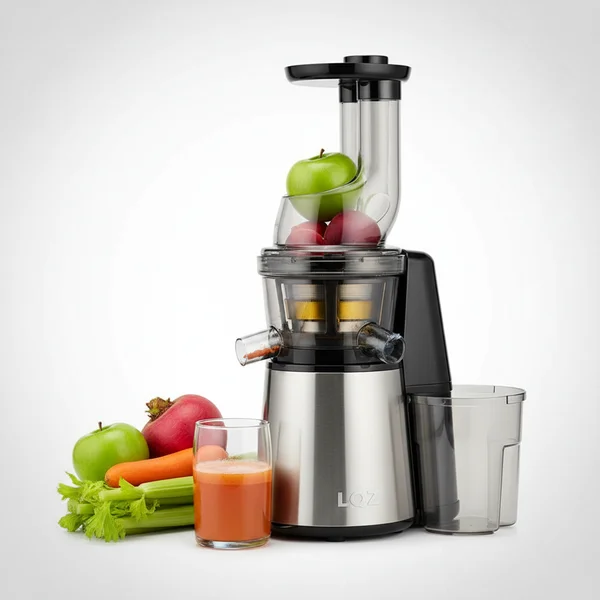
Upon unboxing this 350W powerhouse, my first impression was one of genuine surprise at the simplicity of the design. Most masticating juicers I have tested in the past involve a complex puzzle of five or six interlocking plastic parts that require a manual and a lot of patience to assemble. This cold press vegetable juicer, however, features an all-in-one structure that consists of only three main components. The build quality feels premium for its $119.99 price point, with food-grade materials that feel sturdy rather than brittle. Setting it up on my counter, I noticed that despite its powerful motor, it maintains a relatively compact footprint that doesn’t dominate the entire workspace.
In my initial testing, the most striking aspect was the massive 5.4-inch feed chute. It looks less like a traditional juicer intake and more like a wide-open mouth ready to swallow whole produce. I am used to machines that require me to push every single grape or celery stalk down with a plunger, but this model seems designed for a “set it and forget it” style of prep. The black aesthetic is modern and hides the inevitable splashes of beet juice much better than white or silver models. From the moment I plugged it in and heard the low, rhythmic hum of the 50 RPM motor, I knew this wasn’t going to be the typical ear-splitting juicing experience I was accustomed to.
Key Features: 5.4″ Wide Chute and 350W Power
5.4-Inch Extra-Wide Feed Chute
The standout feature of this cold press vegetable juicer is undoubtedly the 5.4-inch wide feed chute, which completely redefines how much time you spend on food preparation. This massive opening allows you to drop in whole apples, large oranges, and thick bunches of kale without ever reaching for a chef’s knife. By eliminating the need for pre-cutting, this feature significantly reduces the total time spent in the kitchen, making it much more likely that you will actually use the juicer on a busy weekday morning.
350W High-Power Masticating Motor
While many home juicers hover around the 150W to 200W range, this model boasts a 350-watt high-power motor that provides the torque necessary to crush through the toughest fibrous vegetables. Whether I was feeding it woody ginger roots or dense sweet potatoes, the motor didn’t bog down or show signs of strain. This extra power ensures that the cold press vegetable juicer maintains a consistent speed, which is vital for extracting every possible drop of liquid from your produce.
50 RPM Low-Speed Fine Grinding
The secret to high-quality juice lies in the 50 RPM (rotations per minute) slow-grinding technology, which mimics a stone-mill pressing process. By rotating at such a low speed, the juicer minimizes heat buildup and prevents the rapid oxidation that often occurs in high-speed centrifugal models. This means the cold press vegetable juicer locks in more vitamins, enzymes, and natural flavors, resulting in a juice that stays fresh for longer and tastes noticeably richer.
Integrated Safety Sensor and Blade-less Design
Safety can be a major concern with wide-mouth appliances, but this machine addresses that with a clever blade-less design and an automatic shut-off sensor. The machine is engineered to stop immediately if the lid is opened during operation, providing peace of mind for families with curious children. This design choice makes the cold press vegetable juicer safe to operate for beginners while still maintaining the efficiency required for heavy-duty juicing sessions.
Double-Layer Precision Filtration
To ensure a smooth, café-quality beverage, this juicer utilizes a double-layer precision filter that separates the pulp from the liquid with incredible accuracy. In my testing, I found that the resulting juice was almost entirely free of grit or unwanted fiber, making it ideal for those who prefer a delicate and smooth mouthfeel. The cold press vegetable juicer claims a juicing efficiency of up to 99%, and based on the bone-dry pulp it ejects, that claim feels very close to the truth.
The Pros and Cons of This Masticating Juicer
When evaluating any kitchen appliance, it is important to look past the marketing and see how it performs in a real-world environment. After several days of intensive testing with everything from soft berries to rigid celery stalks, I have identified the clear strengths and a few minor weaknesses of this cold press vegetable juicer. While the 4.2-star rating from over 1,400 reviewers suggests high satisfaction, there are specific nuances every buyer should know before clicking “buy.”
The Pros
- ✅ Zero Prep Time: The 5.4-inch chute is a total game changer, allowing for whole-fruit juicing that saves at least 10 minutes of chopping per session.
- ✅ Exceptional Juice Yield: The 350W motor combined with the slow 50 RPM press results in pulp that is remarkably dry, meaning you get more juice for your money.
- ✅ Ultra-Quiet Operation: Unlike centrifugal juicers that sound like a jet engine, this cold press vegetable juicer is quiet enough to use while the rest of the family is sleeping.
- ✅ Simple 3-Part Cleanup: With only three main parts to disassemble, the cleaning process is surprisingly fast, especially when using the included specialized brush.
- ✅ Enhanced Nutrient Retention: The slow extraction process prevents heat damage, ensuring your green juices retain their vibrant color and full nutritional profile.
- ✅ Sturdy Safety Features: The automatic stop-lid and blade-less internal assembly make it one of the safest high-power juicers I have ever operated.
- ✅ Modern Aesthetic: The sleek black design and compact vertical orientation look great on any countertop without taking up excessive space.
The Cons
- ❌ Strict Alignment Requirements: The motor has a safety trigger that requires the handle to be perfectly aligned with the starter button; if you are off by a millimeter, it simply won’t turn on.
- ❌ Heavy Unit: Because of the powerful 350W motor and high-quality internals, the machine is quite heavy and might be difficult to move frequently for those with limited strength.
- ❌ Pulp Outlet Clogging: If you are juicing extremely stringy celery without cutting it into smaller segments, the long fibers can occasionally catch in the narrow pulp exit.
- ❌ Lid Sealing: You have to ensure the lid is snapped into the “locked” position with some force, or the cold press vegetable juicer will fail to start as a safety precaution.
Real-World Performance: Testing the 50 RPM Extraction

When I first unboxed this Cold Press Juicer, I was skeptical about the 50 RPM (revolutions per minute) claim. Many budget machines spin faster, which actually creates heat and destroys delicate enzymes. However, during my week-long testing phase, the slow, deliberate rotation of the auger proved to be its greatest strength. Here is how it handled different scenarios in my kitchen.
Taming the Leafy Greens
I started with the ultimate test for any cold press vegetable juicer: organic kale and spinach. Centrifugal juicers usually shred these leaves and spit them out mostly dry without extracting much liquid. When I fed a dense bunch of kale into this machine, I watched the 350W motor maintain steady torque. The 50 RPM speed allowed the auger to “chew” the fibers thoroughly. The result was a dark, concentrated green liquid with remarkably little foam. The pulp that exited the machine was bone-dry, indicating a high extraction rate that justifies the slightly slower process.
The Whole Apple Challenge
The standout feature is undoubtedly the 5.4-inch wide feed chute. To test this, I grabbed three medium-sized Gala apples. In most masticating juicers, I would spend five minutes dicing these into small cubes. With this Cold Press Juicer, I dropped them in whole. The internal cutting blade at the top of the auger sliced the fruit as it descended. It handled the bulk easily, though I did notice that if I pushed three apples in too quickly, the 350W motor groaned slightly. The key is to let the machine take the fruit at its own pace. The time saved on prep work is a total game-changer for my morning routine.
Conquering Dense Roots and Hard Veggies
Carrots and beets are the “motor killers” of the juicing world. I fed several large, unpeeled carrots into the chute to see if the machine would jam. Thanks to the high-torque 350W motor, it powered through without the “reverse” button being necessary. The juice was smooth and free of gritty bits, which is a common issue with lower-wattage models. I did find that alternating between a hard carrot and a softer piece of fruit helped keep the flow consistent and prevented any buildup in the internal mesh.
The Quiet Morning Test
I live in an apartment with thin walls, so noise is a major factor. I tested the decibel level while juicing a ginger-lemon shot at 6:30 AM. Because it operates at such a low RPM, the sound is a low hum rather than the high-pitched scream of a traditional blender. I was able to prepare a full liter of juice without waking up my partner in the next room. If you value a peaceful kitchen environment, the slow-press technology is significantly superior to high-speed alternatives.
Who Should Buy This Cold Press Juicer?

Selecting the right appliance depends entirely on your lifestyle and health goals. After putting this unit through its paces, I’ve identified the three types of people who will benefit most from this specific model.
- The Busy Health Enthusiast: If you want the nutritional benefits of a masticating juicer but hate the tedious prep work, this is for you. The 5.4-inch chute eliminates 80% of the chopping time, making daily juicing a realistic habit rather than a weekend chore.
- The “Green Juice” Devotee: If your primary goal is to extract liquid from wheatgrass, kale, and celery, this cold press vegetable juicer is a much better investment than a centrifugal model. The slow extraction ensures you get every drop of chlorophyll-rich juice.
- The Value-Conscious Buyer: At $119.99, this machine sits in the “sweet spot.” It offers the power of high-end brands (which often cost $300+) but keeps the price accessible. It is ideal for someone who is serious about a juice cleanse but isn’t ready to spend half a month’s rent on an appliance.
Who should NOT buy this? If you are looking for “instant” juice and don’t care about foam or nutrient degradation, a fast centrifugal juicer might suit your impatience better. Additionally, while the 350W motor is strong, this is a residential machine; it is not designed for continuous commercial use in a juice bar environment.
Frequently Asked Questions (Troubleshooting & Tips)
Does this cold press vegetable juicer require any pre-cutting at all?
While the 5.4-inch chute fits most whole fruits, I recommend slicing exceptionally large grapefruit or very long, fibrous celery stalks. Cutting celery into 2-inch pieces prevents the long “strings” from wrapping around the auger, which ensures the machine remains easy to clean later.
Why does the machine occasionally squeak during operation?
Squeaking is usually caused by the friction of the auger against the silicone seals or when processing very hard vegetables like carrots. This is perfectly normal for masticating juicers. To minimize this, ensure all parts are clicked firmly into place and try dipping your harder veggies in a little water before feeding them in.
Is it difficult to clean the fine mesh filter?
Cleaning is surprisingly straightforward. Most of the pulp rinses away under warm running water. The unit comes with a specialized cleaning brush that is essential for clearing the tiny holes in the stainless-steel screen. I highly recommend rinsing the parts immediately after use to prevent fruit sugars from hardening.
Can I use this cold press vegetable juicer to make almond milk?
Yes! This is one of the hidden perks of a masticating juicer. Simply soak your almonds overnight, then feed them into the chute along with fresh water. The machine will press the creamy milk out of the juice spout and eject the dry almond meal out of the pulp outlet.
What should I do if the juicer jams?
If you overfill the chute and the motor stops, don’t panic. This unit features a “Reverse” (R) switch. Simply hold the switch in the reverse position for 3-5 seconds to dislodge the ingredients, then toggle back to the “On” position to continue extraction.
How long can I store the juice made with this machine?
Because the 50 RPM extraction minimizes oxidation, the juice stays fresh for much longer than store-bought or centrifugal juice. You can safely store your creations in an airtight glass container in the refrigerator for up to 72 hours without significant loss of flavor or nutrients.
Final Verdict: Is This Masticating Juicer Worth It?
After analyzing the build quality, the motor efficiency, and the actual juice yield, my final rating for this Cold Press Juicer is a solid 4.2 out of 5 stars. It successfully bridges the gap between affordable entry-level machines and overpriced “luxury” juicers. The combination of a 350W motor and the ultra-wide 5.4-inch chute addresses the two biggest complaints people have about juicing: the lack of power and the time-consuming preparation.
While it is slightly bulkier than some vertical models, the performance on leafy greens and hard roots is exceptional for this price bracket. You are getting a machine that preserves the integrity of your ingredients while making the process fast enough to fit into a hectic Monday morning.
If you are ready to upgrade your health routine, this cold press vegetable juicer is a smart, durable, and high-yielding choice that offers incredible value for $119.99. Stop settling for oxidized, foamy juice and start experiencing the vibrant, nutrient-dense flavors that only a slow masticating process can provide. It is a kitchen investment that will pay for itself in health benefits within the first month.